

Germany has unveiled a draft 2027 federal budget centred on record borrowing, higher defence spending and large-scale infrastructure investment. The policy paper, already approved by the cabinet, marks a decisive shift away from the European giant’s traditionally cautious fiscal approach.
The approved plans for total spending of 555.4 billion euro will be financed partly through new borrowing worth 203.6 billion euro, including 118.7 billion euro for the core budget. The remaining will come through a 54.9 billion euro infrastructure fund and 30 billion euro from a special defence fund. The proposals will now go before parliament for approval.
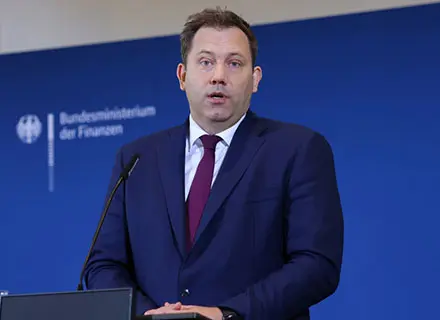
Finance Minister Lars Klingbeil said the spending package was designed to strengthen Europe’s largest economy after years of weak growth and underinvestment.
“We want Germany to be a strong and crisis-resilient country. That is why the priorities in the 2027 budget are clear: We want to put our country back on a growth path and create the jobs of the future in Germany. We are investing in future viability and innovative strength, as well as in security and resilience,” he added further.
Defence remains the budget’s biggest priority. Core military spending will rise by a third to 109 billion euro in 2027, reaching 130.1 billion euro, including Ukraine support and other security expenditure. The government expects defence spending to increase from 2.8% of GDP next year to 3.5% by 2029, following reforms to Germany’s debt brake that allow greater military borrowing. Berlin will now commit a total of 783.8 billion euro to defence-related expenditure between 2026 and 2030.
Germany has earmarked 11.6 billion euro for Ukraine in 2027 and 8.5 billion euro annually from 2028 to 2030.
“We cannot defend Germany against Putin with a balanced-budget policy. We must make up, in the shortest possible time, for three decades in which no investment was made in our defence capability,” Klingbeil said.
The government also plans to invest 117.5 billion euro in 2027, supported by a 500 billion euro infrastructure fund aimed at modernising transport, energy and public assets.
However, the scale of borrowing has triggered concerns over Germany’s long-term finances. Interest payments are projected to almost double, from 41.9 billion euro in 2027 to 80.7 billion euro by 2030.
Business groups warned that rising debt could eventually squeeze public finances. The Federation of German Industries (BDI), along with German Mittelstand association DMB, while criticising the high borrowing level, sathe Germanost one in every five euros of tax revenue could be absorbed by interest payments by the end of the decade.
“By 2030, nearly one in five euros of tax revenue could be tied up in interest payments,” said BDI chief executive Tanja Goenner.
The budget has also drawn criticism from environmental organisations after the government proposed shifting money from a dedicated climate fund into the regular budget and reducing development aid spending. Klingbeil defended the changes, saying they were necessary to close a 34 billion euro budget gap without undermining Germany’s legally binding climate targets.
Beyond defence, the budget continues to allocate significant resources to welfare programmes and support for Ukraine, highlighting the balancing act facing Berlin as it seeks to revive growth while managing rising geopolitical and fiscal pressures.