
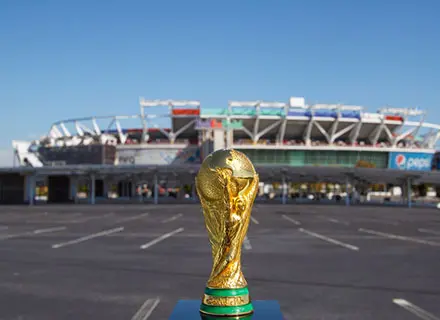

Football’s governing body was never shy about the numbers. FIFA booked roughly USD 13 billion in commercial revenue across the 2023-26 cycle, and the 2026 tournament, expanded to 48 teams and spread across the United States, Mexico and Canada, comfortably beat the USD 7.6 billion it banked from Qatar four years earlier, according to Deutsche Bank Research strategist Marion Laboure, who called it the main winner of this World Cup cycle.
That revenue came from broadcasting, sponsorship, licencing and ticketing, all controlled centrally by FIFA, meaning the organisation captured the upside while leaving host cities to absorb most of the costs, according to researchers who study the economics of the tournament. It was a structural feature of how modern World Cups are financed, not a one-off quirk of 2026.
Gains for broadcasters
Broadcasters had a good tournament too, though the picture was uneven. Fox paid an estimated USD 485 million for US English-language rights, a sum several industry analysts reckoned was two to three times below what the rights should have commanded in an open market.
That discount translated into outsized returns: strong ratings, including the most-watched English-language soccer broadcast in US history for a USA last-32 tie, left Fox on course for close to USD 1 billion in advertising revenue from the tournament alone.
T-Mobile’s new AI tool will not let smartphones hang at FIFA World Cup
Telemundo, which held Spanish-language rights, had sold 90% of its inventory before a ball was kicked, with Anheuser-Busch, Bank of America and Coca-Cola among the buyers.
FIFA’s decision to introduce mandatory in-game hydration breaks, framed as a player-welfare measure given the summer heat across host cities, doubled as a lucrative piece of advertising real estate.
Fox alone was expected to generate around USD 250 million from the breaks, with 30-second spots during the early rounds fetching USD 200,000 to USD 300,000, and premium knockout-stage inventory rising to USD 750,000.
British broadcasters took a different path: the advertising-free BBC and the heavily regulated ITV declined to commercialise the pauses, even as ITV reported it had sold out its regular inventory and delivered record World Cup revenues regardless.
Tournament sponsors
Sponsorship followed a similar trajectory. Analysts at Ampere put 2026 sponsorship revenue at around USD 2.4 billion, up more than a third on Qatar, while the top tier of official FIFA partners paid between USD 65 million and USD 95 million for the rights to use tournament branding. The United States, as host, dominated the sponsor roster, accounting for 14 of the 26 commercial backers on FIFA’s books.
Gambling firms were another clear beneficiary. With more than 100 matches on the calendar, up from 64 in 2022, financial services firm Macquarie estimated roughly USD 50 billion was wagered globally, or about USD 500 million a match, making it the largest betting event ever recorded. Flutter Entertainment, owner of Paddy Power, Betfair and Sky Bet, reported a corresponding jump in stakes placed through its platforms.
Impact on host cities
The picture looked rather different at street level. FIFA’s own projections, produced with the World Trade Organization, put the global GDP impact of the tournament at USD 40.9 billion, with the US capturing USD 17 billion of that and roughly 185,000 jobs created, concentrated in hospitality and accommodation.
Set against annual US output, though, that gain amounted to a rounding error: Saxo Bank calculated it at less than 0.1% of GDP, hardly the growth driver host-city officials sometimes implied it would be.
Sports economist Victor Matheson of the College of the Holy Cross put it plainly to ABC News before a ball was kicked: Cities should expect a mix of winners and losers, not a uniform windfall. That call held up.
Philadelphia, for example, had anticipated around USD 770 million in local economic impact, among the largest of the eleven US host cities, but the spending clustered tightly around stadiums and tourist districts rather than spreading through the wider local economy.
Canadian host cities illustrated the cost side starkly. Hotel rates in Toronto and Vancouver rose 200% to 300% during match weeks, pushing a typical $200 room past $600. Airbnb had offered Toronto homeowners cash incentives to list their properties for the tournament, a move tenant advocates warned would accelerate displacement of long-term renters.
Transit systems absorbed costs FIFA didn’t cover: New Jersey’s transit authority faced a USD 48 million bill to move fans to and from matches, while Boston raised its game-day rail fare to the stadium to USD 80.
Post-tournament scenario
History suggested some of the enthusiasm would cool once the tournament ended, and the data bore that out. Laboure had pointed to France 1998, when post-tournament demand fell well short of pre-event hype.
By April, around 80% of US hotel operators were already reporting bookings running below forecast; two-thirds of New York hoteliers said the same; and in Seattle, almost eight in 10 hotels described the tournament as something close to a non-event commercially. Final numbers, host cities say, did little to change that verdict.
FIFA World Cup 2034 to bring positive momentum to Saudi stock market: Report
Alexander Budzier, a fellow in management practice at Oxford University and chief executive of Oxford Global Projects, was blunter still, arguing that the long-term economic benefits claimed for hosting major sporting events routinely fail to materialise once independent researchers examine the data afterwards, rather than the inflated projections issued beforehand.
And, the winner is…
None of that troubled FIFA’s finances. Between broadcasting fees, sponsorship and ticketing, the organisation’s revenue streams stayed largely insulated from whether individual host cities saw a lasting boost or a temporary sugar rush.
For Fox, Telemundo and the major sponsors, the tournament delivered handsomely. For the taxpayers of Toronto, Boston and a dozen other host cities left holding transit bills and watching hotel booking curves undershoot, the reckoning looks set to take rather longer to arrive, if it arrives in a form they can see on a balance sheet at all.