
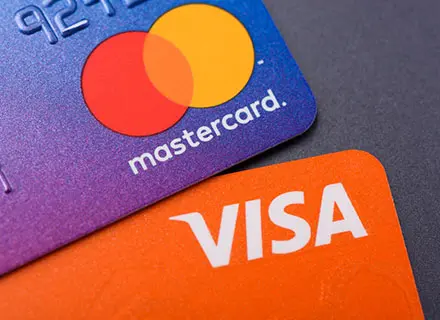

Syrian President Ahmed al-Sharaa has used a cup of coffee to mark a much bigger transaction: the country’s first live international Visa card payment, signalling a further reopening of Syria’s financial system after decades of sanctions and isolation.
Al-Sharaa made the payment at a restaurant in Damascus’s Old City on Wednesday (August 26), with Central Bank Governor Mohammed Safwat Raslan present.
Visa said the transaction was conducted with Lebanon-based Fransabank as the acquiring institution and Syrian payments technology company Paymera, following an agreement with the central bank in December.
The milestone came a day after Washington formally removed Syria from its list of state sponsors of terrorism, a designation the country had carried since 1979.
The Treasury said the action would help foster additional investment and support political and economic stability.
Raslan described the Visa transaction as a “new beginning” for Syrian financial services. He said modernising the national payments ecosystem and integrating it with international payment networks was part of a wider effort to rebuild the country’s financial infrastructure.
Visa’s test was accompanied by an equally significant development from Mastercard and Qatar-based QNB Group.
The companies said they had completed the first end-to-end international Mastercard card payment in Syria, reconnecting the country’s payments ecosystem to Mastercard’s global network after an interruption of more than 15 years.
QNB Syria processed the transaction at an eligible local merchant using an internationally issued Mastercard. The payment was authorised through the network, and the merchant received the funds through the banking system, demonstrating that the full transaction cycle can now operate in Syria.
ALSO READ | IMF sees war-torn Syria’s recovery accelerating but warns reforms must deepen
QNB said eligible merchants, including hotels, restaurants and government entities, will be able to accept international Mastercard credit cards through its point-of-sale terminals. The rollout will be phased, with additional merchants added subject to regulatory approvals and compliance requirements.
For Visa, the immediate commercial focus is enabling international visitors to use their cards in Syria. Wider card acceptance could benefit tourism, hospitality and retail businesses while reducing reliance on cash and giving Syrian merchants access to international payment infrastructure.
The developments are part of a broader attempt by President al-Sharaa’s government to reconnect Syria with international finance and attract foreign investment following the overthrow of Bashar al-Assad in December 2024.
Progress has already been made on the payments side. Syria completed its first electronic transfer through the Swift international messaging system in June 2025, ending a 14-year exclusion.
The country has also been moving towards restoring correspondent banking relationships and rebuilding links with international financial institutions.
The lifting of the US terrorism designation is particularly important because the broader US sanctions regime had already been eased, but the terrorism designation remained a significant source of legal and reputational risk for global banks.
Its removal could make it easier for Syrian banks to establish correspondent relationships, process cross-border transactions and eventually expand access to international capital.
However, the return of global payments networks does not mean Syria’s financial isolation has ended overnight.
Banks and payment companies will still need to navigate remaining targeted sanctions, customer due diligence, anti-money-laundering rules, cybersecurity requirements and other regulatory controls.
That caution was reflected in Raslan’s comments that strong compliance, risk management and operational controls would remain essential to protecting payment and settlement systems and rebuilding confidence.
For businesses, the significance of the card transactions goes beyond the symbolic image of the president paying for coffee.
ALSO READ | Iran war: US backs Iraq-Syria pipeline revival to reduce Hormuz oil risk
That transition will matter most for reconstruction, where Syrian companies will need reliable channels for importing equipment, paying overseas suppliers and receiving funds from foreign partners.
For now, the first card transactions provide a tangible demonstration that Syria’s financial infrastructure is beginning to reconnect with the world at a commercial scale.
The simultaneous return of Visa and Mastercard, therefore, offers one of the clearest signs yet that Syria is moving from political and sanctions relief towards practical financial reintegration.
The next test will be whether banks, merchants and international investors follow the payment networks back into the Syrian market.