
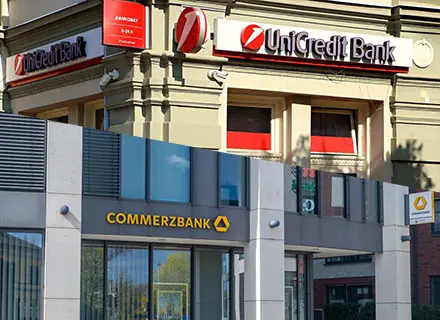

Italian banking giant UniCredit and the German government have reportedly reached agreement on the main sticking points in the bank’s proposed takeover of Commerzbank, a key step in the two-year battle for control of its cross-border rival led by Andrea Orcel.
The agreement, outlined in a letter from Orcel to German Finance Minister Lars Klingbeil and a separate statement from the minister to Reuters, addresses some of Berlin’s longstanding concerns about the proposed acquisition.
Under the arrangement, UniCredit’s enlarged German business would retain its headquarters and stock market listing in Frankfurt, meeting one of the German government’s key demands.
In return, Berlin has dropped its insistence on appointing two representatives to Commerzbank’s supervisory board, signalling a compromise between the two sides after months of disagreement over the future of the German lender.
Orcel welcomed the development, thanking Klingbeil for his collaborative approach and acknowledging the minister’s endorsement of the strategy he has outlined for Commerzbank.
The veteran investment banker said UniCredit was prepared to commit to a series of binding principles, including maintaining Frankfurt’s position as the headquarters of its expanded German operations. The bank also pledged to appoint German nationals to its board of directors.
UniCredit has maintained a significant presence in Germany since acquiring Bavarian lender HVB in 2005.
The Italian bank’s latest commitments are intended to address concerns about the country’s influence over the combined business and the future of Commerzbank’s employees.
Klingbeil told Reuters that Germany supported a swift process and an orderly transition of control.
He added that UniCredit had made clear commitments regarding Germany as a business location, employee rights, and continued constructive engagement with Commerzbank’s works council, the elected body representing employees.
Commerzbank also welcomed the commitments, saying its management would work with UniCredit to develop a strategy that builds on the strengths of both banks.
A combination of UniCredit and Commerzbank would create a banking group with more than 1.3 trillion euro (USD 1.4 trillion) in assets, spanning two of the eurozone’s largest economies.
The proposed transaction would rank among Europe’s most significant cross-border banking deals in recent years.
The European Central Bank has long been urging European lenders to consolidate, arguing that bigger banking groups are better able to compete with the big US financial institutions.
However, political resistance has frequently complicated efforts to bring major European banks together.
UniCredit has argued that its established presence in Germany makes it particularly well positioned to pursue the transaction.
The agreement now clears the way for several important steps, including UniCredit formally assuming control, consolidating Commerzbank on its balance sheet and nominating supervisory board members who could subsequently appoint a new management team.
But despite the breakthrough, the planned takeover is still causing concern among employees of Commerzbank, particularly over the prospect of large-scale job losses in Germany.
Orcel’s pursuit of Commerzbank began in 2024 with the construction of a stake in the lender without the knowledge of its management or the German government.
UniCredit subsequently acquired the shares being sold by the German state, eventually increasing its holding to close to 50%.
Both Commerzbank’s management and Berlin initially resisted the approach, with concerns centring on the bank’s independence, employment prospects and Germany’s influence over its financial sector.
Commerzbank employees have also opposed the proposed acquisition, partly because of Orcel’s previously stated plans to cut jobs in Germany.
Sascha Uebel, head of Commerzbank’s works council, welcomed the commitment to retaining Frankfurt as the German headquarters but emphasised that existing labour agreements must remain in force.
He told Reuters that if those agreements were respected, the transaction might not result in years of confrontation between management and employees.
He added that how employees ultimately receive Orcel would depend on whether the commitments were honoured.
Another important question surrounding the transaction is the future of the German government’s remaining 13.3% stake in Commerzbank.
Berlin acquired the holding following the lender’s bailout during the global financial crisis.
While Orcel’s letter described the latest agreement as establishing the basis for the disposal of the government’s stake, Klingbeil did not make any explicit commitment to sell the shares.
The two sides had previously met in September to discuss UniCredit’s hostile 45 billion euro takeover approach.
Although both parties described those discussions as constructive, significant differences remained.
Since then, the European Central Bank, European Commission and US Federal Reserve have approved the transaction.
Commerzbank has also softened its position.
Earlier this month, the German lender said it was convinced that a combination with UniCredit could create value, signaling a more positive approach to a deal it had opposed for most of the past two years.