
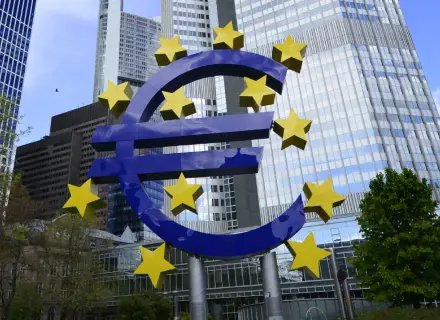

Amid the ongoing Middle East conflict, the Eurozone’s benchmark Bund yields (interest rates paid on bonds issued by the German federal government) edged down from their highest levels in nearly 15 years on March 24, as investors opted for caution due to ongoing geopolitical volatilities.
The news also comes against the backdrop of rising oil prices fuelling inflation concerns and lifting expectations of further European Central Bank (ECB) rate hikes. While Iran has dismissed United States President Donald Trump’s talks of negotiations as “fake news,” reports claiming administration insiders as sources stated that Washington would continue its strikes against the Western Asian nation.
Talking about Bund yields, Germany’s 10-year government bond yield, the euro area’s benchmark, dropped 0.5 basis points to 3.01%. A couple of days back, it reached 3.077%, its highest level since June 2011.
Money markets have fully priced in two European Central Bank interest rate hikes by July 2026, along with a deposit facility rate at 2.65% by year-end. The ratio currently stands at 2%.
According to Reuters, Germany’s two-year yields, more sensitive to expectations for policy rates, were down 1.5 bps at 2.60%. They hit 2.764% the day before, their highest level since July 2024. Italy’s 10-year government bond yields fell one bp to 3.91%, after recently reaching 4.119%, their highest since July 2024.
The yield gap of Italian government bonds versus Bunds was at 85 bps. It was at 63 bps before the attacks against Iran and hit 53.50 in mid-January this year, its lowest level since August 2008. The French spread, on the other hand, was at 69 bps from 58 bps before the conflict.
Discussing the existing money market mood, Commerzbank rates strategist Hauke Siemssen said, “Markets look set to remain in sell-off mode as latest headlines out of the Middle East point to prolonged energy price increases.”
Goldman Sachs also expects the ECB to deliver two 25 basis point interest rate hikes in April and June 2026.
“At the April meeting, only a few data pointers for March will be available, which would render a potential hike a risk management exercise and a sign of commitment to stay ahead of the inflation curve. More hawkish-leaning council members seem in favour of an April hike, while centrist council members should ultimately tip the balance,” Siemssen concluded.