

In March 2026, SoftBank-backed Japanese digital payments giant PayPay Corporation completed its initial public offering (IPO), raising roughly $880 million. The incident crated history, by becoming the largest listing for a Japanese company on a US exchange in a decade, valuing the company at over $12 billion.
In fact, this year is going to be all about Japanese companies arriving in American capital markets for growth financing, superior valuations, and global brand-building, in a sharp reversal of the age-old practice of the Far East Asian country building world-class businesses and keeping them largely within its territory, when it used to come to the funding pipeline.
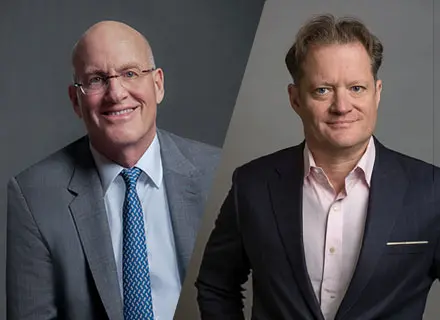
To talk more about the shift, International Finance caught up with Crocker Coulson, CEO of AUM Advisors, and Drew Bernstein, Co-Chair of MarcumAsia, whose organisations are convening the second annual ‘Japan Go IPO Summit’ on September 16 at the Grand Hyatt Tokyo. The agenda of the showpiece event’s second chapter will be covering the full funding life cycle for Japanese companies who are looking to list in the United States: from late-stage and crossover financing through IPO, de-SPAC, and direct listing routes, into post-listing capital raising such as ATMs, PIPEs, and shelf offerings.
Here are excerpts from the interview.
What can attendees expect from the second ‘Japan Go IPO Summit’ in Tokyo?
Drew Bernstein:
Our first Japan Go IPO Summit that we held with Nasdaq in 2025 was really about introducing the concept of going public in the US as a legitimate alternative for Japanese companies that want to position themselves as global leaders. There were certain misconceptions in the marketplace, that Nasdaq was a place for smaller, early-stage enterprises that weren’t ready for the TSE. We wanted to correct that, and educate the market as to what it takes to be successful as a US-listed company. As a result, I think the market has come a long way in just one year, and you see a much more mature and impressive roster of companies queueing up now to launch US IPOs.
How significant was PayPay’s Nasdaq IPO as the largest US listing by a Japanese company in nearly a decade?
Crocker Coulson:
PayPay was a landmark deal since it showed that when you have a company with a strong business model and the right institutional pedigree, they can raise a lot of money in a Nasdaq IPO, and that US institutions will embrace the story. Now you have Softbank taking two more of their portfolio companies public in the US That sends a very strong message to the market that this is a viable path for the right companies to enjoy a valuation, liquidity, and access to follow-on financing they might not find in their home market.
What factors drove PayPay to choose a US IPO over listing in Japan?
Crocker Coulson:
I certainly can’t speak for PayPay, but they are a sophisticated management team with world class underwriters. I am sure they looked carefully at relative valuations and liquidity, and found that Nasdaq provided the best platform for achieving their value creation and corporate finance objectives. That isn’t to say that going overseas is the right choice for every company. You really need to look at how the business model lines up with where US and global fund managers want to allocate capital, and what multiples they are willing to pay for a quality asset like PayPay. You also need to assess if the management team is prepared for the disclosure and investor marketing requirements associated with a US listing. If they are unprepared, it can be a very shocking experience to deal with public market scrutiny.
How do the US and Japan IPO markets differ in terms of valuation, growth financing, and global brand-building?
Drew Bernstein:
When it comes to the depth of the market, specialised analyst coverage, breadth of buy-side funds, trading liquidity, and flexibility to do follow-on financing, the US remains the gold standard with no real rival. That said, it is very easy for a microcap stock with limited institutional backing and no name recognition to become completely lost in the US if they don’t have a strong growth profile and excellent communication skills. Our goal with Japan Go IPO is not to convince every company to come to the US, but for the right companies to come when they are fully prepared to take advantage of what the US has to offer.
Given recent geopolitical tensions and market volatility, do you expect more Japanese companies to pursue US IPOs in 2026?
Crocker Coulson:
Absolutely. We are working with a half-dozen companies that plan to launch IPOs in the next year, and are aware of other sizeable deals that are in the planning stages. Right now, I think you have a confluence that the business culture of Japan is much better aligned with the more rigourous listing standards that Nasdaq and NYSE have implemented. Japan is an allied nation that is well respected both by the US government and US investors. And I believe that the Japanese government recognises that promoting an innovation economy and global outlook are the only path to grow in the face of demographic challenges. So, the stars are aligned for a vibrant cross-border market.
Will PayPay’s US listing influence other major Japanese companies’ IPO decisions going forward?
Drew Bernstein:
Success breeds success. If an IPO trades well, then investors want more of the same. If companies see a transaction that raises significant capital and results in a favourable valuation, they will want to participate in that opportunity. As long as we see high quality companies coming to the US, both large cap and small cap, this cycle will have legs.
How might US IPOs change outcomes for Japanese companies compared to traditional Tokyo Stock Exchange listings?
Crocker Coulson:
Tokyo Stock Exchange is a great market and probably the right home for the majority of companies from Japan, especially those in traditional sectors or with a primary focus on the domestic market. But for next-generation technologies, hyper-growth companies, sectors where US has very deep research coverage, or for companies that want to build a global brand, a US listing is worth considering. It can also be a way to unlock value, and promote innovations by carving out high growth assets from larger Japanese corporates to align incentives, attract talent, and reduce the cost of capital.
Is Japan’s flat startup fundraising environment pushing companies toward US capital markets?
Drew Bernstein:
Japan has incredible resources in technology, engineering and design. What is missing is a very active risk culture to drive innovation. That takes time to develop, but I think you have a younger generation of entrepreneurs coming up who want to make waves. It’s not just about start-up funding, but who is going to step in with the C and D round so they can scale quickly to be something that is truly ready for the public markets. There is a lot of interest among Silicon Valley shops in Japan right now, and that’s why we expanded the focus of the conference this year.
How do you view Japan’s ¥1 trillion government push into AI, robotics, quantum computing, and fusion energy in relation to US market valuations?
Crocker Coulson:
This is a huge positive. If you look at where US institutions want to allocate more capital, it is precisely in areas like quantum, robotics, AI and data centres, and nuclear, both SMRs and fusion. These areas lend themselves to IPOs, but also to SPAC mergers where you have seen deals closing with large PIPE financing, and majority of funds remaining in trust this year. As Japanese frontier tech companies develop, a US listing is a natural next step.
Will differences between Japanese corporate governance norms and SEC requirements be a major focus at the upcoming summit?
Drew Bernstein:
Clearly any company that wants to list in the US needs to embrace US governance norms. That said, we have found that Japan has a very strong compliance orientation as compared with other parts of Asia. I think it is more a matter of educating the team and enabling them to build out their internal capabilities in finance, accounting, and SEC reporting.
How can Japanese companies manage challenges such as dual-jurisdiction compliance, currency risk, and US investor expectations when listing in the United States?
Crocker Coulson:
US investors expect much more frequent information flow and contact with management than is the norm in most other parts of the world. Putting a robust investor relations function in place is crucial, and is often underestimated. Companies may assume that their investment banks will do this for them, but really, they need to take destiny in their own hands, often with support of an IR advisor. They need to have an authoritative member of senior management willing to come to the US four times a year to do non-deal road shows, and attend conferences. The IR strategy, growth strategy, and corporate finance strategy need to be fully aligned to get the value out of their public status.
Bios:
Drew Bernstein
Drew Bernstein is the Co-Chairman and Co-CEO of MarcumAsia, initial co-founder of Bernstein & Pinchuk, a PCAOB registered accounting firm, which has been providing SEC audit and advisory services to Asian companies since 1983. The firm was formerly an affiliate of Marcum LLP. Today, MarcumAsia is one of the largest middle market accounting firms servicing Asia-based, US publicly traded companies, and the most active independent auditor for cross-border IPOs and SPAC mergers.
Bernstein is a distinguished expert with deep knowledge of the Asia and US financial ecosystem with experience extending across Asia, Europe, and Africa. His industry experience encompasses technology, education, retail, manufacturing, hospitality, pharmaceutical, and real estate. He directs a global team, featuring highly trained PCAOB and SEC accounting experts and financial consultants working in New York City as well several offices across mainland China, Hong Kong, Singapore and Japan.
Crocker Coulson
Crocker Coulson is the founder and CEO of AUM Advisors. He is an award-winning investor relations and corporate communications advisor with two decades of experience helping public and private companies access the capital markets, complete major acquisitions, and business transformations. He has worked with senior leaders of over 100 companies across a range of industries ranging from startups to Fortune 500 and FTSE 100-scale enterprises.
He has guided clients through dozens of IPOs, secondary offerings, and going-private transactions, and has organised or chaired major investment conferences in the US and Asia. His network of bankers, institutional investors, and private equity funds informs how he shapes a story for fundamentals-based investors.