
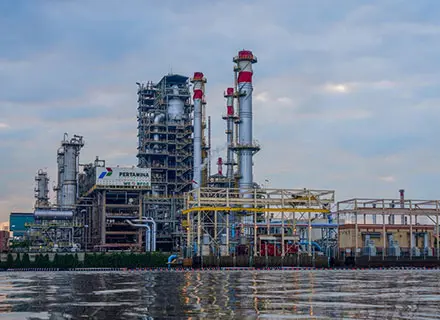

Indonesia will establish a special agency to accelerate investment in its oil and gas industry, giving the proposed body extensive powers over licensing as the Prabowo Subianto government seeks to increase domestic production and reduce its dependence on imported energy.
Energy Minister Bahlil Lahadalia announced the plan on Wednesday, saying the new institution would be one of the key provisions in revisions to Indonesia’s 2001 Oil and Gas Law. The government will soon complete its response to amendments proposed by parliament before beginning joint deliberations on the legislation.
The proposed Special Oil and Gas Business Entity, known as BUK Migas, is intended to cut bureaucratic delays, simplify permit approvals, and improve the investment climate for companies operating in the sector.
Speaking at an industry event, Bahlil said the agency would receive broad authority, including responsibility for licensing matters. The government hopes a more streamlined approval process will make it easier for companies to commit capital to exploration and development projects, where regulatory uncertainty and long lead times can discourage investment.
The initiative is part of President Prabowo Subianto’s wider drive to achieve energy self-sufficiency, a key policy priority for his administration. Indonesia, a member of the Organisation of the Petroleum Exporting Countries until 2009, has struggled to reverse declining output from mature oilfields even as domestic energy demand has increased.
The government is targeting oil production of one million barrels per day by 2029–30. Achieving that goal will require new discoveries, faster development of existing reserves, and additional investment from domestic and international companies.
Indonesia has considerable untapped resources, but converting them into commercially viable production remains a challenge. Exploration requires substantial upfront spending, while projects can take years to move from discovery to production.
Investors must also assess geological risks, infrastructure requirements, fiscal terms, and the stability of regulations over the life of a project.
The proposed agency is expected to address some of these obstacles by improving coordination between government departments.
Bahlil has previously said BUK Migas would report directly to Prabowo, giving it a prominent position within the administration and strengthening its ability to resolve delays that cross ministerial boundaries.
The proposed arrangement is not intended to eliminate the responsibilities of other ministries. Instead, the government wants the new body to help ensure that their respective approval processes do not become unnecessary barriers to increasing output.
The reform comes as Indonesia’s existing upstream regulator, the Special Task Force for Upstream Oil and Gas Business Activities, or SKK Migas, steps up efforts to attract capital.
At an industry conference in Bali this week, the agency highlighted opportunities to develop 43 oil and gas discoveries in areas that remain under exploration.
The opportunities include underdeveloped discoveries and fields whose development plans have not yet been fully implemented. SKK Migas has also invited companies to consider investments in producing basins and exploration in less-developed frontier areas.
Indonesia has 128 sedimentary basins, according to the agency, underlining the scale of its geological potential.
However, the presence of resources alone does not guarantee commercially viable production, making investment conditions and project economics central to the government’s ambitions.
The authorities are also considering ways to make contractual arrangements more attractive to investors. Bahlil has said the proposed institution should have flexibility when negotiating with private companies and the government, including arrangements involving cost recovery and other forms of cooperation.
Such flexibility could help accommodate projects with different cost structures and geological risks. However, investors will also look for clear rules governing how agreements are negotiated, how costs are recovered, and whether contractual commitments will be honored over the long term.