
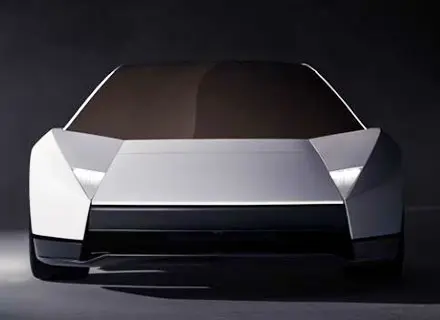

The white two-seater made its debut at a SpaceX test site in McGregor, Texas, on Thursday.
The demonstration saw the thruster-powered vehicle performing unusual manoeuvres, including mid-air turns and jumps over vehicles.
As per Tesla, the Roadster could accelerate from zero to 60 mph (97 kph) in less than a second, reaching a top speed exceeding 230 mph (370 kph) and covering more than 300 miles (480 km) on a single charge.
The performance figures place the Roadster among the most ambitious electric sports cars announced by the company. However, its development has stretched far beyond the original timeline, with Tesla first unveiling a prototype of the second-generation model in 2017 and promising deliveries in 2020.
The latest reveal comes as Tesla redirects resources towards autonomous driving, AI and robotics, while facing pressure to revive demand for its existing electric vehicle lineup.
Tesla has not announced final retail prices for the redesigned Roadster. Its reservation page following Thursday’s event listed three versions, each with a different configuration and deposit requirement.
The Performance variant requires a USD 50,000 deposit, while the Thrust version, equipped with acceleration thrusters, carries a USD 250,000 deposit. Tesla also listed a Rocket variant as an invitation-only model, describing it as a single-seater with a full flight system.
The company had previously quoted a starting price of USD 200,000 for the second-generation Roadster, although it remains unclear whether that figure will apply to the redesigned vehicle.
The thruster-equipped configurations are central to the car’s positioning.
At the unveiling, the vehicle demonstrated how the technology could support dramatic movements, including jumps and rotations.
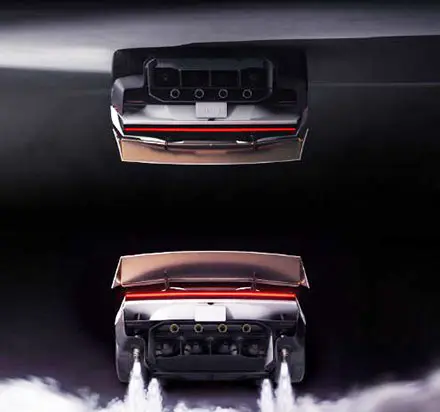 Tesla has not, however, provided detailed technical specifications for the thruster system or explained how it would operate in regular road use.
The Roadster carries significance beyond its expected sales volumes. It could serve as Tesla’s flagship performance car, showcasing its engineering capabilities at a time when the company’s product range is increasingly focused on mass-market electric vehicles, SUVs and autonomous mobility.
Tesla launched its original Roadster in 2008 using a Lotus Elise chassis. Production continued until 2012, and the car helped establish the company as a manufacturer capable of building high-performance electric vehicles.
Since then, Tesla has expanded its lineup with the Model S and Model 3 sedans, along with the Model X and Model Y SUVs. The Cybertruck has added another vehicle category, while the Cybercab represents the company’s move towards driverless transport.
The Roadster’s unveiling comes as Tesla reshapes its long-term strategy around artificial intelligence, autonomous driving and robotics.
While the company has introduced the Cybercab, a two-seat robotaxi designed without conventional driver controls such as a steering wheel and pedals, it is also developing Optimus, its humanoid robot programme, as Musk pushes Tesla to expand beyond traditional vehicle manufacturing.
Tesla has said it plans to make room for Optimus production by ending production of the Model S and Model X. The move highlights the scale of the company’s strategic shift, although its electric vehicle business remains central to its current operations.
The Roadster could help maintain Tesla’s performance-car credentials as the company pursues these newer technologies. However, a launch event alone will not resolve questions about production timing, commercial viability and the pace at which its wider strategy can deliver returns.
The close involvement of SpaceX in the Roadster project has also fuelled speculation about a more profound relationship between the two companies, both led by Musk.
The collaboration brings together Tesla’s electric vehicle engineering and SpaceX’s rocket technology in a highly publicised demonstration.
Tesla is set to announce the Roadster’s debut on October 21, just before its third-quarter results.
Investors are likely to focus on vehicle deliveries, profit margins and cash flow, particularly after two years of weaker sales across Tesla’s ageing lineup.
While higher energy prices, stemming from the ongoing Iran war, have helped support the EV giant’s delivery figures, the company still faces questions about demand, competition and its ability to sustain growth.