
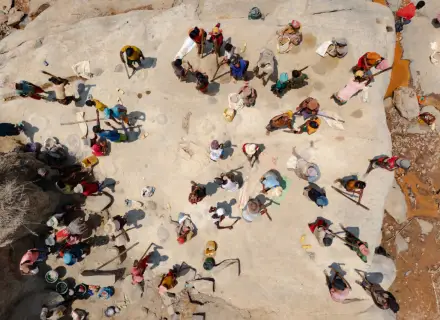

Canada-based advisory firm Veridicor, along with Metalex Commodities, a mid-tier Zambian copper miner, will pilot a sustainability bond this year, with the aim of integrating Africa’s artisanal miners into formal industrial supply chains.
Artisanal mining has been a job generator on a global level, and in Africa, it often operates informally on or near company-run mines, hitting their profits, spreading pollution and depriving nations of revenue. To address this, the proposed “stakeholder prosperity bond,” according to Rob Karpati, Veridicor’s finance director, aims to professionalise artisanal mining.
The instrument will link investor returns to predefined social and environmental outcomes for workers, communities and host economies rather than output.
“The debut issuance would raise between USD 100 million and USD 200 million by year-end to help Metalex Commodities integrate artisanal and small-scale miners through regulated offtake agreements as well as shared infrastructure and equipment investment,” Reuters reported.
“Potential investors include European sustainability bond funds, impact and mining investors, banks and wealthy individuals focused on sustainability,” the firms said.
“Zambia, Africa’s second-largest copper producer, hosts tens of thousands of artisanal miners, including around Metalex’s northwestern permit. Large mines tend to be the anchor of these because it’s got to go on someone’s balance sheet,” Karpati said.
“They end up gaining financially because they get offtake from it, and the artisanal miners gain financially because it’s a fair price, not some predatory intermediate,” the official added.
“Industrial mines would sit at the centre of each bond structure to support repayment, while sustainability-linked terms would adjust interest rates based on social and environmental performance,” Karpati remarked.
Metalex founder and chief executive Ayo Sopitan said the bond would allow the company to run large programmes that integrate artisanal miners into its supply chain.
“We plan to source around 30% of our ore from trained, licensed local miners. The bond lets us do that at a much larger scale than our balance sheet alone would allow,” he said.