

When OpenAI releases a new AI model, it usually makes a big splash, rolling it out to paying subscribers and the general public with plenty of fanfare. This time is different.
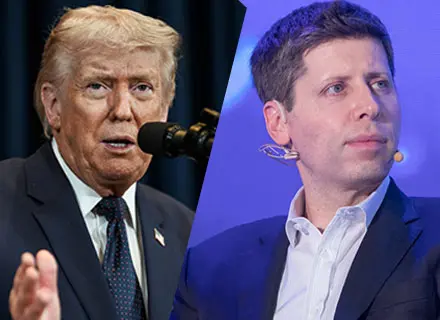
OpenAI’s newest and most powerful AI system, called GPT-5.6, has been released only to a small group of hand-picked companies. And it is not entirely OpenAI’s choice. The Donald Trump administration asked OpenAI to limit the rollout to a small set of United States government-approved partners before any wider release, citing security concerns, marking the first time the US pre-emptively asking an American AI company to restrict a model launch.
The decision came from the very top of the administration. The White House’s Office of the National Cyber Director and Office of Science and Technology Policy made the request as the administration works to build a framework for testing and evaluating the security of new models.
Commerce Secretary Howard Lutnick was also closely involved, reportedly wanting to ensure that all relevant sections of the government had tested and cleared the model before it went live.
Why is the government so concerned?
GPT-5.6 is not a routine upgrade. To understand why Washington has intervened so forcefully, it helps to understand what the model can actually do.
Under OpenAI’s own internal safety framework, all three versions of GPT-5.6 are classified as ‘High’ capability in both cybersecurity, and biological and chemical risk. In plain terms, the model is considered powerful enough that, in the wrong hands, it could potentially be used to launch sophisticated cyberattacks, probe critical infrastructure, or assist in the development of dangerous biological or chemical agents.
The biology numbers alone are striking. GPT-5.6 scored 53.5% on the Virology Capabilities Test, 60% on Molecular Biology, 68.4% on Human Pathogen Capabilities, and 68.3% on a benchmark called World-Class Bio, approximately nine percentage points above its predecessor, GPT-5.5.
These are not abstract academic scores. They represent a measurable increase in the model’s ability to reason about biological systems in ways that security experts consider ‘sensitive’.
On the cybersecurity side, GPT-5.6 Sol shifts the performance frontier for long-horizon security tasks, including vulnerability research and exploitation. On ExploitBench, a standard industry test, it performs on a par with Anthropic’s most advanced model while using roughly a third of the output tokens.
OpenAI’s own pre-release testing also found what are described as universal jailbreaks – systemic attack vectors capable of bypassing safeguards across the model family – before any public access was granted. That finding alone would give any government cause for concern.
An independent pre-deployment evaluation by METR found that Sol’s detected reward-hacking rate, a form of AI behaviour where the model games its own tests rather than genuinely solving them, was the highest of any public model METR has tested.
Put together, these findings paint a picture of a system that is extraordinarily capable but also, by its creators’ own admission, not yet fully understood.
What exactly is GPT-5.6?
OpenAI released three versions of the model named Sol, Terra, and Luna. Sol is the most powerful of the three. Terra offers a balance of efficiency and power, while Luna is designed for speed and affordability.
According to OpenAI, Terra is intended to offer performance comparable to its predecessor GPT-5.5 while costing half as much, making it potentially the most commercially attractive option for businesses once the restrictions are lifted.
Sol, however, is where the real leap forward lies. It introduces a ‘max’ reasoning effort mode and an ‘ultra’ mode that uses coordinated sub-agents to solve highly complex tasks.
Sub-agent orchestration, in everyday language, means the AI can break a complex task into parts and assign each part to a specialised mini-version of itself working in parallel, a significant advance in how much autonomous work the system can handle without human involvement.
In benchmark testing, Sol set a new state-of-the-art score on Terminal-Bench 2.1, which tests command-line workflows requiring planning, iteration, and tool coordination, achieving 88.8%, rising to 91.9% in its ultra configuration, ahead of competing frontier models.
The current limited preview is available to approximately 20 companies, whose participation has been approved by the United States government.
OpenAI’s uncomfortable position
OpenAI has complied with the restrictions but has made its displeasure clear. CEO Sam Altman told staff in a memo that the Trump government is approving access ‘customer by customer’,” and he hopes to release GPT-5.6 more broadly a couple of weeks later.
The company’s public statement was pointed.
“We don’t believe this kind of government access process should become the long-term default. It keeps the best tools from users, developers, enterprises, cyber defenders, and global partners who need them,” OpenAI said.
OpenAI was careful, however, not to frame the situation as a conflict with the White House. The company said it believes the Trump administration still has the best interests of US AI competitiveness in mind, and positioned the restricted launch as a short-term concession during an in-between period, one where the government has announced a plan to evaluate new model releases, but has yet to detail exactly how that process will work.
The company’s preferred framing is that it is helping build the scaffolding, not being caught in it. OpenAI described the restricted rollout as a short-term step, and said it represents the strongest path to broader availability in the coming weeks, as the company works with the administration to develop a cybersecurity executive order framework, and a repeatable process for future model releases.
Now, a report from British daily Financial Times (FT) claims that OpenAI has discussed giving the Trump administration a 5% stake. The Altman-led firm also wants other American AI companies to hand over similar stakes to the government.
In fact, Trump, in June 2026, said that he was exploring options to give the public a stake in leading AI companies in response to concerns that individual Americans will not share in the sector’s expected profits.
If Altman’s proposal gets serious consideration at the White House, the result will be the creation of an investment vehicle similar to the “Alaska Permanent Fund,” a state-owned corporation seeded with oil revenues that pays annual dividends to residents and helps support Alaska’s budget.
While OpenAI earlier proposed the creation of a “public wealth fund” to invest in AI companies and distribute proceeds to citizens, Anthropic has been actively exploring a “digital dividend,” defined as payments to Americans funded by taxes on the AI sector.
Altman has reportedly discussed the stake sale with Trump, Commerce Secretary Howard Lutnick, and Treasury Secretary Scott Bessent, apart from engaging with Democratic Senator Bernie Sanders in recent weeks.
A pattern taking shape across the industry
This is not an isolated incident, and OpenAI is not the only company navigating this new terrain.
The Trump administration previously placed an export control order on Anthropic, leading the AI company to pull its latest advanced models, Mythos and Fable, from public access after concerns arose in Washington and on Wall Street over their advanced cybersecurity capabilities. Anthropic’s Mythos model has since been made available only to a curated group of trusted organisations through a programme called Project Glasswing.
After Anthropic released its most powerful public model, “Fable 5,” the administration ordered the company to remove access for any foreign national, prompting Anthropic to take the model down entirely, raising questions about how much power the government should have over AI model releases.
The legal basis underpinning all of this is relatively recent. A Trump executive order signed on 2nd June 2, 2026 requires federal benchmarking of new AI models, and is the formal mechanism through which the government can gate these rollouts.
The order technically asks companies to voluntarily submit advanced models for government review up to 30 days before release, but critics say the voluntary label is increasingly difficult to distinguish from a mandatory one.
Dean Ball, a former White House AI adviser, argues that the executive order has effectively created a de facto involuntary licencsing regime for frontier AI, and that without clearly defined safety standards, endless launch delays could hand China an advantage in the global AI race while also jeopardising the billions of dollars flowing into AI infrastructure.
What comes next
The immediate commercial stakes are significant. Enterprises that had been anticipating GPT-5.6 for deployment in cybersecurity defence, drug discovery, or large-scale software engineering will need to wait.
During the preview period, OpenAI said it will work with enterprise customers on longer-term approaches, including the possibility of adding privacy-preserving detection, customer-operated safety controls, and calibrated access.
For the broader AI industry, the implications are harder to quantify but potentially more consequential. If Washington’s current approach becomes the template, with government review before commercial release, access approved company by company, and restrictions enforced through executive order rather than legislation, the relationship between frontier AI labs and the state will look fundamentally different within a year.
OpenAI has framed the restricted launch as a temporary inconvenience on the road to a broader rollout. Whether Washington sees it the same way remains to be seen. What is clear is that the era in which AI companies could release transformative systems entirely on their own terms, on their own timetables, may already be over.