
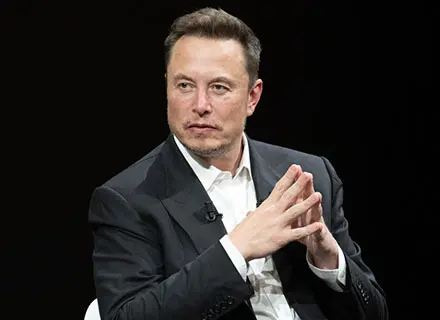

Average pay for chief executives at S&P 500 companies, excluding Tesla’s Elon Musk, jumped 21% to USD 22.8 million in 2025, the highest figure since records began in the 1990s, according to the AFL-CIO’s annual Paywatch study released on Thursday (August 13).
Fred Redmond, the labour federation’s secretary-treasurer, said Musk’s Tesla package, potentially worth up to USD 1 trillion, was reshaping pay negotiations across corporate America.
“It changes the dynamic when other CEO compensation plans come up. Boards use it as a reference,” he said.
Including Musk’s award, valued by Tesla at USD 158.3 billion, the average S&P 500 chief executive took home USD 340.1 million in 2025.
The gap between executive and worker pay widened accordingly. Excluding Musk, the ratio of CEO-to-worker pay rose to 312:1 from 285:1 in 2024; including him, it reached 5,387:1. The report calculated that Musk earned the median Tesla employee’s annual salary roughly every four seconds.
Redmond said, “Our members are angry about their situation and feel they should speak out about inequality.”
Special one-off awards proved contentious elsewhere. Goldman Sachs paid chief executive David Solomon USD 118.9 million, including a retention bonus, winning support from 71% of shareholders in an advisory vote, below the market average.
Real estate investment trust Welltower awarded its chief executive, Shankh Mitra, USD 821 million intended to cover roughly a decade of pay; only 19% of shareholders backed it.
“Welltower’s board and compensation committee remain committed to engaging with shareholders to gather their feedback and understand their perspectives,” a spokesperson told Reuters, while adding that Mitra would receive the full amount only by hitting all performance targets.
ALSO READ | Trading, dealmaking booms to hand Wall Street bankers bumper bonuses, says consultancy
Compensation committees usually argue that these pay packages help align the interests of executives with those of shareholders, pointing out that support for “say on pay” votes among S&P 500 companies averaged 90.6% through late June, according to the consultancy Semler Brossy, which is an increase from 89.4% for all of 2025.
The report also highlighted United States President Donald Trump’s income, which rose almost 254% to USD 2.2 billion in 2025, driven largely by cryptocurrency holdings.
A White House spokesperson said all of the Republican’s assets were held in discretionary accounts managed by independent institutions, adding there was no conflict of interest.
The AFL-CIO noted that workers’ share of US national income has fallen to its lowest level since the Second World War, even as mean annual wages rose 3% to USD 69,770.
Rising CEO pay and inequality with the salaries and incentives received by the workers will again reignite the broader political debate on why the American workforce is having trouble affording housing, healthcare and other necessities.