
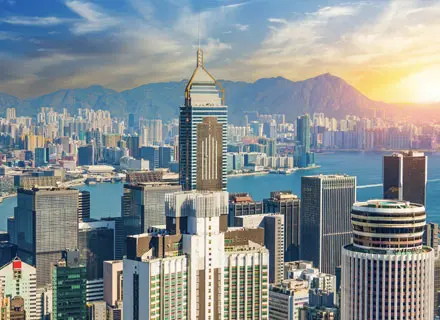

For decades, Switzerland was the undisputed home of the world’s offshore money. The image was almost cinematic with vaulted bank corridors, Alpine discretion, and numbered accounts. But that era has quietly ended. In 2025, Hong Kong overtook Switzerland to become the world’s largest cross-border wealth management centre, according to the Boston Consulting Group’s 2026 Global Wealth Report. It is one of the most significant shifts in global finance in a generation.
Cross-border wealth refers to money that individuals or families hold in a country other than the one they live in. Think of a wealthy Indonesian family keeping investments in Singapore, or a European entrepreneur holding assets in Zurich. These arrangements are entirely legal and extremely common among the rich, and the city that attracts the most of this money earns enormous advantages, such as jobs, fees, taxes, real estate demand, and influence.
In 2025, Hong Kong booked USD 2.95 trillion in such assets, narrowly surpassing Switzerland’s USD 2.94 trillion. Executive Partners Analysis put the moment in perspective in May 2026: “Hong Kong now books $2.95 trillion in cross-border private wealth. Switzerland books $2.94 trillion. The margin is $10 billion on a base of nearly $3 trillion, which is to say the margin is almost nothing. But the direction is everything. This reversal is unlikely to be undone.”
The Rise of the East in a World of Abundance
The backdrop to Hong Kong’s rise is a year of spectacular global wealth growth. Total global financial wealth rose by 10.7% in 2025 to reach USD 333 trillion, the fastest expansion since 2021. If you include physical assets like property and land, total global net wealth approaches $550 trillion. Much of this growth was driven by surging stock markets, which rose 13.2% globally on average. Gold was a particular standout, jumping roughly 44% in the year, as central banks and retail investors alike rushed to buy the commodity amid concerns about the long-term stability of major currencies.
This wealth is not spreading evenly. Globally, cross-border assets grew by 8.4% to USD 15.7 trillion, but nearly 90% of all new offshore money flowed into just 10 booking centres. The result is a world increasingly divided into two gravitational poles: an Eastern Hub, anchored by Hong Kong and Singapore, pulling in wealth from mainland China, India, and Southeast Asia, and a Western Hub, dominated by Switzerland, the United States, and the United Kingdom, serving European, Middle Eastern, and Latin American clients.
Hong Kong now sits atop both of these poles, and analysts project it will continue growing at around 9% per year through 2030. As BCG’s 2026 Global Wealth Report Stated: “Hong Kong is cementing its role as China’s gateway to global markets, though that same concentration ties its trajectory tightly to economic and regulatory developments on the mainland.”
The China Connection
The single biggest reason for Hong Kong’s ascendancy is its relationship with mainland China. More than 60% of the assets booked in Hong Kong come from mainland Chinese clients. This is the product of a deliberate policy architecture designed to channel mainland wealth through Hong Kong’s internationally trusted financial system.
The centrepiece of this architecture is the Cross-boundary Wealth Management Connect, commonly called the WMC, a scheme that allows residents of the Greater Bay Area, the cluster of cities in southern China that includes Shenzhen and Guangzhou alongside Hong Kong, to invest in financial products on either side of the border. When it was upgraded in early 2024, the scheme raised individual investment quotas and allowed a wider range of products and participants. By April 2025, over 154,000 individual investors from the Greater Bay Area were using it, and they had moved more than RMB 112 billion across the border. The number of eligible investment funds available to mainland investors through the scheme grew from around 160 at the end of 2023 to 358 by March 2025.
The impact on Hong Kong’s banking and investment industry has been dramatic. Between 2022 and 2024, investment transaction volumes at retail banks more than doubled, from HKD 819 billion to HKD 1.774 trillion. In private banking, which serves the very wealthy, volumes grew from HKD 2.975 trillion to HKD 4.466 trillion over the same period. Total assets under management in Hong Kong grew by 13% in 2024 to reach HKD 35 trillion.
Private banks expanded their office space by between 35% and 50% to handle the surge. By mid-2025, a streamlined onboarding process for wealthy clients at seven private banks had already processed transactions exceeding HKD 70 billion, with 13 more banks preparing to join the system.
Inviting the Ultra-Wealthy Home
Managing money is one thing. Getting the people who own it to move there is another. Hong Kong has been pursuing both strategies simultaneously. Paul Chan, the Financial Secretary of the Hong Kong Special Administrative Region, described the underlying logic plainly, “Leveraging the advantages of ‘one country, two systems’, complemented by free, open, transparent, and predictable economic policies as well as a stable and secure investment environment, and cross-market connectivity, Hong Kong is attracting more and more ultra-high-net-worth individuals and family offices.”
In March 2024, the government launched the New Capital Investment Entrant Scheme, a residency programme that allows wealthy foreigners to obtain the right to live in Hong Kong in exchange for a minimum investment of HKD 30 million, roughly USD 3.85 million. Of that amount, HKD 27 million must go into approved financial assets or real estate, and HKD 3 million must be placed into a government-run strategic investment fund that deploys capital into local technology, artificial intelligence, biotechnology, and sustainable industries.
By the end of February 2026, the scheme had received 3,166 applications and was on track to bring in approximately HKD 95 billion in new capital. Of those applicants who have completed their investments and received approval, most put their money into mutual funds and listed equities. The tax incentives driving these decisions are significant. Hong Kong levies no capital gains tax, no inheritance tax, no wealth tax, and no value-added tax. Income tax on locally earned salaries tops out at 17%, which is extremely low by international standards.
These conditions have made Hong Kong a magnet for family offices, which are private companies set up by very wealthy families to manage their investments and financial affairs across generations. By the end of 2025, there were over 3,380 single family offices operating in Hong Kong, a 25% increase in just two years. The government had set a target of facilitating 200 new family offices and hit it ahead of schedule, with a new target of 220 additional offices set for 2026.
The Succession Reckoning
Underlying the family office boom is a generational pressure that rarely makes headlines but is reshaping the entire wealth management industry. Decades of rapid wealth creation across East and Southeast Asia have produced a high concentration of first-generation fortunes. In Singapore, Malaysia, and Indonesia, between 40% and 50% of major family enterprises are still run by their founders, with the median age of leadership above 70. These families are now confronting what happens next.
Michael Kahlich, Managing Director and Partner at Boston Consulting Group, framed the scale of the challenge in the 2026 Global Wealth Report, “Families are increasingly confronting succession as a design challenge rather than a single transfer event. The firms that can help clients navigate governance, inter-generational alignment, and long-term wealth structures will define the next era of wealth management in Asia.”
The complexity is real. Modern family fortunes span multiple asset classes and multiple jurisdictions. Younger family members are often dispersed globally, pursuing careers outside the founding business, and may have very different views on what to do with inherited wealth. Many prefer venture capital or sustainable investments over running a traditional manufacturing operation. Equal distribution among heirs can fragment ownership and dilute control. The wealth managers and private banks best positioned to win in Hong Kong are no longer simply those offering access to products, but those capable of designing governance frameworks that can hold a family’s financial interests together across borders and generations.
The Stock Market Revival
If the wealth management business is one engine of Hong Kong’s comeback, its stock exchange is the other. In 2025, Hong Kong reclaimed its position as the world’s top initial public offering, or IPO, venue.
An IPO is when a private company sells shares to the public for the first time, raising capital in the process. Hong Kong raised USD 37.4 billion across 119 listings in 2025, a 231% increase on the year before, exceeding the combined total of the previous three years.
The momentum continued into early 2026, with 40 companies completing IPOs in the first quarter alone, raising the equivalent of around USD 13.3 billion, a 489% year-on-year increase and the strongest quarterly performance in five years.
BCG’s Michael Kahlich observed that the physical aggregation of capital and companies is now forcing even European institutions to relocate: “What ultimately matters is client proximity. Two major wealth-management clusters are emerging globally. Singapore and Hong Kong serving Asia, and Switzerland, the UK, and the US serving Western markets. Swiss banks have responded by expanding operations heavily in major Asian hubs.”
The dominant story driving Hong Kong’s IPO revival is China’s artificial intelligence boom. While technology listings in the United States have struggled, with companies going public at high valuations and then performing poorly, Chinese AI and technology companies have found Hong Kong to be a more receptive and practical venue.
More than 85% of Chinese AI-related companies that went public through early 2026 chose Hong Kong. This is partly because of a specialised regulatory framework called Chapter 18C, which allows innovative technology companies in areas like AI, semiconductors, autonomous vehicles, and robotics to list even if they have not yet generated significant revenue. The bet is on future potential rather than current profitability.
Leading Chinese AI companies that listed have seen post-listing share price gains exceeding 400%. More than 500 companies are now waiting to list, most of them mainland Chinese firms specialising in advanced manufacturing and technology.
Not Everything is Booming
For all the financial energy flowing through its banking towers, Hong Kong’s recovery is uneven on the street level.
Tourist numbers are healthy. Visitor arrivals rose 12% in 2025 to nearly 50 million people, with mainland Chinese visitors accounting for roughly three-quarters of the total. But tourist spending is another story. Total international visitor spending in 2025 remained 15% below the level seen in 2018, before the social unrest and pandemic that scarred the city’s reputation. In contrast, regional rivals Singapore and Macao have both exceeded their pre-pandemic spending levels.
Modern mainland tourists tend to be savvy, cost-conscious travellers who use their phones to compare prices and seek out cultural experiences rather than splashing out on designer goods. Hong Kong’s currency, pegged to the US dollar, makes it expensive relative to other regional destinations. Broad retail sales fell by 5.5% in the first five months of 2025, and hotel room rates have softened despite near-full occupancy.
The government has responded with investment, earmarking HKD 1.6 billion for tourism in its 2026-27 budget, and launching promotional campaigns in new markets including India, Southeast Asia, and the Middle East. Luxury goods showed some resilience, with jewellery and watch sales jumping 20% in April 2026, but the broader consumer economy remains two-speed.
The Shadow Over the Success Story
The most difficult question hanging over Hong Kong’s financial renaissance is whether the institutional framework that makes it valuable can survive the political pressures bearing down on it.
Hong Kong’s unique appeal has always rested on a single foundation: ‘one country, two systems’, the arrangement under which it operates a common legal system, free capital flows, and independent courts, even as it is politically a part of China. International investors, wealthy families, and global banks trust Hong Kong precisely because it offers Chinese proximity combined with Western legal protections. That combination is increasingly under strain.
The enactment of Article 23, a sweeping national security law, in March 2024, followed by updated implementing rules in March 2026, has substantially expanded the legal risks of operating in Hong Kong. The law defines state secrets very broadly, potentially covering information about economic conditions, government policy decisions, and technological developments.
For financial firms, this creates practical uncertainty. Routine business activities, such as conducting due diligence on a Chinese company, auditing assets, or analysing markets, could potentially be characterised as illegal intelligence collection if they touch on sensitive topics.
Foreign consulting and investigation firms have already faced enforcement actions on the mainland under similar laws. A Q2 2026 geopolitical risk assessment captured the essential tension: “The question for the rest of the decade is whether the territory can manage what analysts are calling its security paradox. Can Hong Kong continue to present itself as a globally trusted, transparent financial centre while operating under a tightening legal and political environment.”
Political life has also narrowed. The Democratic Party, Hong Kong’s oldest pro-democracy political organisation, dissolved in late 2025 following financial difficulties and warnings from security authorities.
Where Does This Leave Global Wealth?
Switzerland is not finished. Its greatest strategic advantage is diversity. It draws clients from many different continents and continues to attract money from volatile regions like the Middle East whenever geopolitical tensions flare. It is nobody’s sole focus, which makes it resilient. The United Arab Emirates is also advancing rapidly, recording 11.1% growth in cross-border wealth in 2025 to reach USD 721 billion, as it positions itself as a bridge for wealth owners who want to move assets out of traditional Western centres without losing access to global markets.
But for now, the top spot belongs to Hong Kong. Its GDP grew by 5.9% in the first quarter of 2026, the 13th consecutive quarter of expansion and the strongest rate in nearly five years. The financial machinery is functioning at peak capacity. If the territory can preserve its common law framework and operational transparency while continuing to deepen its integration with the Greater Bay Area, its position at the top of global wealth management looks durable. If the two impulses pull too far apart and international capital begins to feel the friction, the current moment could look, in hindsight, like a high-water mark.