
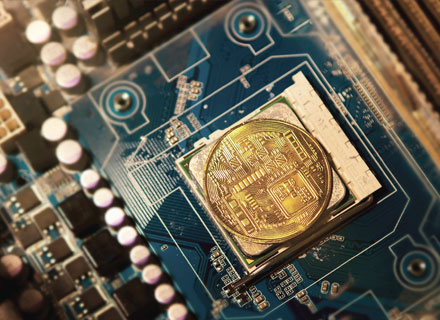

For thousands of years, gold has stood as a symbol of wealth, stability, and trust. Civilizations have hoarded it, traded it, and used it as the foundation for entire monetary systems. Yet, despite its enduring appeal, gold has always come with practical baggage.
It is heavy, it needs to be stored securely, and moving it across borders or between owners is slow and expensive. In a world that increasingly runs on digital speed, gold has remained stubbornly analogue.
Tokenised gold is changing that. It takes the oldest store of value in human history, and gives it a passport into the digital economy. As more of our everyday devices and systems begin talking to each other and to blockchains directly, tokenised gold may end up being just one small piece of a much larger transformation. To understand why this matters, it helps to break the concept down from the ground up.
As David Tait, CEO of the World Gold Council, put it earlier in 2026, “Gold faces a rapid and pervasive digital transformation.” In financial services, the metal must evolve to keep its place in the system.
At its simplest, tokenised gold is a digital token that represents ownership of a specific amount of physical gold. Each token is typically backed by a fixed quantity, often one gram or one troy ounce, of real gold bullion sitting in a vault somewhere in the world. The token itself lives on a blockchain, the same technology that underpins cryptocurrencies like Bitcoin and Ethereum.
Smart Contracts Explained
The link that connects the digital token to the physical metal is something called a smart contract. A smart contract is essentially a self-executing computer programme stored on a blockchain. It automatically carries out an agreement once certain conditions are met, without needing a bank, broker, or middleman to approve each step.
In the case of tokenised gold, smart contracts manage the rules around minting new tokens, transferring ownership, and redeeming tokens for physical gold. When a company issues new tokens, the smart contract typically requires proof that an equivalent amount of gold has been added to the vault.
When someone wants to redeem their tokens for actual gold bars, the smart contract handles the process of burning, or permanently removing, those tokens from circulation while triggering the physical delivery process.
This automation removes a lot of the friction and human error that traditionally came with gold trading. There is no need to physically inspect a vault every time a trade happens. The smart contract and the blockchain record do that verification work continuously.
Trust You Can Verify
Of course, none of this works without trust in the actual gold sitting in storage. This is where audited vaults come in. Companies that issue tokenised gold typically store their physical reserves in secure, professional-grade vaults, often located in established gold trading hubs.
To maintain credibility, these vaults are regularly checked by independent third-party auditors. These auditors verify that the amount of gold physically stored matches the number of tokens issued. If there are one million tokens in circulation, each representing one gram of gold, the audit confirms there really are one million grams, or one thousand kilograms, sitting in the vault.
Many issuers also allow token holders to view detailed information about the specific gold bars backing their holdings, including serial number, weight, and purity. Some go a step further by publishing real-time, or near real-time, proof of reserves, giving people an ongoing window into whether the digital tokens remain fully backed.
This question of trust sits at the heart of how the wider industry is now thinking about the asset class.
Matthias Tauber, managing director and senior partner at Boston Consulting Group, observed, “The question is no longer whether gold will be digital. It’s how it can participate in modern financial systems without compromising physical integrity.”
How Ownership Actually Works
For an everyday investor, the process of getting involved with tokenised gold is surprisingly straightforward. Most platforms allow users to purchase tokens using either traditional currency or cryptocurrency. Once purchased, the tokens sit in a digital wallet, similar to how you might hold Bitcoin or Ethereum.
From there, the tokens can be used in several ways. They can simply be held as a long-term store of value, much like owning physical gold but without the storage headaches. They can be sent to other people anywhere in the world in minutes, regardless of time zones or banking hours. They can also be sold back to the issuer, or traded on cryptocurrency exchanges for other digital assets or cash.
Interestingly, many tokenised gold products allow holders to redeem their tokens for actual physical gold, provided they meet certain minimum quantity requirements. This means the digital token is not just a representation, it carries a real claim that can be converted back into the tangible asset whenever the holder chooses.
Plugging Into Decentralised Finance
One of the most transformative aspects of tokenised gold is how it connects to the broader world of decentralised finance, often shortened to DeFi. DeFi refers to a growing ecosystem of financial services, including lending, borrowing, and trading, that operate without traditional banks or financial institutions acting as middlemen.
Since tokenised gold exists on a blockchain, it can plug directly into these DeFi platforms. Someone holding tokenised gold could use it as collateral to avail a loan in a digital currency, without ever selling their gold.
They could provide it to a lending pool and earn interest from other users who borrow against it. They could swap it instantly for other digital assets on decentralised exchanges, all without needing approval from a bank.
This idea of gold actively working within financial systems, rather than sitting passively in a vault, is exactly what industry leaders are now pushing toward.
Tait has spoken about infrastructure that would let participants ‘pass gold digitally around the gold ecosystem, as collateral, for the first time’, pointing out that gold has traditionally been viewed as a static, unyielding asset with untapped potential.
This is a genuinely new development in financial history. For the first time, an asset that has represented stability and tradition for millennia can now actively participate in fast-moving, programmable financial systems, all while the underlying physical gold remains safely locked away in a vault.
A World Where Everything Is on Chain
To really appreciate where tokenised gold might be heading, it helps to zoom out and look at a much bigger trend reshaping technology, the Internet of Things, or IoT. IoT refers to the growing network of everyday physical objects, from refrigerators and thermostats to shipping containers and factory machines, that are connected to the internet, and capable of collecting and exchanging data automatically.
Right now, most of this data sits in private company databases, isolated from each other and largely invisible to the public. But a powerful idea is gaining momentum. What if these devices could record their data directly onto a blockchain, creating permanent, verifiable, and shared records that anyone could check?
Imagine a vault holding gold reserves equipped with IoT sensors that continuously measure weight, temperature, humidity, and even motion. Instead of relying solely on periodic human audits, these sensors could feed real-time data straight onto the blockchain, automatically confirming, moment by moment, that the gold backing each token is exactly where it should be. A sudden change in weight could trigger an automatic alert, or even pause trading of the related tokens, all without a single human needing to intervene immediately.
This is part of a much larger shift that many technologists believe is coming, a future where blockchain becomes the invisible infrastructure connecting almost everything. Shipping containers could log their location and condition as they cross oceans, with smart contracts automatically releasing payments once goods are confirmed delivered in good condition.
Solar panels and electric vehicle batteries could trade excess energy with neighbours automatically, with payments settling instantly on a blockchain. Supply chains for food, medicine, and electronics could become fully transparent, with every step from factory to shelf permanently recorded and impossible to fake.
In this kind of world, tokenised gold is not an isolated experiment. It is an early example of a much broader pattern, physical things and real-world data being represented, verified, and exchanged through blockchain technology, often with little or no need for human middlemen. Gold just happens to be one of the first and most natural assets to make this leap, given how closely its value has always depended on questions of authenticity, location, and trust.
Why This Matters for Global Financial System
The importance of tokenised gold extends well beyond convenience for individual investors. On a global scale, it represents a meaningful step toward democratising access to an asset that has historically been difficult for ordinary people to own in meaningful quantities, especially in regions with limited banking infrastructure.
In many parts of the world, buying and securely storing physical gold is simply not practical for the average person. Tokenised gold removes that barrier. Someone with just a smartphone and an internet connection can own a fraction of a gold bar, something that would have been unthinkable a generation ago.
It also offers a potential hedge against currency instability. In countries where local currencies are volatile or where access to stable foreign currencies is restricted, tokenised gold provides an alternative way to preserve value, all while remaining liquid and easily transferable.
From a broader financial systems perspective, tokenised gold represents a bridge between two worlds that have often operated separately, traditional commodity markets and the emerging digital asset economy.
As more real-world assets, from real estate to bonds to commodities, follow gold’s lead and become tokenised, and as IoT devices increasingly feed real-world data onto blockchains, we may be witnessing the early stages of a fundamental shift in how value itself is stored, verified, transferred, and used.
Tokenised gold has taken one of humanity’s oldest and most trusted assets and equipped it with the speed, accessibility, and programmability of modern digital finance. It does not ask people to abandon what gold has always represented, security, permanence, and tangible worth. Instead, it simply gives that value a new way to move through the world.
As physical objects become increasingly connected, and as more of the data and assets that matter to our lives find their way onto blockchains, tokenised gold offers an early glimpse of what this future might look like, one where trust is not just promised by institutions, but continuously demonstrated by the technology itself.