

Ferrari has spent the better part of two months arguing with itself in public. In May, it unveiled the Luce, its first fully electric car. Within weeks, it followed up with a limited-run V12 fitted with a gated manual shifter and a clutch pedal, the automotive equivalent of clearing its throat and insisting nothing has changed. The contrast is telling for a brand that built its mystique on staying ahead of its own customers. It raises a genuine question. Is Ferrari’s retreat into heritage a considered hedge, or a sign that fear of its own base is now shaping the next-generation lineup more than vision is.
What went wrong with the Luce
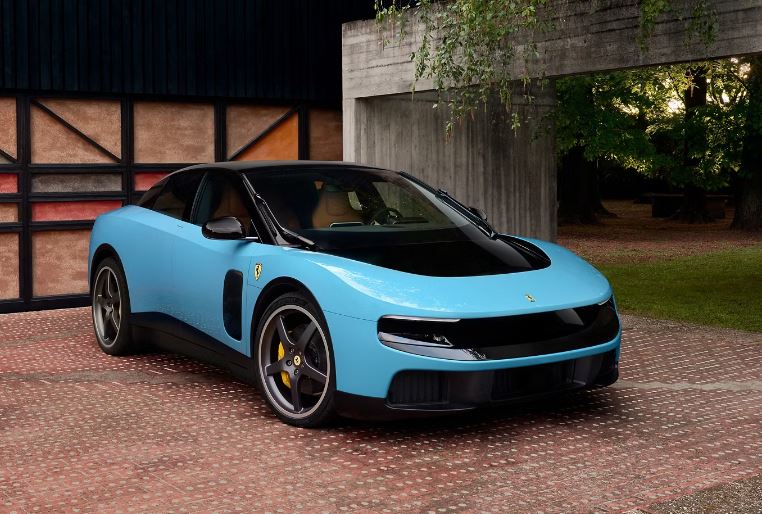
The Ferrari Luce sparked investor concern and social media backlash over its unconventional styling, with shares falling 8.4% after the May 25 unveiling. The car is priced at approximately 550,000 euro (roughly USD 640,000). The criticism was not really about the powertrain. Critics focused on design, emotion and brand heritage, feeling the minimalist, Jony Ive-influenced aesthetic departed too radically from what a Ferrari is supposed to look and feel like.
One widely read review put it more bluntly, noting that the backlash focused less on the fact that it’s electric than on the fact that it doesn’t look like the low-slung Ferrari many people expected, adding that strip away the badges and most people would not recognise it as a Ferrari at all. Adding to the identity crisis, the Luce is technically a four-door liftback rather than a sports car or supercar in the traditional sense, which for a marque built on two-seat theatre is not a small detail.
Rival reactions sharpened the point. Lamborghini’s chief executive Stephan Winkelmann defended his company’s decision to delay its own EV plans in favour of plug-in hybrids, calling it the right approach and effectively arguing that buyers were not yet ready. For a segment sold almost entirely on emotion, that is a serious warning.
The Manuale as the fix
Ferrari’s response arrived fast. On 3rd July it unveiled the 12Cilindri Manuale, a special series limited to 1,499 units, built with an open-gate six-speed manual by-wire system and a clutch pedal in the footwell, alongside a Tailor Made specification inspired by the 1968 365 GTB4. Under the bonnet sits a naturally aspirated 6.5 litre V12 producing 830 cv and revving to 9,500rpm, capable of 0-100 km/h in around three seconds and a top speed above 340 km/h.
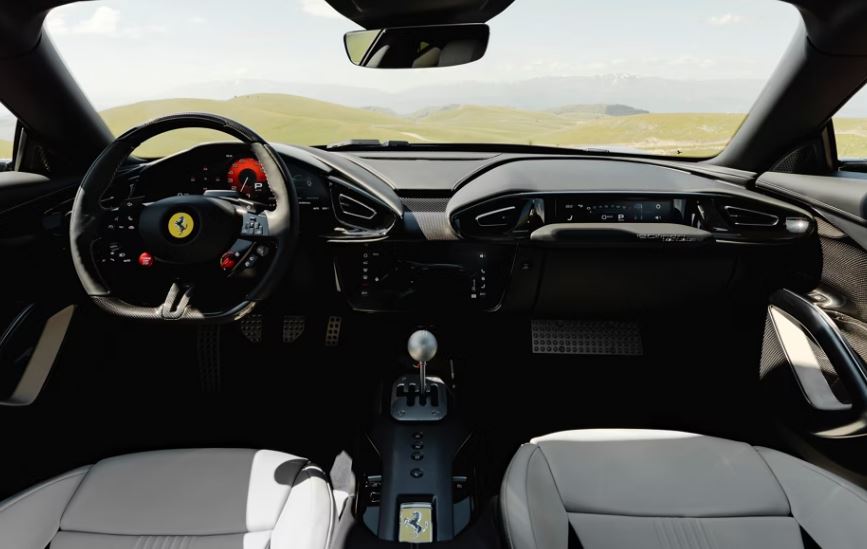
It is the first new Ferrari fitted with a real clutch pedal and gated shifter since the 599 GTB Fiorano ended production in 2012, a fourteen-year gap. Pricing starts from 590,000 euro in Italy, with first deliveries scheduled for the Q1 2027.
It is worth noting the gearbox is not mechanically connected to the wheels at all. Two sensors read the position of the shift lever and clutch pedal, with an electronic controller translating those inputs into hydraulic commands sent to the standard eight-speed dual-clutch transmission. It is theatre engineered to feel authentic, not a return to old hardware.
Ferrari insists the timing is coincidental rather than reactive. The Manuale has been two years in development, and the company has said it will not ask clients who want its special cars to buy a Luce as a condition. Whether or not the timing was deliberate, the messaging lands as pure reassurance for the traditionalist end of its client base.
A business plan already hedging its bets
This tension was baked into Ferrari’s own strategy well before the Luce arrived. At its Capital Markets Day in October 2025, Ferrari cut its 2030 fully electric target to just 20% of the lineup, down from the 40% it had promised in 2022, with combustion and hybrid models splitting the remaining 80% evenly.
The market punished the retreat rather than rewarding the caution. Shares fell as much as 16%, their steepest single-day drop since the company’s 2016 listing, wiping out around 13.5 billion euro in market value.
Investors had been promised aggressive electrification and growth, and got a slower, more conservative version of both instead. On the product side, Ferrari committed to an average of four new launches per year through to 2030, so the Luce and the Manuale are early data points in a much longer experiment, not the whole story.
Is traditionalism actually holding Ferrari back
There is a reasonable case that it is. Chinese EV makers are already producing four-figure horsepower electric performance cars at a fraction of Ferrari’s price, and regulatory pressure on combustion engines across Europe is not going away.
A brand that keeps reaching for the V12 every time a new idea meets resistance risks training its own customers to reject anything unfamiliar, which makes each future launch harder rather than easier. The Luce’s design missteps were real, but retreating to nostalgia every time does not fix a design problem, it just avoids the next one.
The counter case is just as strong. Ferrari’s entire business is built on selling scarcity to people who already have everything, and the company’s own stated philosophy is to sell one car fewer than the market demands.
That model rewards patience over speed. Unlike a mass-market EV maker, Ferrari does not need to win over the whole market at once. It needs to convince maybe a few thousand people a year, and those buyers are demonstrably not there yet for a four-door electric liftback, whatever its horsepower figure.
Why some unconventionality still makes sense
None of this means Ferrari should stop pushing. Its cash generation from V12 and hybrid sales gives it room to experiment that most manufacturers do not have, and a flop like the Luce is survivable precisely because the ICE and hybrid business is throwing off enough profit to absorb it.
The smarter reading of events is not that Ferrari abandoned its next-generation ambitions for the Manuale, but that it is learning, expensively, which kind of unconventional its buyers will tolerate. Bold styling that breaks with sixty years of proportion was a bridge too far. A gearbox that fakes mechanical feel through software, oddly, was not.
The bigger picture
Ferrari is not choosing between tradition and progress so much as trying to sell both at once, to two different sets of customers who may never fully overlap.
That is a harder trick to pull off than either extreme, and the coming years of its 2030 plan will show whether Maranello can keep threading that needle, or whether it ends up known as the brand that flinched the moment its own fans pushed back.