
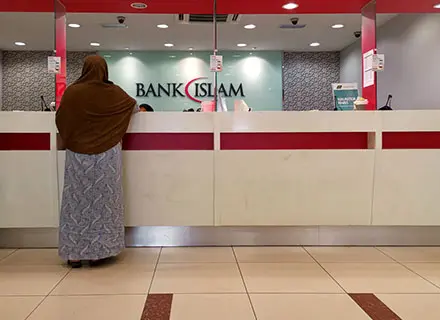

Despite the ongoing Iran war taking its toll on the global financial landscape, including Islamic banking and finance, Malaysia’s Islamic finance ecosystem has stood out due to its remarkable resilience and structural maturity.
As per Bashar Al Natoor, managing director and global head of Islamic Finance at Fitch Ratings, the Southeast Asian country has remained a unique “local story” that has successfully buffered itself against external shocks, including geopolitical volatility.
“During the crisis, the Gulf Cooperation Council (GCC) debt markets saw minimal dollar issuances, rising yields, and tighter liquidity, while Malaysia’s market remained resilient with steady foreign investor participation, growing non-sovereign issuance, and innovations like tokenized sukuk, supported by strong ringgit stability and regulatory development. It’s impacted by its own local story,” the senior official told the StarBiz.
Al Natoor expects a resilient debt capital market that will continue to expand as envisioned in Malaysia’s local Capital Market Master Plan (2026 to 2030). Fitch also predicts the nation’s debt capital market (DCM) to expand modestly to reach USD 640 billion outstanding by the 2026-end.
“This growth is anchored by a deep domestic investor base, stable yields, and the ringgit’s performance as one of Asia’s most resilient currencies. Unlike the GCC, where US dollar issuances were scarce during the height of the conflict, activity in the Malaysian market continued almost as normal,” the ratings agency remarked.
“A key trend for the remainder of 2026 is the strategic shift from sovereign to non-sovereign debt. While the Malaysian government is engaging in fiscal consolidation, aiming to reduce federal debt to 60% of GDP by 2030, the private sector is picking up the mantle as well. Non-sovereign issuance rose by 17% year-on-year in the first five months of 2026, accounting for 68% of total DCM activity,” said Bashar, terming the transition a sign of market maturity.
“We expect more non-sovereign to go and issue into the market, and I think that stands out,” he stated, noting that corporate and bank issuers are increasingly defining the market’s trajectory.
“Banks remain the largest non-sovereign contributors, often using sukuk for refinancing and opportunistic funding. The local Islamic banking sector, meanwhile, continues to outpace conventional growth. Islamic banking assets grew by 7% to reach USD 312 billion by the end of 2025, while conventional assets grew by only 4%,” Fitch said further.
Talking about the growth of the Islamic financial ecosystem in Malaysia, the industry now represents 44% of the Southeast Asian country’s total system loans, nearing the Anwar Ibrahim government’s 50% target.
Bashar attributed this success to the most “evolved ecosystem” in the world, which integrates issuers, investors, takaful (Islamic insurance), haj funds, and pension funds like the Employees Provident Fund (EPF) into a cohesive syariah-compliant framework.
“Malaysia has cemented its position as the world’s largest environmental, social, and governance (ESG) sukuk market, holding a 31.6% share of global outstanding ESG sukuk as of mid-2026. ESG-linked debt in the country rose by 44% to USD 20 billion, heavily supported by government tax incentives. Sukuk remains the dominant vehicle for these sustainable investments, accounting for 94% of total ESG debt issuance,” Fitch noted.
Malaysia is also taking a lead role in terms of innovating in the industry. The Southeast Asian nation saw its first tokenized sukuk issuance in the first half of FY 2026. New regulations for private debt will likely further enable this niche.
Bashar, however, warned the use of technology could present a challenge for Malaysia’s Islamic financial ecosystem, as technological advancements are vital for maintaining a competitive edge.
“While the Islamic capital market is domestic-centric, foreign interest remains stable. Foreign holdings of government debt stood at 21.6% at the end of the first quarter of financial year 2026, a high figure compared to other Organization of Islamic Cooperation countries,” he told the StarBiz.
To further attract international capital, particularly from the GCC, the Anwar Ibrahim government plans to launch its first wakalah bi al-khadamat sukuk in 2026. This will bridge the gap between Malaysian and GCC syariah interpretations, potentially opening new inflows of Middle Eastern investments into the Southeast Asian nations.