
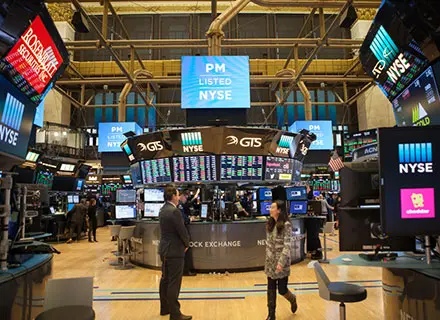

Wall Street’s biggest lenders have kicked off the US earnings season with a common message: Investment banking is back in business. Q2 results from JPMorgan Chase, Bank of America, Citigroup, Goldman Sachs and Wells Fargo showed that a revival in dealmaking, buoyant capital markets and booming trading activity have become the principal drivers of profit growth, overshadowing traditional lending for the first time since interest rates began rising.
The results suggest that corporate America has regained confidence after two years of subdued mergers and acquisitions (M&A) activity and a prolonged drought in initial public offerings (IPOs).
Companies returned to debt and equity markets during the quarter, while volatile financial markets generated strong client activity that boosted trading desks across Wall Street.
Collectively, the five banking giants earned close to USD 49 billion in quarterly profit, highlighting the strength of the industry’s recovery and providing a positive signal for the broader American economy.
Breaking down the numbers
JPMorgan Chase once again led the pack, reporting net income of USD 21.2 billion, or USD 16.9 billion excluding one-off items, on revenue of USD 57.4 billion. Investment banking fees jumped 45%, while equities trading revenue surged 86%, helping the bank post another record-breaking quarter.
A wave of big-ticket IPOs and dealmaking made the venture the highest gainer among the American banks. The investment banking division, now run by recently promoted executive Doug Petno, rode a sharp rebound in the American IPO market, led by the blockbuster market debut of Elon Musk’s SpaceX. JPMorgan was among the lead underwriters on the deal.
The bank has raised its forecast for 2026 expenses to USD 107.5 billion from USD 105 billion on the back of higher volume and revenue-related expenses. JPMorgan’s market value currently stands at more than USD 920 billion, very close to Wall Street’s elite trillion-dollar club.
One of the major talking points from JPMorgan’s earning report was the 30% yearly jump in its investment banking fees. The bank was part of several landmark transactions during Q2, including as co-adviser on NextEra Energy’s USD 67 billion merger with Dominion Energy, apart from being the lead active bookrunner on Alphabet’s USD 85 billion equity offering.
JPMorgan gained massively from the positive momentum seen in the global M&A activities, whose value, so far in 2026, has gone beyond USD 3 trillion, as per the Dealogic data. The bank’s equity trading revenue surged 86%, while fixed-income trading revenue increased 6%.
Bank of America also exceeded market expectations, reporting quarterly profit of USD 9.1 billion, up 27% from a year earlier, on revenue of USD 31.6 billion. The bank benefited from resilient consumer spending, higher investment banking fees, and solid trading income as clients remained active in financial markets.
The venture’s Q2 sales and trading revenue jumped 33% to a record USD 7.1 billion from USD 5.3 billion a year earlier, outpacing CEO Brian Moynihan’s expectations of a 15% rise. Equities revenue climbed 70% to USD 3.6 billion.
The bank reported a net income of USD 9.1 billion, or USD 1.21 per share, in the three months ended June 30, compared with USD 7.2 billion, or 90 cents per share, a year earlier. Shares of the bank, with about an 8% gain so far in 2026, have outperformed peers JPMorgan and Wells Fargo.
Just like JPMorgan, an upbeat global M&A ended up benefiting Bank of America as well. Its securities division acted as a joint book-running manager for the SpaceX IPO. Along with JPMorgan, the venture was also the financial advisor for NextEra Energy’s USD 66.8 billion deal to buy Dominion Energy. BofA’s total investment banking fees jumped 50% to USD 2.1 billion in the second quarter.
The bank’s net interest income (NII), the difference between what it earns on loans and pays out on deposits, rose 9% to USD 16 billion in the quarter from a year earlier. Average loans and leases rose 8% as well.
CFO Alastair Borthwick said that the positive forecast for full-year NII growth was supported by anticipated loan and deposit growth, fixed-rate asset repricing, and balance sheet optimization.
Citigroup delivered one of the strongest percentage increases among its peers. Quarterly profit rose 45% to USD 5.8 billion on revenue of USD 24.8 billion, driven by its strongest investment banking performance in several years and robust trading revenues.
Goldman Sachs, whose business is more heavily dependent on Wall Street activity than consumer banking, enjoyed one of the biggest earnings rebounds of the quarter.
Net income climbed 78% to USD 6.6 billion as a resurgence in M&A advisory work, equity underwriting, and market volatility fueled a sharp increase in investment banking and trading income.
Wells Fargo, traditionally more reliant on commercial and retail banking, also reported better-than-expected results. The bank posted a quarterly profit of USD 6.4 billion on revenue of USD 22.6 billion, with stronger commercial banking performance, improving credit quality, and higher fee income offsetting pressure on net interest income.
Analyzing things
After two years during which higher interest rates made net interest income the primary earnings driver, investment banking has once again taken center stage.
The recovery reflects a marked improvement in corporate confidence. Businesses that delayed acquisitions, public listings, and debt issuance during periods of economic uncertainty are returning to capital markets as financing conditions improve and expectations grow that the US Federal Reserve could begin easing monetary policy over the coming year.
At the same time, heightened volatility across equity, bond, and currency markets generated increased client activity, providing a significant boost to trading operations.
For Wall Street’s largest banks, this shift is important because it broadens earnings beyond traditional lending. While loan growth remains modest and deposit competition continues to pressure margins, stronger fee income from advisory work, underwriting, and trading offers a more diversified and sustainable source of profitability.
Another encouraging takeaway from the earnings was the resilience of the US consumer. Despite elevated borrowing costs and persistent inflation, household spending has remained healthy, and banks have not reported a significant deterioration in credit quality. Loan losses remain broadly contained, suggesting consumers continue to manage higher interest rates better than many economists had anticipated.
Technology companies are rushing to fund AI infrastructure, a trend that will further boost dealmaking and financing activities for Wall Street, generating lucrative fees from capital raising and loans.
Goldman, which has already benefitted from its status of being the lead left underwriter on the SpaceX IPO, is all set to play a major role alongside Morgan Stanley in the upcoming listing of Anthropic. Citigroup, on the other hand, as a joint global co-ordinator on the SK Hynix sale, earned over USD 70 million from the deal.
BofA, since 2025, has helped raise nearly USD 500 billion for AI-related companies, accounting for 60% of such fundraising across investment-grade debt, while leveraging finance and equity capital markets.
Meta Platforms is working with Morgan Stanley and JPMorgan Chase on a roughly USD 13 billion financing package for a data center in El Paso, Texas. As per JPMorgan’s Chief Financial Officer Jeremy Barnum, the firm is seeing decent capital expenditure and loan demand from companies that may not be AI-related but have an indirect link.
Still, caution remains
Nevertheless, bank executives struck a cautious tone about the second half of the year. Uncertainty surrounding US trade policy, geopolitical tensions in the Middle East and Europe, and the trajectory of inflation could all influence corporate activity and financial markets in the months ahead. A slower pace of interest-rate cuts than currently anticipated could also affect borrowing demand and capital market activity.
Investors, meanwhile, responded cautiously despite the strong results. Analysts noted that many of the positive earnings drivers had already been priced into bank shares, while rising operating expenses and lofty valuations tempered enthusiasm. Even so, the first batch of earnings has delivered a strong opening to the reporting season.
Rather than relying solely on the benefits of higher interest rates, America’s biggest lenders are once again generating growth from the businesses that traditionally define Wall Street—advising companies on mergers, underwriting stock offerings, and helping investors navigate increasingly active financial markets.
Because the country’s largest banks sit at the center of corporate finance, consumer lending, and capital markets, their performance is widely regarded as an early indicator of economic momentum. Strong earnings across all five institutions suggest businesses are investing again, consumers remain willing to spend, and financial markets are regaining confidence.
If those trends continue through the second half of the year, Wall Street’s biggest banks may have done more than deliver impressive quarterly results – they may have provided the clearest indication yet that corporate America is entering a new phase of recovery, with investment banking, rather than interest rates, leading the way.