
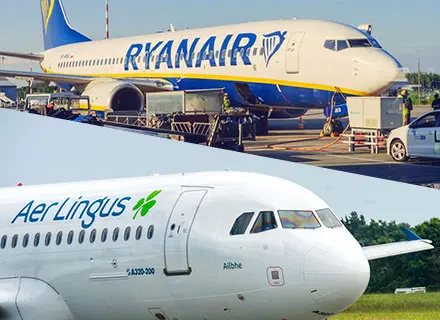

Higher fuel costs due to the ongoing Iran war and the disruption at the Strait of Hormuz have started weighing big upon the United Kingdom’s aviation circle, with Ryanair’s profit slumping by a third in the April-June quarter. The budget carrier also anticipates a downfall in its summer fares amid consumer nervousness around the geopolitics and its impact on the broader economy.
The weak results for Ryanair, Europe’s largest airline by passenger numbers, are the latest sign of how the five-month-old Iran war is putting massive pressure on aviation companies, especially budget carriers, by keeping the oil prices at elevated levels.
Setting aside the truce that was agreed upon last month, American forces hit Iran for a ninth consecutive day, with Tehran returning the favor with equal intensity. However, the nation’s foreign ministry also expressed eagerness to restart negotiations with Washington based on national interests. The geopolitical flip-flop has also resulted in extreme volatilities in oil prices.
“The price of our 20% unhedged fuel doubled in the quarter, and fares fell 6%, primarily we think due to the impact of the Middle East conflict and the timing of Easter,” Chief Executive Michael O’Leary said in a video presentation.
The Irish airline reported after-tax profit of 538 million euro (USD 616 million) for its fiscal first quarter through June 30, down 34% from the 2025 and short of a forecast of 579 million euro in a company poll of analysts. The airline also said it was too early to issue a full-year profit forecast, which would depend heavily on last-minute bookings over the remainder of the summer.
However, Ryanair still sees itself better positioned than most rivals because 80% of its fuel requirements to the end of March are hedged at USD 67 per barrel, compared to recent peaks around USD 150.
Chief Financial Officer (CFO) Neil Sorahan said the airline stepped in to hedge 15% of its fuel needs for the year-to-date-March 2028 at USD 85 per barrel following the June interim ceasefire between Iran and the United States.
“Weakness in fares is likely to be short-lived, however, as European aviation is facing a wave of consolidation and airlines going bust that will take out capacity. I wouldn’t be surprised to see a number of casualties this winter … there are a few people very much on the edge,” Sorahan said.
The Ryanair CFO also sees a significant capacity cut in Europe in the coming months, which, as per him, “could be positive for pricing, and a lot more may be taken out in summer 2027.”
“The possible sale of British rival easyJet, which is the subject of a bidding war, could also lead to a reduction in capacity and could trigger a domino effect of consolidation in Europe,” Sorahan said.
Talking about the impact of the surging oil prices on the UK aviation circle, Irish airline Aer Lingus could cut up to 500 jobs as part of a reorganization, citing high costs and a challenging economic environment.
“The airline, which has already cut senior management roles by a quarter, plans to reduce wider employee costs by about the same level while making network changes to remove lower-margin flying,” it said last week.
That would lower the carrier’s overall capacity by 6%, including some long-haul and short-haul routes, it said, adding that it was also focused on reducing supplier costs.
Aer Lingus’ parent company, London-listed IAG, issued a profit warning in May 2026, cautioning that high jet fuel costs and supply disruptions due to the war would weigh more heavily on earnings than previously expected.
“Our accelerated transformation aims to … ensure the airline is a strong investment case and able to weather the turbulence in our industry,” Aer Lingus Chief Executive Lynne Embleton remarked.
The airline, which operates over 100 routes between Europe and North America, is aiming for an operating margin of 12%-15% over the medium term to attract investment.