
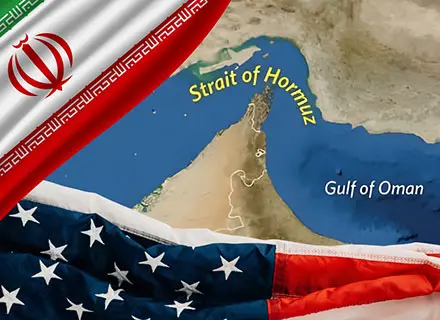

For decades, the Strait of Hormuz has been the single most consequential 33-kilometre stretch of water in global trade. Roughly a fifth of the world’s oil and a significant share of its liquefied natural gas pass through this narrow gap between Iran and Oman. Every Gulf economy has, in one way or another, built its prosperity on the assumption that this artery stays open.
That assumption has been tested more severely in 2026 than at any point in recent memory, and the Gulf’s response is now visible in trucks, pipelines and ports rather than just in policy papers.
In the second week of July, Dubai-based DP World added 700 lorries to its regional fleet, a move that will support up to 35,000 additional trips a month across the GCC.
The company said the fleet would serve first, middle and last-mile logistics, covering both containerised and non-containerised cargo, and that it forms part of a wider effort to build bonded, customs-controlled road corridors linking east coast gateways directly to Jebel Ali Port.
DP World’s logistics chief for the GCC, Raveen Guliani, framed it as a response to what customers now demand. He claims they need certainty and reliability in a region where the sea route can no longer be taken for granted.
That single announcement is a small piece of a much larger shift. Since fighting between the United States and Iran erupted in February and repeatedly flared since, Gulf states and the companies operating within them have moved from treating Hormuz contingency planning as an occasional exercise to treating it as core infrastructure strategy.
The question now being asked in boardrooms from Riyadh to Abu Dhabi is not whether to reduce dependence on the strait, but how far that dependence can realistically be cut, and how quickly.
A war that keeps reopening the wound
The scale of the disruption explains the urgency. Iran’s closure of Hormuz to non-Iranian vessels forced Gulf producers to shut in as much as 12 million barrels per day of oil at the peak of the crisis. Iraqi output collapsed from around 4.3 million barrels a day to under 1.5 million in May.
Kuwait declared force majeure. Bahrain’s Sitra refinery was struck repeatedly. A ceasefire framework reached in June briefly restored some shipping, but it has proved fragile.
Strikes and counter-strikes resumed in July, tankers were hit inside the strait, and daily transits have fallen from around 135 ships before the war to fewer than 40 in recent weeks, according to shipping data cited in regional reporting.
Washington has since said it will reimpose a naval blockade of Iranian ports and floated the idea of tolls (20% transit fee) for “safe passage” of ships through the strait, a proposal Tehran has publicly haggled over rather than rejected outright.
As per the latest updates, the Donald Trump administration has dropped the idea, pursuing instead trade and investment agreements with Gulf states.
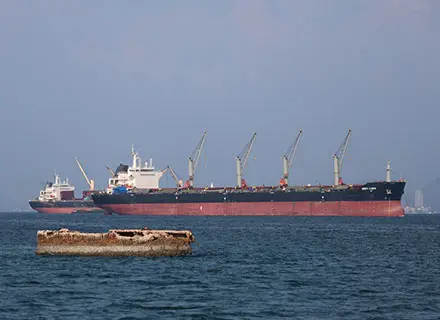
Every time the waterway closes or comes under threat, the economic cost lands immediately on Gulf exporters and on global energy and shipping prices. That repeated shock, rather than any single event, is what has pushed the region towards what might be called a “Hormuz Plus One” strategy.
The idea is to keep using the strait when it is open, but build enough parallel capacity on land and along the Red Sea and Gulf of Oman coasts that a closure no longer means an economic stop.
Saudi Arabia’s pipeline bet
Saudi Arabia’s answer predates the current war by more than four decades. The East-West Pipeline, also known as Petroline, was built in the 1980s during the Iran-Iraq war specifically to move crude from the Kingdom’s eastern fields to the Red Sea port of Yanbu without touching Hormuz.
It has proved its worth this year with Aramco pushing the line to its full capacity of seven million barrels a day within days of the first strikes, and Yanbu exports reaching around five million barrels a day since.

That capacity, however, only partly offsets what Hormuz can carry. Roughly 15 million barrels a day of crude used to move through the strait before the war, meaning even a maxed-out Petroline covers well under half of that flow.
This is why Riyadh is reportedly in preliminary talks to expand the pipeline’s capacity by a further one to two million barrels a day, according to sources cited by Reuters, potentially with a smaller secondary line dedicated to refined products.
The project would take years and cost billions, and would require changes to how Saudi crude is priced for international buyers.
Crucially, the Kingdom is also discussing whether the expanded system could carry crude on behalf of neighbours who have no pipeline options of their own, Kuwait, Bahrain and Qatar among them. Kuwait’s state oil company has confirmed talks are under way with both Saudi Arabia and the UAE to find space for its barrels.
The UAE goes further, and faster
If Saudi Arabia’s approach is decades-old infrastructure being stretched, the UAE’s is a newer and broader build-out. Abu Dhabi’s existing Habshan-Fujairah pipeline already carries up to 1.8 million barrels a day of crude to the Gulf of Oman coast, bypassing Hormuz entirely. ADNOC is fast-tracking a second pipeline along the same route, reportedly around half complete, aimed at doubling that capacity by 2027.
What is more striking is that the UAE strategy has moved well beyond oil. With container traffic at Jebel Ali, Dubai’s flagship port and one of the world’s largest, having fallen by as much as 95% at the height of the Strait’s closure, DP World is now in talks to build an entirely new multipurpose port and container terminal at Fujairah, on the Gulf of Oman coast, according to reporting by the Financial Times. Cargo landed there would move onward to Dubai, Abu Dhabi and other commercial centres by road, dovetailing directly with the kind of trucking capacity DP World has just expanded.
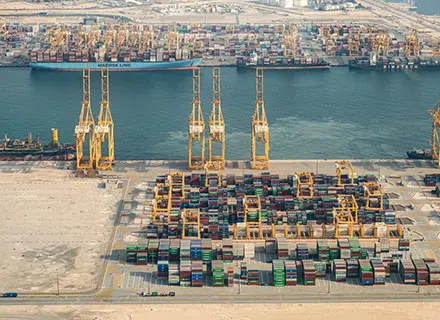
Parallel expansion is under way at Khor Fakkan, where Sharjah-based Gulftainer has committed roughly two billion dollars to grow capacity, and at Dibba, with UAE officials scoping out at least one further harbour along the same coastline.
The government’s own language leaves little ambiguity about intent. UAE Minister of Foreign Trade Thani Al Zeyoudi has said the country is aiming for “Zero Hormuz Dependency,” regardless of whether the Strait remains open. New rail links, roads and pipelines are being built to connect these eastern ports and fields to the country’s population and industrial centres, an implicit acknowledgement that ports alone cannot absorb the shift without inland logistics to match.
Where the strategy runs into limits
Even so, “Hormuz Plus One” is not the same as “Hormuz Optional.” Analysts note that the conflict has focused regional minds on the risks of relying on a single chokepoint, but the physics of oil and gas infrastructure impose hard limits on how far that reliance can fall. Kuwait, Bahrain and Qatar have no pipelines of their own and depend entirely on Saudi or Emirati goodwill and spare capacity.
Iraq’s northern pipeline to Turkey remains dogged by disputes and runs well below its potential.
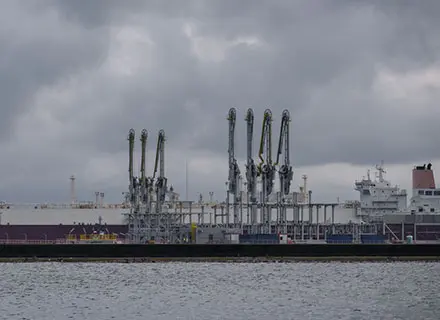
Qatar’s economy rests overwhelmingly on liquefied natural gas (LNG), which cannot simply be piped overland in the way crude can; Doha is examining several alternatives, including routing through Saudi territory, but none offers anything close to a full substitute for seaborne LNG carriers transiting Hormuz.
Containerised trade faces its own version of this problem. Trucking and rail can absorb meaningful volumes, DP World’s overland corridors have already moved more than 350,000 twenty-foot equivalent units since the disruption began, but that is a fraction of the more than 15 million containers Jebel Ali alone handles in a normal year.
Road networks, customs posts and warehousing in Fujairah, Khor Fakkan and Dibba are already under visible strain from the diversion so far, with weekly container movements through Khor Fakkan rising roughly eightfold and daily truck traffic climbing from around 100 vehicles to close to 8,500.
A structural shift, not a full escape
What is emerging, then, is not an exit from Hormuz but a hedge against it. Saudi Arabia’s pipeline expansion and the UAE’s port and pipeline build-out will, over the next two to three years, meaningfully raise the volume of oil that can move without touching the strait, and DP World’s road and rail investments will do the same for containerised goods.
Together, these efforts could shave a serious portion off the economic damage of any future closure, particularly for crude oil, where physical bypass infrastructure already exists and is being expanded.
But total independence from Hormuz remains out of reach for the foreseeable future, especially for gas, for smaller Gulf states without their own pipelines, and for the sheer volume of containerised trade that still needs a deep-water port inside the strait to function efficiently.
The Gulf is not abandoning Hormuz. It is building a costly, overlapping insurance policy around it, one truck, pipeline and port terminal at a time, in the hope that the next time tensions flare near Bandar Abbas, the region’s economies will not have to hold their breath quite so completely.