
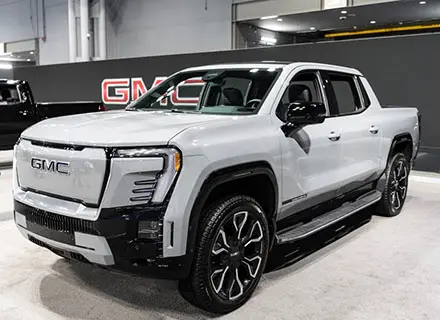

Amid the ongoing tariff warfare between the United States and Canada, American automotive giant General Motors’ Canadian workers on Sunday approved an agreement that would build a new heavy-duty truck in Ontario, part of a pledge by the company to invest in a North American nation.
However, the timing of the development is precariously interesting, with Canada’s auto sector already grappling with 25% US duties on vehicles.
President Donald Trump, meanwhile, has vowed to lift the ratio to 50% from January 1, 2027 onwards, putting further pressure on the industry, which is known for having a deeply interconnected manufacturing and supply chain ecosystem across North America.
According to details of the agreement released by the Canadian union Unifor on Saturday, GM offered to spend CUSD 144 million to add the next-generation heavy-duty GMC Sierra truck to a plant in Oshawa and pledged not to immediately sell or close a second assembly plant in Ingersoll, Ontario.
“GM has promised to invest over CUSD 1 billion (USD 720 million) in Canadian plants. That includes a CUSD 691 million commitment to support production of new V8 engines in Ontario that was previously announced in April,” stated the union, which represents 4,600 GM workers in the province.
The deal offered Canadian workers a yearly 3% wage increase over the next three years.
“The new agreements include meaningful improvements to wages, benefits and job security, and recognize the valuable contributions of our represented employees while helping sustain good-paying jobs that have long been a cornerstone of Canada’s automotive industry,” Jack Uppal, GM Canada president, said in a statement.
The automobile sector emerged a key part of talks between the Washington and Ottawa to reduce American tariffs on Canadian-produced vehicles.
Negotiations between the two broke down in August over unresolved issues like whether to cut duties on medium- and heavy-duty vehicles that are critical for Canadian factories.
While Canada has said it cannot accept a trade deal unless the agreement ensures the survival of the country’s robust auto assembly and parts industry, US Commerce Secretary Howard Lutnick has replied by stating that Canadian negotiators only raised demands to include medium-and heavy-duty trucks just ahead of the deadline for securing a deal.
American and global automakers had hoped the trade talks would provide relief from Washington’s original 25% tariffs, which have raised the cost of shipping vehicles and parts across the border.
As per the Barclays’ research, about 17% of GM’s Chevrolet Silverado pickup truck production, its top-selling model, is currently in Canada.
Talking about the others, Japanese automakers Toyota and Honda, which account for more than three-quarters of all cars made in Canada, may be forced to shutter some production lines if the tariffs go into effect on January 1 as threatened by Trump, analysts said.
The tariff warfare between Washington and Canada further complicates the business prospects of the Japanese automakers, who are already facing heat in the global markets due to the rapid proliferation of low-cost Chinese EVs.
The United States remains Toyota’s and Honda’s biggest market, with Chinese rivals like BYD not allowed in.
In 2025, Canadian-built cars accounted for almost a quarter of Honda’s United States sales and 17% of Toyota’s, the most among major automakers, as per the Barclays analysts.
“If you really wanted to destroy the Canadian auto industry, you could with these tariffs. Both companies would likely have to close some of their Canadian assembly lines,” said Julie Boote, autos analyst at Pelham Smithers Associates in London, while speaking with Reuters.
Japanese automakers at dire straits
Canada’s auto industry produces around 1.2 million cars a year and indirectly supports some 427,000 jobs. Toyota’s exports from the North American major to the United States include the RAV4, while Honda exports the CR-V.
Both cars are among the best-selling SUVs in the world’s largest economy.
Not only Japanese, but over the years, American (including GM), European, and South Korean car companies and their suppliers have built production chains across North America, taking advantage of cross-border trade deals and, especially in Mexico, lower labour costs.
However, the existing 25% tariffs have now changed the cost dynamics. Toyota, in the last financial year, ended up spending some 1.4 trillion yen (USD 8.8 billion) extra.
The world’s largest automaker aims to invest up to USD 10 billion over five years to expand its US operations. That will include a new USD 3.6 billion auto plant in Texas, with the intention of moving production of the Tacoma pick-up truck from its Baja California plant in Mexico.
Honda, already grappling with its unprofitable car business, has had to reassess its North America expansion plans, with a senior executive recently acknowledging to the media that the future now hinges on the USMCA. Hyundai has also been vocal about the policy uncertainty surrounding the trilateral trade pact affecting its investment decisions.