
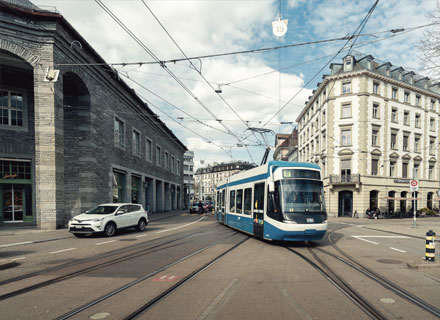

Somewhere beneath the streets of Lausanne, Switzerland, a quiet financial crisis is unfolding. The city’s metro line, the M2, opened in 2008 to considerable fanfare. It was Switzerland’s only fully automated metro system, a gleaming example of modern engineering, moving roughly 360,000 passengers every single day without a driver in sight. It was supposed to be the future of urban transport.
Eighteen years later, the regional transport authority has been handed a bill for €295 million. Not to build a new line. Not to extend the network into new neighborhoods. Simply to stop the existing system from becoming unusable. This is not a Swiss problem. It is a European one, and it is getting worse.
The Promise That Wasn’t Kept
To understand why this is happening, you need to go back to how cities have always thought about building metros. For most of the twentieth century, the logic was straightforward. You dig the tunnels, pour the concrete, lay the tracks, wire the signals, and run the trains. The upfront cost is enormous, but once the infrastructure is in place, it lasts for generations.
London’s Underground has stretches of tunnel that are more than 160 years old, and still in daily use. The signaling systems were mechanical relays and copper wiring, chunky and old-fashioned, but remarkably durable. Cities could borrow heavily to build a metro line, then pay back that debt slowly over 40 or 50 years while the system quietly earned its keep.
This model held for a very long time. But it rested on an assumption that turned out to be wrong. The misleading idea was that the technology running a metro line would age at roughly the same pace as the concrete and steel surrounding it.
In the 1990s and early 2000s, a wave of new automated metro lines swept across Europe. Cities like Copenhagen, Athens, Lausanne, and Barcelona invested billions in the latest generation of digital train control systems, called Communications-Based Train Control (CBTC). These systems used radio signals, onboard computers, and sophisticated software to run trains automatically, without drivers, at very short intervals. They were genuinely impressive. They could move more passengers more efficiently than traditional driver-operated lines, and transit authorities were told that the long-term savings on staff costs alone would justify the investment.
What nobody adequately accounted for was that these digital systems were not like tunnels. They were more like laptops.
When Software Ages Faster Than Concrete
A tunnel is built to last a century. The computers managing a modern metro are governed by the same commercial technology cycles as your smartphone. The processors, software platforms, and radio communication hardware that make a CBTC system work typically have a viable lifespan of 15 to 20 years before they become obsolete, unreliable, or simply unsupportable, because the companies that made the original components have moved on to newer products and stopped manufacturing the old ones.
This mismatch is at the heart of what transport researchers are now calling an ‘Infrastructure Obsolescence Crisis’. Cities borrowed money over 40-year timelines to build these metro systems. But the digital nervous systems inside them started dying at the 15-year mark, long before the original debt was anywhere near paid off.
Consider what this means in practice. A city takes out a massive loan in 2005 to build an automated metro line. In 2020, before the loan is half repaid, the computers running the system are so outdated that replacement parts no longer exist. The vendor who originally sold the system has discontinued the product. Engineers can no longer guarantee the system is safe to run in its current state. The city must spend hundreds of millions more, on top of the original debt, simply to keep the trains moving.
That is the trap Lausanne found itself in. And it is the same trap that dozens of European cities are now entering simultaneously.
The Case of Lausanne’s M2
The Lausanne M2 serves as the clearest example of what this crisis looks like up close.
When the line opened in 2008, it was a genuine achievement. It climbs through steep terrain that would defeat most conventional metro systems, operates entirely without drivers, and has become so central to the city’s transport network that the regional authority’s chief executive described it as crucial to mobility across the entire metropolitan area. By any operational measure, it has been a success.
But the automation technology installed in 2008 was built on the digital architecture of that era. The computer systems managing train movements, the trackside sensors, the software coordinating everything in real time… all of it was designed around components and platforms that have since been superseded. Maintaining the system has become progressively harder and more expensive as spare parts disappear and vendor support fades. Running the system in its current state is no longer a viable long-term option. The €295 million contract signed with the French rail technology company Alstom will strip out the old control framework entirely and replace it with a modern CBTC system called Urbalis Fluence. The trains themselves will also undergo a mid-life upgrade, with their onboard computer systems replaced to match the new signaling infrastructure.
“This modernisation will bring more frequent, more reliable journeys for passengers and help the city meet growing demand with shorter waits and a smoother ride,” said Marie Icardo, Managing Director of Alstom Switzerland. “By pairing our new-generation, train-centric CBTC with a fully integrated mid-life upgrade of the fleet, we are boosting capacity while extending the performance of the existing trains for years to come.”
One detail in that contract is worth noting. It explicitly includes what is described as ‘technical support and obsolescence management services’, an acknowledgement built into the contract itself that the new system will also need active management to prevent it from suffering the same fate as the system it is replacing.
Across a Continent, the Same Bill Is Coming Due
Lausanne is not an outlier. Transit authorities across Europe that installed automated systems between roughly 1998 and 2010 are hitting the same technological wall at roughly the same time. The cumulative cost of signaling and automation upgrades across the continent over the next five years is estimated to exceed €5 billion.
In Copenhagen, the metro system that opened in 2002 was one of the world’s first fully automated urban rail networks. Now in its 24th year, it is undergoing a comprehensive overhaul of its core automated systems on its original two lines, while trying to keep the trains running for the hundreds of thousands of passengers who depend on them daily. Alstom has been contracted separately to upgrade 34 of the original trains. In parallel, Danish State Railways has ordered a new fleet of 226 fully automated trains from a Siemens and Stadler consortium at a cost of €3 billion, with 30 years of maintenance included.
“This is the largest investment in the 90-year history of the S-Bane,” said Flemming Jensen, CEO at Danish State Railways (DSB). “With this investment, DSB takes another important step toward future proofing the capital’s public transport. Increased frequency and capacity will ensure that the S-Bane keeps up with growing demand and maintains its role as the backbone of Copenhagen’s transport network.”
In Athens, lines 2 and 3 of the metro, built largely to serve the 2004 Olympic Games and opened in 2000, are now undergoing their first major systems overhaul in 25 years. The total upgrade programme exceeds €500 million, including a €106 million project to refurbish 12 of the original trains and extend their working life. Fifteen new trains are being acquired. When finished, the improvements are expected to reduce average waiting times to under four minutes.
Madrid is upgrading its busiest metro line, Line 6, from a semi-automated system to a fully driverless one. This is a 23.5 kilometre circular route used by around 400,000 people every day. The contract, again awarded to Alstom, involves replacing the existing signaling system entirely and commissioning new electronic interlocking infrastructure.
Barcelona presents perhaps the most extreme case. Its L9 line, one of the longest metro lines in Europe, was begun with an original budget of €5 billion. Cost overruns driven by the complexity of integrating advanced automation systems pushed the total to €5.9 billion. Completing just the central section of the line requires a further €926 million. On top of this, the city is spending an additional €331 million on 39 new trains for its older lines. Following a 3.5% fare hike that took effect in January 2026, a single metro ticket in Barcelona now costs €2.90. The Metropolitan Transport Authority (ATM) officially stated the fare increases were necessary ‘to offset rising costs for maintaining the transport network and inflation’, noting that ‘in recent years, city and regional authorities have invested significant resources in infrastructure development, fleet renewal, and the introduction of new technologies’.
In Prague, the city is grappling with upgrading its existing metro lines while simultaneously building a new automated line, Line D, at a cost of €1.23 billion. The broader underground expansion plan for the city over the next two decades carries an estimated price tag of €7.5 billion, and analysts have pointed out that decisions made early about automation technology could either save or waste hundreds of millions of euros depending on which approach the city chooses.
Italy offers a cautionary story about what happens when the original technology choices are particularly poor. The city of Turin installed a proprietary automated metro system built around a technology that was later discontinued by its manufacturer, Siemens. Because the system was bespoke and no longer standard, finding replacement trains has meant commissioning specially designed vehicles that cost significantly more per metre of trainset than almost any comparable project in Europe. Turin is a textbook case of how reliance on a single vendor’s unique, closed technology leads directly to financial pain when that vendor moves on.
Why This Was Always Going to Happen
The root cause of this crisis is a structural mistake embedded in the way transport planners and economists thought about digital infrastructure in the 1990s.
When engineers calculate whether a metro line is worth building, they model costs and benefits over very long timeframes. The tunnels and stations are treated as long-lived assets, because they genuinely are. But the digital systems, the CBTC computers, the software, the trackside sensors, were bundled into the same financial models as if they would last just as long. They do not. The commercial technology sector operates on cycles of two to seven years. A railway operates on cycles of 40 to 100 years.
Designing a system that fuses these two timescales without acknowledging the gap was, in hindsight, a serious error.
The second major mistake was allowing transit authorities to become locked into proprietary systems. When a city bought an automated metro system from a particular company in 2003, it was not just buying hardware and software. It was entering a relationship from which it could not easily exit. The software was closed, the hardware was bespoke, and the protocols were unique to that vendor. If the vendor later stopped supporting the product, the city had no alternative supplier to turn to. It could not invite competitive bids for replacement parts, because no other company made compatible ones.
This is fundamentally different from how mainline railways work. European mainline railways are governed by a common standard called the European Train Control System, which means trains from different manufacturers can operate on tracks equipped by different signaling companies. Urban automated metros were never subject to any equivalent requirement. Each system was effectively a sealed box, and the city that owned the box was at the mercy of whoever had the key.
Attempts to fix this have largely stalled. Paris’s transport authority tried to enforce interoperability standards between CBTC suppliers and found the process immensely difficult and expensive. New York City used one of its lines as a pilot project to develop interoperability requirements and encountered equally profound complexity. Without a regulatory mandate from the European Union requiring open, standardised architecture for urban rail automation, the situation is unlikely to change on its own.
The Financial Trap and Its Consequences
The financial damage from this crisis extends beyond the direct cost of the upgrades themselves.
Public infrastructure is funded through long-term borrowing. The traditional model assumes large upfront spending, followed by decades of relatively low maintenance costs, with a significant overhaul perhaps at the halfway point. A 15-year forced replacement of the entire digital layer of a metro system destroys this model entirely. Cities find themselves servicing the original construction debt while simultaneously taking on nine-figure bills for technological renovation they never planned or budgeted for.
The most damaging consequence is the crowding out of expansion. Money that should be invested in building new lines in underserved areas is being diverted to keep existing lines alive. When Prague must spend vast sums upgrading its legacy lines at the same time as building Line D, it has less capacity to fund other transport improvements. When Barcelona is consumed by finishing L9 and maintaining existing infrastructure, regional rail projects across Catalonia are delayed or cancelled.
At the European level, the problem is becoming difficult to ignore. The European rail sector requires an estimated €100 billion in infrastructure investment to meet the continent’s climate and connectivity targets. The Connecting Europe Facility and Cohesion Fund allocate billions toward rail, with €18.2 billion earmarked specifically for railway networks. But a growing share of that money is being absorbed by the rehabilitation of infrastructure that is not old by any conventional measure. Systems built in the early 2000s, which should still be in their operational prime, are consuming funds that were intended for new development.
How Vendors Are Responding
The major vendors have recognised that the old business model, sell the system and move on, is producing a crisis that threatens to destroy confidence in automated transit altogether.
Alstom has restructured its maintenance offering around what it calls FlexCare, a long-term service agreement that covers not just routine repairs but explicit management of technological obsolescence over the life of the system.
As Alstom’s official mandate notes: “Rolling stock typically has a lifetime of up to 40 years, and it is inevitable that various electronic components and sub-systems will become obsolete over time. We sustain the safety and reliability of fleets with proactive obsolescence management… to ensure obsolescence impact is mitigated for increased fleet availability.”
The company maintains more than 35,500 vehicles worldwide under such arrangements, and has invested in additive manufacturing, producing over 150,000 parts using 3D printing to replace components that are no longer commercially available.
Siemens Mobility has adopted a similar approach, with recent contracts in the United Kingdom and New Zealand transferring responsibility for obsolescence management directly to the supplier rather than leaving it with the transit authority.
Engineers are redesigning the architecture of automated systems to reduce the rate at which they become obsolete. Older CBTC systems distributed intelligence across thousands of pieces of trackside equipment, sensors, relays, and control panels, all of which degraded over time and were expensive to access and replace inside operating tunnels.
The newer approach concentrates the computing power aboard the trains themselves. When the onboard computers eventually need updating, they can be swapped out in a depot during normal maintenance windows, without requiring intrusive, disruptive work inside the tunnels at night.
This approach, sometimes called train-centric architecture, is central to the new system being installed in Lausanne.
Smaller specialist companies are also filling gaps. Some niche suppliers of onboard power systems are explicitly committing to maintain product lines for multiple decades, ensuring that when a specific semiconductor goes out of production, a certified replacement is available rather than triggering a full system redesign.
What Needs to Change
The lessons of this crisis point toward several concrete changes in how cities and governments approach automated transit. The European Union has the authority and the precedent to mandate open, standardised architecture for urban rail automation, just as it mandated common charging standards for consumer electronics. Without this, transit authorities will continue to be captured by individual vendors, and the cycle of proprietary lock-in and forced full-system replacement will repeat itself.
Public accounting frameworks need to be updated to reflect the reality of digital infrastructure. Tunnels and software cannot be depreciated on the same schedule. The full lifecycle cost of a system, including software updates, cybersecurity management, and mid-life hardware replacement, must be calculated and included in the original contract rather than treated as an unexpected future expense.
The structure of public-private partnerships must also change. If a private company builds and operates an automated metro line, the risk of digital obsolescence should remain with that company, not default back to taxpayers when the technology fails at year 15. This requires careful contractual design, but it is not impossible. Several recent contracts, in Chennai and Copenhagen among others, have begun to move in this direction.
The Larger Picture
What is happening beneath the streets of European cities is a collision between two fundamentally different timescales. One is the timescale of civil engineering, measured in generations. The other is the timescale of digital technology, measured in years.
For most of human history, infrastructure was made of things that aged slowly. Stone, steel, and concrete degrade predictably. You can plan for their maintenance and replacement without financial surprises. But when the core intelligence of that infrastructure is digital, when the thing that makes it function is software running on microchips made by companies that operate on quarterly cycles, the financial and engineering assumptions of the past no longer hold.
The cities now writing enormous cheques to keep their 20-year-old metro systems alive are not victims of bad luck. They are paying the price for a systemic failure to understand how digital technology ages. The tunnels under Lausanne will be there hundred years from now. But, the computers that ran the trains through them became obsolete before the city finished paying for the tracks.
Unless Europe’s transport policymakers restructure how automated transit is procured, financed, and maintained, this will not be the last generation of digital metro systems to reach technological obsolescence while their construction debts are still being repaid. The next wave of automated metro lines being planned and built today will face the same reckoning in the early 2040s, and the bill will be even larger.