

The European Central Bank (ECB) plans to make its currency swap arrangements with foreign central banks more accessible, as it steps up efforts to strengthen the euro’s international role and reduce the euro area’s exposure to financial shocks originating overseas.
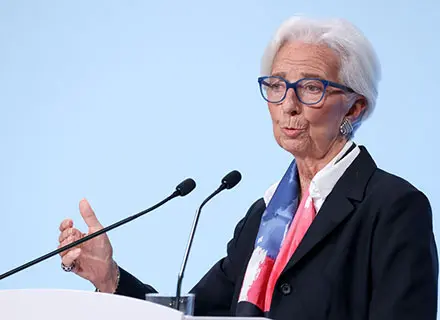
ECB President Christine Lagarde announced the initiative on Friday at the 36th Frankfurt European Banking Congress, saying the central bank was adapting its liquidity arrangements to a world increasingly shaped by geopolitical tensions, financial fragmentation and uncertainty over the international monetary system.
“We are working to keep our swap lines fit for purpose in a more fragmented world. They will be more accessible, too,” Lagarde said.
Currency swap lines allow two central banks to exchange currencies, enabling one to provide liquidity in its own currency to the other when financial markets come under stress. In the ECB’s case, the arrangements allow foreign central banks to obtain euros in exchange for their currencies, helping them meet demand for the single currency during periods of market disruption.
The existing network is relatively limited, with arrangements involving major central banks such as the US Federal Reserve and the People’s Bank of China. Making these facilities more accessible could extend the euro’s role as a source of international funding and provide another layer of protection against disruptions in global markets.
Lagarde said the primary purpose of the arrangements was to prevent financial stress originating outside the euro area from spreading into European markets. Such spillovers can disrupt monetary policy transmission and make it harder for the ECB to maintain control over financing conditions and borrowing costs.
However, the facilities also have a strategic purpose. They can encourage foreign investors and reserve managers to hold more euro-denominated assets by providing assurance that liquidity will be available during a crisis.
“A reserve manager who knows that euro securities can be turned into euro liquidity without a fire sale has more reason to hold them in normal times,” Lagarde said.
The initiative comes amid growing international debate about the US dollar’s dominance in global trade, investment and financial markets. Concerns over US President Donald Trump’s unpredictable economic policies and the country’s rising public debt have prompted policymakers and investors to consider whether the dollar’s position as the world’s principal reserve currency could gradually weaken.
The dollar continues to dominate international payments, foreign exchange transactions and global reserves. The euro, despite being the world’s second-most important international currency, has struggled to expand its influence beyond its existing markets.
The ECB has increasingly treated the internationalisation of the euro as an economic and strategic priority. A stronger global role for the currency could reduce Europe’s vulnerability to exchange-rate fluctuations, lower financing costs and give European businesses greater freedom to conduct international transactions in their home currency.
Lagarde said a greater share of trade invoiced in euros would make European companies less exposed to movements in exchange rates. It would also help the region finance substantial investment requirements, including spending on defence, technology and infrastructure, with support from international investors holding euro-denominated assets.
The ECB is pursuing several measures to improve access to euro liquidity. One important initiative is the Eurosystem repo facility for central banks, known as EUREP, which provides foreign central banks with access to euros against eligible euro-denominated collateral.
In February, the ECB made EUREP permanent and opened it to central banks worldwide. More than 30 central banks have already expressed interest in accessing the facility, according to Lagarde.
Unlike swap lines, which involve an exchange of currencies between central banks, repo facilities provide liquidity against collateral. Both mechanisms, however, can help prevent temporary funding shortages from escalating into wider financial instability.
The ECB is also working to make the euro easier to use in cross-border payments. It includes linking the TARGET Instant Payment Settlement (TIPS), the Eurosystem’s instant payment platform, with payment systems in other regions. The aim is to speed up and make international transactions more efficient and less dependent on the current payment networks.
The move comes amid pressure in Europe to strengthen its economic independence and financial infrastructure. Reliance on external banking systems, especially dollarized ones, exposes European businesses and financial institutions to policy changes and disruptions beyond the region’s control.
However, expanding the euro’s international reach will require more than emergency liquidity arrangements. Deeper and more integrated European capital markets, consistent regulation, stronger payment infrastructure and a larger supply of attractive euro-denominated assets will also be necessary.
Lagarde’s latest remarks underline the ECB’s intention to make international liquidity support a more effective instrument of European financial policy.