
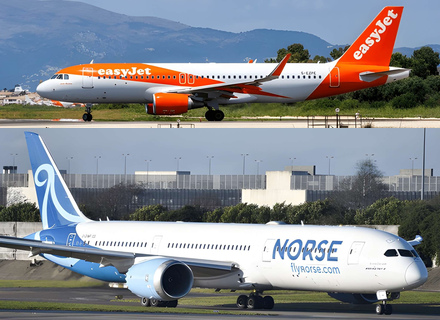

The ongoing Iran war and the resultant soaring fuel costs have put Norse Atlantic and easyJet under the notice, with the Norwegian long-haul budget carrier announcing its financial situation as a “critical” one.
As per Norse Atlantic, it requires new financing to meet short-term liquidity needs and continue operating, a declaration that sent shockwaves across the European aviation circle, resulting in the business plunging to an all-time low.
Norse launched a formal process for a potential sale or merger in July and has said it was in talks with airlines about leasing some Boeing 787 aircraft.
Shares in Norse plummeted after the announcement, dropping by more than 70% at 0905 GMT.
Most of the airline’s market value has already been wiped out this year.
The Norwegian company is now in talks to secure short-term financing, it said in a statement.
“However, there can be no assurances that such discussions will result in a viable solution,” Norse said.
The carrier, which does not hedge its jet fuel needs, cut capacity as costs skyrocketed following the beginning of the Iran war in late February.
Norse is not alone, as many other airlines, especially the budget ones, are facing the same problem, filing for bankruptcy or initiating restructuring proceedings to survive.
Norse’s plight echoes the wider strain on Europe’s smaller, financially weaker carriers, with analysts warning that these businesses could end up struggling to generate enough cash to get through the winter, with some even predicting trouble as early as February, when carriers traditionally run short of funds.
Latvian carrier AirBaltic has already entered Chapter 11 bankruptcy proceedings and restructuring as it sought to shore up new financing.
Norse signed an aircraft, crew, maintenance and insurance (ACMI) deal with Pakistan International Airlines in October to lease two of its Boeing 787-9 Dreamliner jets.
While the company has held potential takeover talks, it said the board and the management had “diligently considered other available options, including ACMI contracts”.
On the other hand, easyJet reported an almost 90% slump in its annual profit on Wednesday, as the budget carrier moves toward a takeover by the US-based private equity firm Apollo in early 2027.
Apart from Norse Atlantic and easyJet, Jet2 and Ryanair have already trimmed capacity and winter schedules to protect profit margins.
EasyJet said it remains only partially protected against further increases, having hedged about 69% of its jet fuel needs for the first half of 2027 and 54% for the second half.
ALSO READ | Emirates posts USD 903 million half-year profit as Iran war hits earnings
“Demand was slow to recover after the Middle East conflict began, and while bookings improved closer to departure, it was not enough to fully offset softer trends earlier in the booking window,” the airline said.
EasyJet’s headline pretax profit fell 89% to 71 million pounds (USD 92.9 million) in the year ended September 30, from 665 million pounds a year earlier, as fuel costs rose 11% to 2.5 billion pounds.
EasyJet’s result also missed analysts’ average estimate of 87.7 million pounds, according to LSEG data.
EasyJet’s 5.7 billion euro takeover by Apollo still remains subject to EU ownership rules and union-related hurdles.
However, CEO Kenton Jarvis told reporters that easyJet’s hedging strategy gave the airline flexibility.
“If we see a dip in fuel (prices), then we can come in and take a bit more equally,” Jarvis said.
Jarvis said he could not rule out further head office job cuts in the coming year in addition to up to 50 positions already set to be eliminated.
The disturbing news from Europe’s aviation circles, as per analysts, is not surprising, as airlines all over the world are struggling with persistently high jet fuel prices, due to which they are being forced to rethink how they finance aircraft purchases and fleet expansion, increasingly turning to borrowing, pre-delivery payment financing and sale-and-leaseback transactions to preserve cash as pressure on operating margins intensifies.
ALSO READ | Ryanair CEO warns of record airfare hike as US airlines struggle with fuel costs
With fuel costs remaining elevated nine months after the US-Israeli war on Iran began in February, carriers are preparing for the possibility that the squeeze could extend into 2027.
The shift is creating fresh business for aircraft lessors and financiers, as airlines seek to avoid tying up their own cash in expensive new aircraft.
Singapore jet fuel recently traded at around USD 141 a barrel, more than 50 per cent above the approximately USD 93 level before the conflict, according to LSEG data cited by Reuters. Some airlines are even testing their ability to withstand jet fuel prices reaching USD 200 a barrel next year.
The prolonged price shock is forcing carriers to reassess liquidity requirements and financing arrangements, said Steven Townend, chief executive of aircraft lessor BOC Aviation.
“They’re all starting to reconsider how much liquidity they need,” Townend told Reuters.
The pressure is evident in airline earnings. Seven publicly traded US carriers generated nearly USD 28 billion more revenue during the first nine months of 2026 than in the corresponding period last year. However, their combined fuel expenses increased by almost USD 17 billion, while operating profit fell 12%, according to a Reuters analysis of regulatory filings.
The airlines’ cash and liquid investments increased by 8% to approximately USD 35 billion by September, but operating expenses climbed nearly 18%.
Carriers have responded by increasing fares and cutting flight schedules. US airfares averaged almost 23% higher year-on-year during the seven months ending in September. However, passing the entire increase in operating costs to passengers is proving difficult.
Airline ticket prices are ultimately determined by demand rather than the cost of inputs, said Scott Laurence, an aviation consultant at Oliver Wyman. Further capacity reductions could also make it harder for airlines to spread fixed costs across their operations.
The International Air Transport Association (IATA), in its June 2026 industry outlook, forecast global airline fuel expenditure would rise almost 40% to USD 350 billion this year, from USD 52 billion in 2025.
Jet fuel was expected to average USD 152 a barrel, nearly 70% higher than the previous year’s average.
IATA also projected global airline net profits would fall to USD 23 billion in 2026, from USD 45 billion in 2025, with the industry’s net profit margin declining to 2%.
For airlines, the immediate priority is to retain sufficient liquidity to meet operating expenses while continuing to take delivery of aircraft ordered years earlier.
Airlines typically make substantial advance payments to manufacturers well before an aircraft is delivered. These pre-delivery payments can tie up capital for extended periods, particularly when carriers have large order books.
Townend said BOC Aviation was receiving significantly more requests than usual from airlines seeking financing for these advance payments. Financing deliveries and pre-delivery obligations allows carriers to conserve their cash for fuel, payroll and other operating requirements.
Andy Cronin, chief executive of aircraft lessor Avolon, said airlines had initially expected the fuel shock to be temporary. However, the persistence of elevated prices and another increase in September had forced carriers to reconsider their financial plans for 2027.
Alaska Air is among the airlines evaluating alternative funding arrangements. Higher fuel costs reduced its operating cash flow by $309 million during the first nine months of 2026. The carrier is considering borrowing and sale-and-leaseback transactions to finance future aircraft deliveries.
“We’re evaluating a range of financing options for future deliveries and will pursue the approach that best supports Alaska Air Group’s financial and strategic objectives,” said Emily Halverson, the airline’s vice-president of finance, controller and treasurer.
Another option gaining attention is the sale-and-leaseback model, under which an airline sells an aircraft it owns to a leasing company and subsequently leases it back for continued operations.
The arrangement allows carriers to unlock capital tied up in aircraft without removing them from their fleets. The proceeds can be used to meet operating expenses, repay existing borrowings or fund new aircraft deliveries.
Thailand’s Asia Aviation, the parent of Thai AirAsia, said this month it was pursuing sale-and-leaseback arrangements and other financing options to manage higher fuel costs.
Aircraft lessor FTAI Aviation has also reported growing interest in such transactions.
In September, it purchased 27 older Boeing 737-700 aircraft from Canada’s WestJet, leasing 17 back to the airline and allocating the remaining 10 to its engine and parts business.
The scale of activity, however, remains open to interpretation. Aviation consultancy IBA found no significant increase in sale-and-leaseback transactions, while Cirium Ascend counted 73 aircraft sold and leased back during the first 10 months of 2026, compared with 46 in the same period last year.
The changing financing landscape could make aircraft leasing companies more important, giving airlines alternatives to outright ownership of aircraft.
Boeing’s Commercial Aircraft Finance Market Outlook said that geopolitical tensions were affecting customer funding strategies and airlines were moving away from cash purchases toward financing in the first half of 2026.
Advance-payment financing, including structures that were combined with sale-and-leaseback transactions, was too.
The leasing market remains competitive and lessors are looking to bank financing and the capital markets for aircraft purchases. Regional banks are also playing a bigger role in aircraft finance, particularly in Asia and the Middle East.
Sale-and-leaseback transactions can provide airlines with more cash than conventional aircraft-backed loans and keep existing bank credit lines available.
But there is a trade off with the model. Aircraft sales reduce ownership and transfer residual value risk to lessors, but create long-term rental obligations.
Airlines also have to make lease payments even if fuel prices drop or the demand for passengers falls.
Legal and financial advisers have warned that sustained fuel volatility could influence aircraft valuations, financing terms and lenders’ appetite for airline exposure. Some financiers may seek additional contractual protections as the financial performance of carriers deteriorates.
The immediate challenge is therefore not simply finding money to finance new aircraft but balancing liquidity, borrowing costs and long-term fleet commitments.
Most industry participants expect fuel prices to change within five years. However, as Laurence observed, the industry had also underestimated how long the present fuel shock would last.