
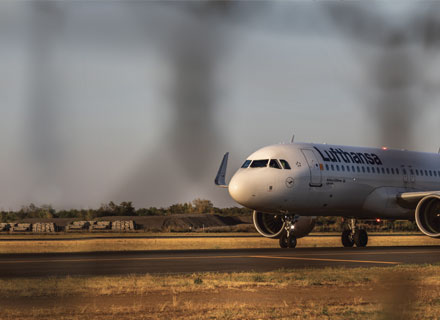

In the first week of August, Germany major Lufthansa, also the Europe’s second-largest airline group, cut its profit outlook and warned earnings could fall by 2026-end.
However, Lufthansa’s profit outlook followed the same pattern of its global peers, with these being the common factors mentioned across the aviation industry’s earning documents: Iran war, higher jet fuel prices and capacity revisions.
While the budget carriers have felt the worst of the crisis, fuel-related costs have managed to pressurise the airlines’ hedging programmes too.
One after another, disappointing numbers arrive
Let’s start with Lufthansa, whose latest forecast 2026 adjusted earnings before interest and tax (Adjusted EBIT) stands at 1.7 billion euro-2.2 billion euro (USD 2.0 billion to USD 2.5 billion). It had previously expected adjusted EBIT well above the 2025’s 1.96 billion euro. After peaking in June 2026, the carrier’s stock has gone down about 2%.
Lufthansa’s capacity fell about 3% in the Q2, partly due to the staff strikes in April. However, its full-year capacity plans remain unchanged and are expected to be broadly flat. Adjusted EBIT fell to 383 million euro in the second quarter from 870 million euro a year earlier, well below analysts’ average forecast of 401 million euro.
The company now expects 2026 fuel costs of 8.66 billion euro, compared with an earlier forecast of 8.9 billion euro.
As per the Chief Financial Officer (CFO) Till Streichert, the second half of the year remained uncertain as customers were booking closer to departure dates. Still, Lufthansa has decided to maintain its longer-term targets, including an operating margin of 8% to 10% between 2028 and 2030, despite geopolitical disruptions.
The company added that 86% of its fuel needs for this year are hedged, while Spohr told reporters fuel supplies are expected to remain stable.
For Air France-KLM, things were a bit different in Q2, as it beat profit expectations on revenue gains from premium and long-haul travel. However, Iran war was the spoilsport here, as the carrier trimmed its annual capacity guidance.
The airline group, in the coming days, will be leveraging its premium offering and ticket price increases to sustain profits through an industry downturn. However, Dutch arm KLM said improvements were not good enough to strengthen its financial foundations.
ALSO READ | AirBaltic files for Chapter 11 bankruptcy as Iran war drives up fuel costs
The Franco-Dutch group posted second-quarter adjusted operating profit of 484 million euro (USD 552.5 million), down from 736 million euro in the same period in 2025 but higher than the 327 million euro consensus from analysts polled by the company.
Air France-KLM has lowered full-year capacity expectations, now guiding for a 1% drop in short and medium-haul flights and a group increase of between 2% and 3%. That is a second cut from the 3% to 5% forecast made before things got heated up in the Middle East. The capacity cuts will mainly materialise in the Q4 and will include fewer daily flights through European cities such as Dusseldorf and London.
The company also trimmed its April fuel bill projection for 2026 by 4% to USD 8.9 billion, citing newer and more efficient aircraft as well as jet fuel hedging.
With 6.8 billion euro in net cash and 3.5 billion euro in undrawn credit lines (at the end of June), the airline group may look to go for cheap consolidation opportunities.
Budget carriers face cost pressure
The environment is forcing smaller and budget carriers to seek restructuring or buyouts. Portugal’s TAP, one such carrier, has emerged Air France-KLM’s acquisition target, with Lufthansa being the other interested party.
TAP has slots linking its Lisbon hub with Brazil, Portuguese-speaking African countries and the United States, markets that can potentially become lucrative expansion opportunities for the winner.
British Airways owner IAG, while publishing its Q2 results in July, trimmed its 2026 capacity outlook to flat, after reporting a 16% profit drop due to soaring fuel costs and weaker travel demand.
IAG, which also owns Iberia and Aer Lingus, said its fuel costs for the year would be between 8.3 billion euro and 8.6 billion euro (USD 9.6-USD 9.9 billion), slightly lower than the roughly 9 billion euro forecast in May.
The company said it was about 57% booked for the second half of the year, with booked revenue in line with a year earlier. It continues to expect to offset about 60% of its higher fuel bill through higher ticket prices and cost-cutting measures.
ALSO READ | Iran war: Chinese airlines sink deeper into losses as jet fuel prices bite
EasyJet, before its acquisition by Apollo Global, saw the Iran war and the resultant price pressure on jet fuel contributing heavily in its 70% profit downfall.
Ryanair, a prominent name in the European budget flying segment, witnessed its profit slumping by a third in its most recent quarter on higher fuel costs and lower fares that look set to remain weak through the key summer period amid renewed consumer nervousness due to the Iran war.
The Irish airline reported after-tax profit of 538 million euro (USD 616 million) for its fiscal first quarter through June 30, down 34% from the previous year and short of a forecast of 579 million euro in a company poll of analysts.
However, the budget carrier maintained about being “better positioned” than most rivals because 80% of its fuel requirements to the end of March 2027 are hedged at USD 67 per barrel. The management also stepped in to hedge 15% of its fuel needs for the following year at USD 85 per barrel during the recent interim ceasefire.
Wizz Air, another budget airline, saw its operating losses further deepening in the first quarter. It now expects revenue per seat to keep falling in the current quarter after it cut fares to attract passengers. Despite the headwinds, it has decided to keep on expanding its operational capacities, by inducting new Airbus aircraft in its fleet.
The budget carrier has hedged 76% of its full-year jet fuel needs using zero-cost collars, instruments that would cap the business’ exposure at USD 826 per metric ton. However, the same mechanism, prices fall below a floor of USD 759, may end up becoming counter-productive, as it will prevent the carrier from benefiting from the windfall.
Same story everywhere
In the United States, domestic airfares have been 26.5% higher than a year ago, according to June’s consumer price index data. Analysts, after decoding the data, found prices going up, both in domestic and global front, by 25%-30% compared with 2025.
Strong demand for travel and reduced global oil refining capacity have resulted in upward trajectory of jet fuel prices. The commodity was trading about USD 149 a barrel as of August 4, up from USD 90 at the start of 2026 – a 65% increase. Crude-oil prices are up about 30% since January, trading around USD 76 a barrel.
“Jet fuel costs rise slightly higher than oil prices because on average, only about 10% of refined oil can be turned into jet fuel. The more limited the product, the more vulnerable it is to these supply shocks,” said Louise Burke, the global head of aviation at Argus Media, a commodities data provider, while interacting with the Guardian.
“There have been a substantial amount of refinery closures, a key to why jet fuel prices have soared so much higher than standard crude oil. A new refinery in west Africa has helped bring on supply, and refiners are making tweaks to boost output to about 12%-14% to take advantage of the higher jet fuel prices, which has helped to alleviate some of the shortages,” she noted further.
ALSO READ | Iran war: Higher fuel costs weigh on UK carriers’ earnings outlook
As per John Grant, the chief analyst at OAG, jet fuel prices are the biggest operating cost for airlines and the hardest to control. Costs range between 30% and 35%. In a set-up like this, airlines get a little elbow room. Some may hedge their fuel costs to limit losses, but others buy on the volatile spot market.
Demand for flying in the world’s largest economy has also persisted despite higher airfares, giving airlines more leeway to continue charging higher prices.
Legacy carriers such as American Airlines, United Airlines and Delta Air Lines said in recent earnings calls that higher airfares helped to offset some of the higher fuel costs, but the volatility of prices makes it hard to forecast the effects.
In China, in separate filings to the Hong Kong and Shanghai stock exchanges on July 14, China Southern Airlines, Air China, and China Eastern Airlines reported anticipated interim losses that add up to between RMB 7.37–8.97 billion (USD 1.1–USD 1.3 billion).
And this is not about China, Europe or the United States. Everywhere it’s the same scenario. As per the International Air Transport Association’s (IATA) latest financial outlook for the global airline industry, overall sector profitability will get halved due to the geopolitics, with high fuel prices acting as the constant irritant.
Airlines are expected to achieve a combined total net profit of USD 23.0 billion in 2026, roughly half the previously projected USD 41 billion. The net profit margin is expected to be 2.0% in 2026, roughly half the previously projected 3.9%. It is also less than half the 4.2% estimate for the 2025 net profit margin.
Total industry revenues are expected to reach USD 1.165 trillion in 2026, up by paltry 9.4% on the USD 1.065 trillion in 2025.
Only silver lining will be the passenger load factor, that is forecast to continue to set record highs with airlines expected to fill 84.0% of all seats over the year. This will be an improvement on 2025’s ratio of 83.5%.
What’s happening at the fuel price front?
In the United States, the price for a gallon of Jet-A fuel rose 70 cents in August 2026 when compared to July figures to settle at an average price of USD 8.31 per gallon. Fixed-Base Operators (FBOs) conducted by the Aviation Research Group found out Jet-A fuel prices going up the USD 1.70 per gallon mark during the month, compared to the similar period in 2025.
Europe has been able to offset lower Middle Eastern jet fuel shipments by importing cargoes from the United States and Nigeria. The continent brought around 750,000 barrels per day (bpd) of jet fuel in June, the highest level since October 2025, and maintained a similar pace in July.
On August 10, imported jet cargoes were assessed at a discount of USD 24 per metric ton to gasoil futures, the widest discount since July 2025, according to LSEG and Argus Media.
At the height of the Iran war in March, jet fuel had traded at a premium of more than USD 500 per barrel over the benchmark.
However, the current situation is much better than the one seen a couple of months ago, when the International Energy Agency (IEA) warned about the continent having “maybe six weeks of jet fuel left.”
The reality is that the Gulf exports constitute the largest source of jet fuel to the global market. Refineries in other major exporting countries, such as Korea, India and China are themselves highly dependent on crude oil imports from the conflict-ridden region.
Europe has, over the years, relied on the Middle East for about 75% of its jet fuel imports. As per the IEA’s estimates, despite United States and Nigeria acting as the guardian angels currently, they would be only be able to replace a little over half of the lost supplies.
Houston-based Chris Russo, associate director for energy in North America at Publicis Sapient, sees the crisis leaving a long-term imprint on the airlines’ profit books.
Russo, while speaking at the Aviation Week Window Seat podcast, stated that even if Iran war ended tomorrow and the Strait of Hormuz fully reopened, jet fuel prices to remain high for months to come.
In fact, if the crisis gets worse again, some low-cost carriers may not survive a prolonged period of higher costs.
As per him, China and the United States have relied on their strategic oil reserves since the beginning of the Iran war. However, the world has been facing a nearly one-billion-barrel supply shortage.
“This hasn’t been factored into the prices of crude, so that will come back to bite because it will jack up prices again in the future and cause problems downstream for things like jet fuel. This is going to be a challenge for airlines for a long while,” Russo said.
For him, airlines, from now onwards, should take a long-term view about how to procure fuel and manage the processes like commodity’s smart management. Beyond reactive steps, like cutting routes or frequencies, or even fuel hedging, carriers should closely examine the contracts they have with suppliers to guarantee some amount of fuel over the next 12 or 24 months.
Russo said working those options could save an airline one to four cents per barrel, a meaningful saving when so many barrels are being bought.
Fuel Hedging: Where things stand now
In April, Ryanair CEO Michael O’Leary warned that the European aviation sector, as a whole, will face “financial difficulties” if jet fuel prices stay high.
Then, the following month, discount American carrier Spirit Airlines decided to cease its operations, after repeated attempts to secure creditor support for a government bailout plan met with failure.
Spirit once accounted for 5% of US flights. The news broke out on May 2. A day before that, the carrier’s board blamed the increase in oil prices and “other pressures” on the business responsible for the carrier’s deteriorating financial outlook, that ultimately led to its bankruptcy.
Talking about the Iran war and its impact on Spirit, the carrier’s restructuring plan assumed jet fuel costs of about USD 2.24 a gallon in 2026 and USD 2.14 in 2027.
However, geopolitics shot prices up to around USD 4.51 a gallon by the end of April, making fresh financing a must for the survival of the business, which it couldn’t manage.
However, things have changed since then. S&P Global’s July data, while talking about the industry’s fuel hedging trends, “European airlines’ fuel hedging programs have absorbed the bulk of this year’s conflict-driven jet fuel price shock, industry data showed, widening a structural cost divide with largely unhedged US carriers as coverage ratios begin to thin into 2027.”
Air France-KLM has lifted hedge cover to 87% of consumption on a horizon extending two years forward, while Lufthansa entered the crisis roughly 82% hedged for the Q1 2026 and 77% for the full year.
IAG’s coverage stood at 75% in the first quarter, declining to 50% in the Q4 2025, while Air France-KLM’s quarterly profile ranged from 70% in the first quarter to 47% in the fourth quarter.
Among low-cost carriers, EasyJet was 84% hedged for the H1 2026, 62% for the H2 and 43% for H1 2027, while Ryanair has locked in roughly 80% of next year’s fuel requirement. Wizz Air has described itself as mostly hedged through 2026.
IATA sees the North American airlines largely moving away from fuel hedging, jet fuel cost increases are transmitted more directly and rapidly into the region’s airlines’ cost bases.
Should prices remain elevated as legacy contracts roll off, carriers will face a choice between re-hedging at structurally higher forward levels, absorbing the cost into margins, or passing it through to fares.
Pain everywhere
In July, Iran war found its mention in the International Monetary Fund’s (IMF) outlook, with the global monetary body cutting its 2026 global growth forecast for the second time this year. Since then, the headwind called the energy shock has been accompanied by heatwaves (in Europe) and the record high food prices.
Consumers are already facing a cost-of-living heat. Central banks are showing reluctance to cut their interest rates. And if the April’s report from the consultancy Teneo is to be believed, the Iran war has ended up triggering a surge in air fares, with the lowest-priced economy tickets costing 24% more on average than they did a year ago.
The war, in its sixth month, saw a ceasefire being signed and broken by the Washington and Tehran. Post-June, Qatar, Oman, Kuwait, Jordan and Bahrain have all faced missile and drone attacks, resulting in the flight cancellations.
Several international airlines have pushed their route cancellations to the Middle East after the European Union Aviation Safety Agency (EASA) extended its conflict zone advisory for the Gulf, urging airlines to avoid the contested airspace until August 31.
So even if the jet fuel flow gets normal, a lack of permanent ceasefire will ensure that even if the carriers resume their Gulf services, avoiding the contested airspace will end up resulting in taking alternative yet longer routes, leading to more fuel consumption. The cycle of hedging and re-hedging will continue.
Higher ticket prices will remain as airlines will be looking to recover fuel costs. For budget carriers, whose popularity hinges solely on low-cost flying, will find it difficult to pass on the costs.
After the pandemic lull, airlines entered the post-pandemic period focusing on expansion. The Iran war has forced them to focus once again on survival, cost control and balance-sheet protection, whether the industry likes it or not.