
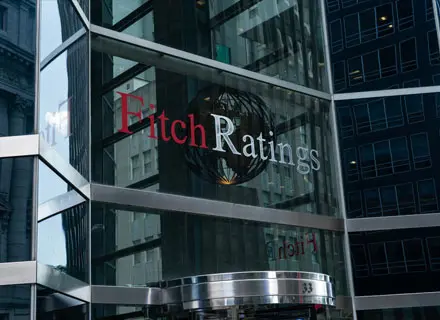

While the broader Islamic finance market within the Association of Southeast Asian Nations (ASEAN) surpassed USD 1 trillion in Q1 2026, the Philippines’ contribution remained small despite recent regulatory and funding milestones, said Fitch Ratings.
As per the American-British credit rating agency, Islamic banking assets in the Southeast Asian country amounted to just USD 44 million as of end-2025, underscoring the archipelagic nation’s still nascent position in a regional market dominated by Malaysia, Indonesia and Brunei.
“Regulators in the Philippines are developing its nascent Islamic finance ecosystem, recently through sukuk guidelines,” Fitch said.
Talking about the Philippines’ efforts towards becoming an Islamic finance growth engine, the country issued its maiden USD 1 billion sovereign sukuk in 2023, which carries a BBB rating. It now has five licensed takaful operators (providers of Shariah-compliant insurance).
ASEAN’s Islamic finance industry exceeded USD 1 trillion in Q1 2026, supported by large Muslim populations, government commitments, accommodative regulation, halal economy growth and digitalisation.
As per Fitch, while the sector’s growth across Southeast Asia remains uneven, tailwinds like stronger links with Gulf Cooperation Council (GCC) countries and closer integration within ASEAN could help the industry players to expand market access, draw investments and support financial inclusion.
Fitch also cited recent agreements by the United Arab Emirates (UAE) with Indonesia, Malaysia and the Philippines that are aimed at deepening Islamic finance collaboration between the countries.
“For the Philippines, cross-border cooperation may provide additional momentum. Still, the Philippines remains far behind more established regional markets. Indonesia’s Islamic banking assets reached USD 61 billion at end-January, while Brunei’s stood at USD 11 billion as of end-2025. In Malaysia, Islamic financing already accounted for 44% of total banking system financing by the 2025 end,” Fitch noted.
While Malaysia leads ASEAN’s Islamic fund industry with around USD 70 billion in assets under management (AUM), Indonesia has emerged as one of the world’s largest sukuk issuers. Brunei, on the other hand, has the highest Islamic finance market share in most verticals, with Islamic bank assets equivalent to about 70% of its banking sector.
“Across ASEAN, about 49% of Islamic finance assets consist of sukuk outstanding, followed by Islamic banking assets at 41%, Islamic funds’ assets under management at 8% and takaful assets at 2%. Nearly half of global sukuk outstanding now comes from the ASEAN. Malaysia ranks first globally, while Indonesia ranks third, with most issuance denominated in local currencies,” Fitch observed.
Also, all Fitch-rated dollar ASEAN sukuk were investment grade, or within the BBB category, as of end-April, with no defaults recorded in the past four years. However, Fitch said that the overall credit environment has become more challenging, with 63% of the region’s sukuk issuers on negative outlooks following the revisions of the sovereign outlooks of Indonesia and the Philippines.
And last but not least, geopolitical tensions, particularly the Iran war, could affect sovereigns and sukuk issuers through higher energy prices, heavier subsidy burdens, weaker currencies, wider credit risk premia and tighter external funding conditions.