

As per Statista, in 2026, the total transaction value in the ‘Digital Payments Market’ will reach $26.89 trillion, with total transaction value likely recording an annual growth rate (CAGR 2026-30) of 7.63%, that, by 2030, will result in a projected total amount of $36.09 trillion. The digital payments market’s largest segment, will be the ‘Mobile POS Payments’, with a projected total transaction value of $18.95 trillion in 2026.
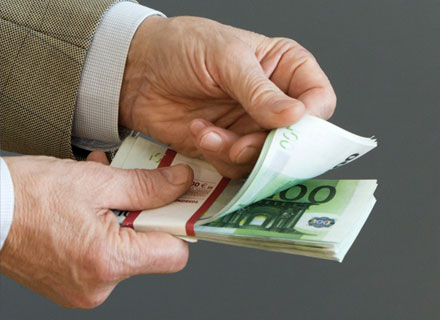
Will the rapid normalisation of POS and digital wallets make banknotes a thing of the past? Not so easily, claims another study from the Official Monetary and Financial Institutions Forum (OMFIF), as per which, digital payment ecosystem is useful till the presence of electricity, connectivity, and authentication servers. If one among them goes down, or all the three go down together, physical cash becomes the last line of defence.
The April 2025 blackout on the Iberian Peninsula (continental Spain and Portugal), in which the power grid collapsed and telecommunications faltered, entire regions found themselves suddenly cut off from the digital economy. Payment cards did not work. Mobile wallets froze. Online banking was inaccessible. Merchants could not connect to networks. People with ample digital balances were unable to purchase food or fuel. Only those who carried physical banknotes retained economic agency.
Cash is king, but has its weakness
A well-designed monetary ecosystem always treats both physical cash and digital money complementary to each other. While the POS and digital wallets serve the tech-savvy sections of the populations, cash ensures that the elderly, the digitally excluded, unbanked communities, informal workers, and those concerned about privacy still to participate in the digital economy.
Private digital payments provide speed and convenience. CBDCs may provide a modern, stable form of public digital money. But only cash provides a non-digital layer that can sustain economic activity during severe disruptions. It is the monetary equivalent of an emergency generator.
However, physical banknotes also have their share of vulnerabilities, and the prominent among them is counterfeiting. We are talking about the illegal act of creating, copying, or imitating a physical currency, that if left unchecked, can undermine national economies, apart from weakening financial institutions and jeopardising people’s livelihoods.
The introduction of unauthorised, counterfeited money artificially increases the currency supply, which in turn devalues legitimate currency, leading to higher prices and inflation. Individuals and businesses unknowingly accepting counterfeit bills suffer immediate and unrecoverable financial losses, as these notes get confiscated by banks without reimbursement. If the volume of fake cash reaches a critical mass, it lowers the faith among people on the utility of paper money entirely, threatening its function as a medium of exchange and a store of value.
In August 2025, under Europol’s watch, a joint law enforcement operation intercepted the distribution of counterfeit currency through postal services. Nearly one million items got confiscated, including fake euros, US dollars, and British pounds, with an estimated value of over EUR 66 million.
The collaboration between authorities from 18 countries also triggered 102 new investigations targeting criminal networks engaged in currency counterfeiting. Led by Austria, Portugal and Spain, the probe was conducted between October 2024 and March 2025, and uncovered several criminal networks engaged in currency counterfeiting. Most of these networks were operating from outside the EU (European Union), mainly from Asia, but also from America and the Middle East.
Central banks vs counterfeiters
In March 2026, the Swiss National Bank unveiled the new-look Swiss franc banknote designs, featuring native plants, landscapes, and how human life adapts at different altitudes throughout the Alpine nation. The central monetary authority has also utilised a revolutionary three-layer substrate called Durasafe in the next-generation notes, which sandwiches a polymer layer between two outer layers of cotton paper.
This unique base, combined with over 20 advanced security features, makes counterfeiting nearly impossible. The notes have also embedded fibres and security numbers that glow when viewed under UV light, and sections that disappear under infrared light.
Another very good case study has been Singaporean banknotes, that use a blend of advanced physical substrates, intaglio printing, and optically variable devices (OVDs) to prevent counterfeiting. Lower denominations get printed on durable polymer, while higher denominations utilise specialised paper. Genuine notes feature a metallic, reflective kinogram. When tilted, the denomination numeral shifts, and the MAS (Monetary Authority of Singapore) logo transforms into the Singapore lion symbol.
Polymer-made lower denominations also feature an embedded metallic thread, while paper notes utilise an interwoven thread. When held to light, holographic images of the Singapore Lion symbol and MAS logo become visible on the thread.
The MAS logo itself has been printed in a micro-lettering format, which ‘ will be difficult to figure out without a magnifying glass. Specific elements like the serial numbers, chairman’s seal, latent image patches, and denomination numerals have been kept UV-friendly, emitting a bright, distinct glow.
The Bank of England’s proposed new banknote designs, despite being controversial for leaving out historical figures, will be having intricate wildlife photos like bird flapping its winds or a deer running, that in the words of the central bank, will be combined with latest security technologies to prevent counterfeiting.
United States, to commemorate its 250th anniversary, will be launching its ‘Catalyst’ series of redesigned $10 currency, that will incorporate advanced visible and covert machine-readable security features to combat counterfeiting. These new notes will incorporate advanced security features commonly deployed in other developed economies, but never used in US currency. Features like enhanced optically variable devices, sophisticated watermarking techniques, and critically, machine-readable elements specifically designed for high-speed automated authentication.
Keeping in mind the counterfeiters’ shift to generative AI to replicate microprinting and watermark patterns with increasing accuracy, the Catalyst redesign will also be introducing security elements that current counterfeiting technology cannot reproduce.
While central banks are bringing more complex security features like polymer substrates, 3D ribbons, and colour-shifting inks, counterfeiters are adapting as well against these security advancements. They are reportedly using advanced flatbed scanners paired with layer-based graphic software (like altered versions of Photoshop) to isolate, sharpen, and reconstruct complex banknote graphics layer by layer.
Using high-end commercial digital printers, these ‘notes’ are getting reproduced, with ‘fine lines and micro-text’. Counterfeiters are also using chemical solutions to strip the ink off low-value banknotes (such as $1 or $5 bills), followed by the reprinting of higher denominations ($50 or $100) on the original, authentic paper, effectively bypassing security pens and texture tests.
Forgers are even mimicking the extreme-pressure intaglio presses on the notes, by utilising fine-tip glue pens, or selectively applying clear matte lacquer sprays over portraits and text. Makeup kits, specifically eyeshadow and nail polishes, are being used to replicate expensive Optically Variable Ink (OVI), or colour-shifting 3D ribbons.
Last but not the least; to create the security threads, some criminals split thin paper sheets in half, before manually placing a simulated plastic or UV-ink strip inside, and gluing the layers back together.
Making the banknotes secure
Modern-day banknotes are being made from synthetic polymer materials like biaxially oriented polypropylene (BOPP). As compared to paper banknotes, they last significantly longer, have less environmental impact, reduced cost of production and replacement, and, most importantly, more than enough room for inducting abundant security features.
It was the Reserve Bank of Australia (RBA), Commonwealth Scientific and Industrial Research Organisation (CSIRO), and The University of Melbourne, that first innovated and issued the new breed of currency in Australia during 1988. By 1996, Australia switched its physical dollar to polymer banknotes.
Romania was the first country in Europe to issue a plastic note in 1999, and became the third country, after Australia and New Zealand, to fully convert to polymer by 2003.
Polymer banknotes usually have three levels of security. Primary security levels are easily recognisable by consumers, and may include intaglio, metal strips, holograms, and the clear areas of the banknote. Secondary security features are detectable by a machine. Tertiary security features may only be detectable by the issuing authority when a banknote is returned.
Next comes watermarks, one of the basic features to ensure banknotes’ effective documentation and protection for centuries. They are extremely difficult to replicate, as slight deviations in the portrait, or in the motif, raise suspicion in the minds of people and authorities alike.
When it comes making watermarks an iconic shield of defence against the counterfeiters, German company Giesecke+Devrient GmbH, that operates in the fields of digital security, financial platforms, and currency technology, has become a known name. It has developed an array of watermark designs like multitone, highlight and pixel, each of which has a distinct appearance.
These watermarks, if linked together on a banknote, create unambiguous and memorable motifs. Watermark designs often get amplified in printed and applied security features, further helping simplify the currency’s authentication process.
Next, we have ‘Security Thread’, a polymer-based stripe incorporated into banknotes during the papermaking process. The concept came into the picture during the mid-1800s when legendary American papermaker Crane and Co. introduced silk security threads.
In 1940s, the Bank of England wrote a new chapter in banknotes’ security, by proposing metallic threads for shilling banknotes. Since then, security threads have become a widely used authentication method.
Today, more than 90% of banknotes contain security threads, and their design has only become more sophisticated over the years, featuring microtexts, holograms, colour-changing effects, and UV luminosity.
Depending on their location in the paper, security threads can be of three types: Latent (completely embedded within the paper substrate), Diving (thread that weaves in and out, creating a dotted line on the banknote’s surface), and Figure (thread that appears as a series of shaped windows but forms a solid line when viewed in transmitted light). Threads can be of metal without text, metal with microtext, semi-transparent with text, holographic, colour changing, or luminescent under UV light.
Threads also carry magnetic properties, which are detectable by specialised devices with magneto-optical sensors. There can also be floating images in these security threads, that creates a motion effect (when the note is tilted, the image appears to move or shift). Every security thread comes with a dynamic effect, that produces motion, shifting, or transformation when the banknote is tilted or moved.
The devil lies in the details
Microprinting is a powerful anti-counterfeiting security feature that consists of incredibly tiny text (usually 0.15 to 0.3 mm high) printed onto banknotes. To the naked eye, the microprint appears as a solid, continuous thin line, but if seen under a magnifying glass, it reveals clear, legible words or numbers. Because of the feature’s microscopic size, counterfeiters using standard photocopiers or scanners cannot reproduce the fine details, and end up producing a text that usually translates into a blurred or solid line.
Central banks use either of positive microprinting (dark letters on a light background) or negative microprinting (light letters on a dark background). You will find some of the best use cases of microprinting in any prominent currency.
Next is ‘Intaglio Printing’, a security printing technique where designs get engraved into metal plates. Thick ink fills the recessed grooves, and immense pressure transfers it onto the paper, creating a thick, raised, and highly tactile texture. Here, Giesecke+Devrient has redefined the game through its ‘FIT System’, a combination of computerised engraving and laser technology that enables the realisation not only of very fine lines, but also translucent, multi-tonal structures that create new colours.
The element is embedded directly into the intaglio master by means of high-resolution laser engraving, and then embossed onto a reflective metal patch of the banknote paper. Three-dimensional structures are reproduced to an exceptional level of quality. The precise engineering guarantees that originals remain unique, whilst each reprint is identical to the base stock.
Another impact player is colour-shifting ink. Also known as Optically Variable Ink (OVI), the mechanism is a premium anti-counterfeiting measure that is used on modern banknotes. When you tilt the bill, the ink displays two distinctly different colours depending on your viewing angle, making it an incredibly reliable, naked-eye security feature.
The ink contains specialized metallic or magnetic flakes that bend and reflect light differently at various angles. Held flat, the ink on the note may appear green. Tilted, it shifts to blue, gold, or copper, depending on the specific currency and denomination.
Currency meets technology
Central banks are already thinking about the future. Digital and smart authentication of banknotes will be the next method to watch out for, as the procedure will be integrated into advanced cryptography, digital watermarks, machine-readable codes, and smartphone-based AI models to verify currency, deter counterfeiting, and bridge physical cash with digital financial ecosystems.
German technology company AUGENTIC and Orell Fussli Limited Security Printing have prepared a solution called ‘Smart Banknote CBDC’, that combines Orell Fussli’s highly secure banknotes with AUGENTIC’s ‘CBDC Platform’, including trustwise.io Distributed Ledger Technology.
Smart banknotes emerging from this ecosystem can be exchanged like traditional banknotes, apart from being converted into digital cash at any given time. This happens by using encrypted, anti-copied 2D barcodes for authentication purposes via smartphone. All processes are secured by DLT in combination with smart contracts.
Central banks and tech developers are also utilising consumer smartphones to verify currency. By using built-in cameras, infrared sensors, and advanced machine learning models, mobile apps can analyse banknote fingerprints, micro-printing, and edge transitions to confirm if a note is genuine with near-perfect accuracy.
Digital watermarks and machine-readable features, in the coming days, will allow banknotes to get printed with covert data, like specific magnetic signatures and invisible infrared patterns. Scanners, photocopiers, and ATMs will be programmed to detect this digital data, actively preventing unauthorised reproduction, or verifying deposits in real-time.
And then, there is ‘Chaotic Element Fingerprinting’, a state-of-the-art system that analyses the natural, random distribution of security fibres embedded in the paper pulp of a banknote. When scanned with UV light, this pattern serves as a unique cryptographic fingerprint linked to the note’s serial number.