
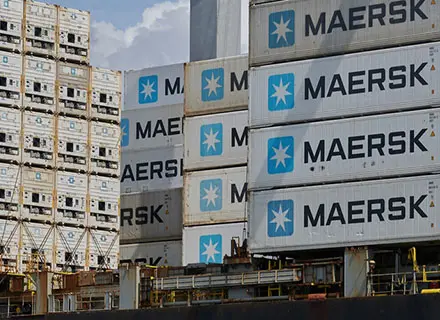

As Danish integrated shipping, supply chain and logistics company Maersk announces a revision of its Peak Season Surcharge (PSS) applicable to goods shipped from China and Hong Kong to the ports of Mombasa and Dar es Salaam, importers in Kenya and Tanzania are bracing for higher business costs, as the new freight charges will be making cargo movement between Chinese and East African ports expensive from the next week onwards.
From June 15, Maersk will be charging USD 1,000 for every 20-foot container, up from USD 900. The surcharge for a 40-foot container, on the other hand, will now stand at USD 2,000, from the previous rate of USD 1,100. And last but not least, 45-foot high-cube dry containers will now attract a surcharge of USD 2,000, increasing costs for businesses that rely on larger shipments.
As per the industry players, given the fact that East African economies heavily depend upon Chinese imports for hardware like industrial equipment, electronics, construction materials, vehicles, and consumer goods, higher freight costs will increase the final prices of imported products, placing more pressure on businesses already struggling with rising operational expenses.
As per the reports, for cargo destined for the Port of Dar es Salaam in Tanzania, the surcharge for a 20-foot container has increased from USD 750 to USD 1,000, while the charge for a 40-foot container has risen from USD 1,050 to USD 1,400. However, analysts see cargo routed through Dar es Salaam becoming more expensive in some categories due to congestion challenges and growing demand for cargo-handling services at Tanzanian ports.
“We expect more shipping lines to follow suit; the charges for Tanzania will continue to rise further compared to Kenya due to port congestion being experienced in Dar es Salaam Port. The surcharge applies strictly to non-spot bookings and is charged according to freight-paid terms, affecting pre-arranged shipping contracts. For non-FMC bookings, pricing is now tied to the scheduled departure date of the first water leg at the time of booking confirmation,” said John Mwasingo, a Mombasa-based clearing and forwarding agent, while interacting with The East African.
Noting that increased freight charges inevitably translate into higher landed costs, economist James Mwangi sees importers paying up more to bring goods into the region, following which the additional costs will be passed on to wholesalers, retailers, manufacturers, and ultimately consumers.
“Shipping costs are a critical component of the total cost of imports. Any increase in freight charges has a direct impact on product prices across multiple sectors,” Mwangi said.
The timing of Maersk’s surcharge increase couldn’t come at a bad time, with many East African firms still recovering from disruptions experienced during the global supply chain crisis and fluctuating exchange rates that have made imports more expensive.
Kenya, whose broader economic and industrial activities rely heavily on Chinese imports, will start paying more in surcharges. In 2025, Nairobi imported goods worth USD 4.3 billion from China, which included machinery and industrial equipment, telecommunications devices, electronics, motor vehicles, construction materials, iron and steel products, as well as various manufactured consumer goods.
In contrast, exports to China remain comparatively small, ranging between USD 200 million and USD 310 million annually. The East African country mainly exports tea, coffee, titanium ore, leather products and a limited range of agricultural commodities to the world’s second-largest economy. The substantial trade imbalance, accompanied by the raised surcharges, will now put pressure on existing trade arrangements between the nations.
“While Kenya provides duty-free entry for used personal effects and selected personal goods brought in by travellers, commercial imports do not enjoy blanket duty exemptions. Most imported goods remain subject to the East African Community’s Common External Tariff and other applicable taxes. Some products, including solar energy equipment, agricultural inputs, and selected industrial machinery, may qualify for tax exemptions or reduced rates under specific government policies. However, analysts argue that higher freight charges could erode some of the benefits associated with these incentives,” The East African reported.