
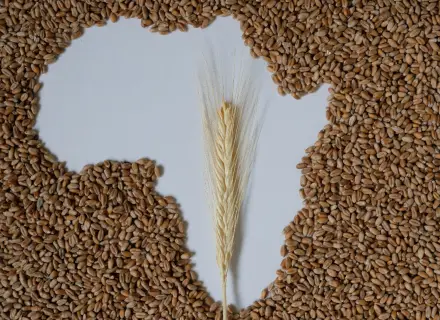

According to a new report from the African Development Bank, African Union Commission, UN Economic Commission for Africa and UN Development Programme, the continent’s food security faces a steep test as the Middle East conflict sends oil prices soaring and upends key trade routes.
“The war has already triggered a trade shock, which could potentially and quickly turn into a cost-of-living crisis across Africa due to higher fuel and food prices, rising shipping and insurance costs, exchange rate pressure and tighter fiscal conditions. The extent of this impact would vary across the continent based on levels of import dependency, exposure to the Middle East and global market conditions,” the report noted, while predicting that the continent’s GDP may decline in 2026 by 0.2 percentage points if the conflict’s duration exceeds six months.
According to the study, food prices, in particular, are mainly felt by vulnerable African households, given that most countries are still growing at rates below pre-COVID levels.
“Thus, the longer the conflict lasts and the more severe the disruption to shipping routes and energy and fertiliser supplies, the greater the risk of a significant growth slowdown across the continent,” the report noted.
The Middle East reportedly accounts for nearly 16% of Africa’s imports and 10.9% of its exports. The Strait of Hormuz, the key waterway effectively shut by Iran (to gain geopolitical leverage in the conflict), usually handles a fifth of global oil exports and nearly 90% of Arabian Gulf oil exports.
“Continued escalation of the conflict worsens global instability, with serious implications for energy markets, food security and economic resilience, particularly in Africa, where economic pressures remain acute,” said Mahmoud Ali Youssouf, chairman of the African Union Commission.
“Food security is crucial to Africa, with an estimated population of more than 1.57 billion, as communities across the continent rely on agriculture for their livelihood. A lack of food security can lead to hunger, malnutrition and social instability,” says African Food Security, an agricultural development firm.
The main challenges in the continent’s food sector have been climate change, poor infrastructure, limited access to modern farming technology, political instability, land degradation and rapid population growth.