
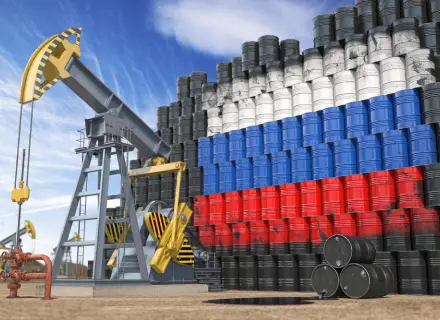

The ongoing supply crunch in the global energy market, due to the Iran war and Strait of Hormuz blockade, has opened a new window of opportunity for Russia, with the United Kingdom now allowing imports of diesel and refined jet fuel under a sanctions carve-out, as the Keir Starmer administration looks to ease fuel costs that have been putting tremendous pressure on the European country’s aviation and household activities.
London’s move also coincided with the waiver issued by the United States, under which purchases of Russian seaborne oil will support energy-vulnerable countries hit by supply disruptions.
Despite the criticisms about the waivers potentially weakening West’s economic efforts against the Kremlin’s war machine, administrations in Washington and London are in no mood to leave the rising fuel costs unattended, with the phenomenon putting a severe squeeze on both the households’ energy expenses and the operational margins of the airlines.
The budget airlines have been on dire straits, with fuel bills accounting up to a quarter of operating expenses. To deal with this, carriers globally have responded with fare increases, capacity cuts and warnings of weaker earnings.
In the United Kingdom, higher fuel costs have also fed into broader cost-of-living pressures, with the Starmer government seeking to be proactive in terms of addressing inflation and energy affordability-related concerns. While the inflation rate fell to 2.8% in April from March’s tally of 3.3%, due to lower electricity and gas bills, analysts from Cornwall Insight still predict the domestic energy price cap will rise by around 13% in July from the current levels.
Despite the lower inflation, the United Kingdom hardly has any room for error, with the Iran war weighing heavily upon its overall economic outlook. A cooling labour market, along with falling payrolls and job vacancies, is emerging as the pain point.
While Western sanctions, imposed since 2022 (the year the Ukraine war started), have sought to curb Moscow’s energy revenues, the main driver of its battle machine, Russian crude has been flowing to global markets, often via intermediaries like India and Turkey (in terms of refining and re-exporting energy products), thereby complicating enforcement as refined products are not typically classified as Russian-origin under standard trade rules.
Talking about the United Kingdom’s latest waiver, the time-limited licence will cover the maritime transportation of LNG from Russia’s Sakhalin-2 and Yamal projects and related services, including shipping, financing and brokering, under Russia’s sanctions rules until January 2027.
On the other hand, US Treasury Secretary Scott Bessent said that the extension of the 30-day general license will allow temporary access to Russian oil and petroleum products stranded on tankers without violating severe American sanctions on Russian oil majors.
“This extension will provide additional flexibility, and we will work with these nations to provide specific licenses as needed. This general licence will help stabilise the physical crude market and ensure oil reaches the most energy-vulnerable countries,” Bessent said, in a sharp U-turn from his April statement, where he told the Associated Press that no further extension of the Russian oil sanctions waiver was planned.
While the Donald Trump administration sanctioned Russian oil majors Rosneft and Lukoil in 2025 to pressure Moscow to end its Ukraine campaign, the ongoing Iran war has resulted in a situation change, with the US Treasury issuing back-to-back waivers since March 2026 to ease energy supply shortages and mitigate price spikes by releasing sanctioned Russian oil and petroleum products stranded in tankers. The waivers do not apply to oil now being pumped by Russia.