


Apple has retired one of its most familiar ways of selling the iPhone. On July 28, the company launched Apple Upgrade in the United States, a hardware leasing programme that replaces the long-running “iPhone Upgrade Program” and stretches well beyond the phone itself. Instead of buying an iPhone, iPad, Mac or Apple Watch outright, or paying it off in installments, customers can now lease the device for a fixed monthly fee, then hand it back, swap it for a newer model or buy it once the term ends.
The scheme is available on the Apple Store online, in the Apple Store app and at Apple Store locations across the US. The leasing itself is provided by Klarna, the buy now, pay later specialist, which runs a credit application with a soft credit check that does not affect the applicant’s credit score. There is no down payment and no upfront fee, a large part of the programme’s appeal.
Apple is pitching the change as a win for flexibility. The programme gives customers “a more flexible way to pay for the products they love”, in the words of Karen Rasmussen, Apple’s vice president of the Apple Store online, announcing the launch.
How the lease works
Customers choose a 12 or 24 month lease for an iPhone or Apple Watch, or a 24 or 36 month lease for an iPad or Mac. Anyone leasing an iPhone must connect it to AT&T, T-Mobile or Verizon at enrolment, although iPads, Macs and Watches can be leased without a carrier.
 Trading in an existing Apple device at the start lowers the monthly payment, and Apple Card holders can earn Daily Cash on what they pay. One quirk worth noting is that a device ordered for store pickup must be collected within seven days or the lease is cancelled.
Upgrading early is possible too, though it attracts a charge, and Apple’s own lease terms warn that customers “may incur substantial fees” for ending the agreement before the initial term runs out.
The economics of leasing an iPhone
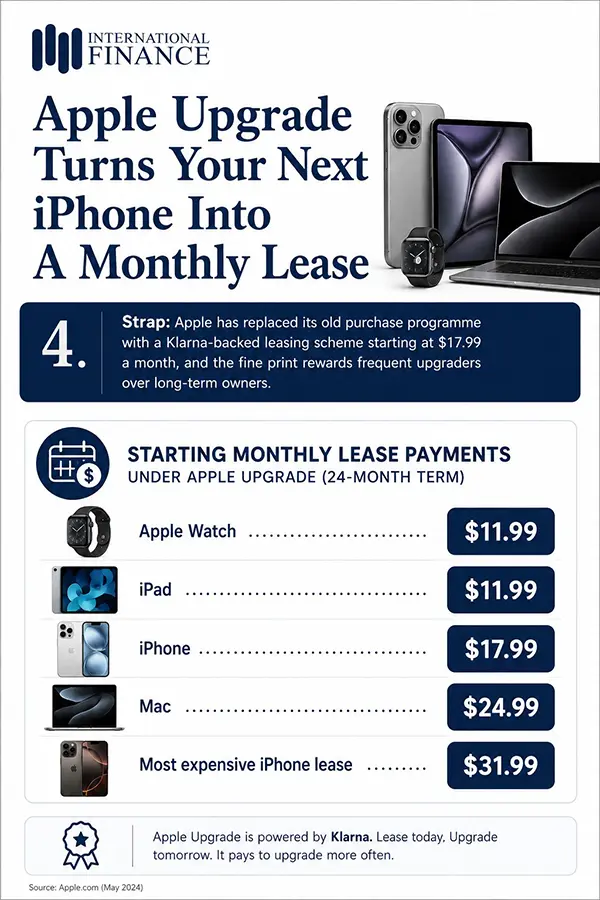
Monthly payments start at USD 17.99 for an iPhone and rise to USD 31.99 for the priciest models on a 24-month term. Apple Watch and iPad leases begin at USD 11.99 a month, while Macs start at USD 24.99, with high-end MacBook Pro configurations reaching the high USD 30s to USD 50s.
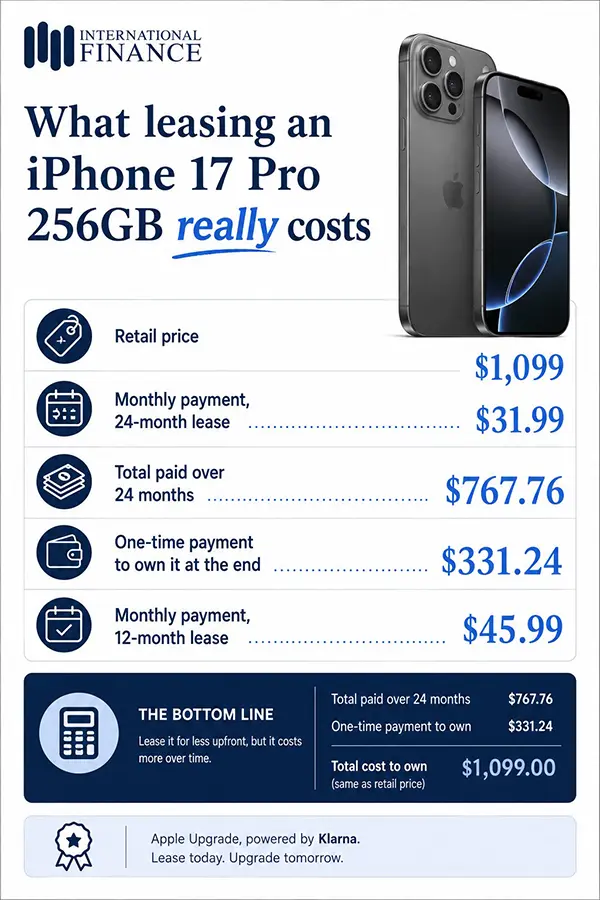
Apple’s own worked example makes the maths clear. An iPhone 17 Pro with 256GB of storage retails at USD 1,099. On a 24-month lease, the typical payment is USD 31.99 a month, which adds up to USD 767.76 over the full term.
Unlike the old iPhone Upgrade Program, Apple Upgrade does not bundle AppleCare+. Extended warranty cover must be bought separately and is billed by Apple outside the lease.
 The programme also skips Apple’s entry-level hardware. The iPhone 16 and 16 Plus, Apple Watch SE, MacBook Neo, Mac mini, iPad (A16) and Studio Display are all excluded, meaning the cheapest routes into the ecosystem still require an outright purchase or instalment plan.Why Apple wants you to lease
For Apple, the logic is straightforward. Leasing converts lumpy, unpredictable hardware sales into steady recurring revenue, keeps customers on a regular upgrade rhythm and binds them more tightly to the ecosystem.
Analysts have described it as the clearest signal yet that Apple is shifting towards a hardware-as-a-service model, selling ongoing access to devices rather than one-off products.
The timing is telling too. The launch follows price rises on some devices amid a memory chip shortage driven by the artificial intelligence boom, and iPhone prices are widely expected to climb further. A low monthly figure softens the sting of a rising sticker price.
Lease or buy
For users who upgrade every year or two anyway, Apple Upgrade is genuinely attractive. Payments are lower than instalments, nothing is owed upfront, and swapping to the newest model becomes routine.
Stoy Hall, a certified financial planner in Iowa, told the same outlet that the real risk is not any single payment but “what happens when that gets stacked on top of the car payment”, streaming services, buy now, pay later purchases and the other small monthly charges people barely notice.
Their caution is worth heeding, since fees for damage or cancellation and a separate AppleCare+ subscription can quietly erode the savings. As with any lease, the monthly figure is the headline, but the total cost of ownership is the story.