
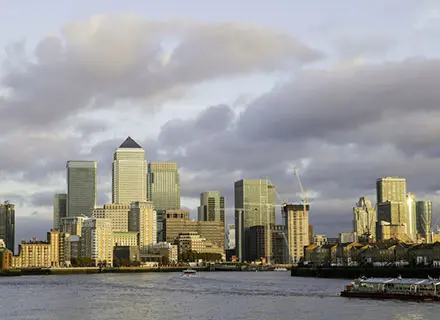

London’s super-rich are voting with their feet, and the scale of the wealth involved is putting a new number on Britain’s tax gamble: USD 160 billion.
That is the combined wealth of billionaires and wealthy families tracked by the “Bloomberg Billionaires Index” who have loosened or severed their ties with the United Kingdom over the past two years, according to Bloomberg Tax.
The departures include some of the most prominent names in British business and finance. Property tycoon David Reuben, ranked second on this year’s “Sunday Times Rich List” with his brother Simon, has moved from London to Monaco.
Hedge fund billionaire Chris Rokos is preparing to shift his residence to Greece and establish an office in Athens. Steel magnate Lakshmi Mittal has moved to Switzerland, while other billionaires have opted for Monaco, Italy, the UAE, and other lower-tax jurisdictions.
The moves come after the UK abolished the non-domiciled tax regime in April 2025 and replaced it with a residence-based system.
For established residents, however, the change can be substantial. Foreign income and gains that previously benefited from the remittance basis can become taxable in Britain. The inheritance tax regime has also shifted from domicile to residence.
A person who has been a UK resident for at least 10 of the previous 20 tax years can fall within the inheritance-tax net on overseas assets, with exposure potentially continuing for between three and 10 years after leaving.
For the government, the calculation is that a broader tax base will ultimately raise more money. Treasury estimates put the expected yield from the non-dom reforms at 39.5 billion pounds by 2030-31.
However, the mobility of the people targeted by the reforms is testing the fiscal case.
Henley & Partners’ 2026 wealth-migration research says the UK remains a major center for wealth creation, financial services, education, and international connectivity, but its competitiveness for globally mobile wealth has weakened.
The firm points to the abolition of non-dom status, wider inheritance-tax exposure, higher capital-gains taxation, and policy uncertainty as factors affecting relocation decisions.
The evidence on the scale of the wider millionaire exodus, however, needs qualification.
Henley projected that 16,500 millionaires would leave Britain in 2025, making the UK the biggest projected loser of millionaire wealth globally.
Yet London officials have cautioned that such figures are based on estimates from private wealth-migration firms and should not be treated as definitive government statistics.
HM Revenue & Customs data offers a more measured picture. In the final year before the non-dom regime was scrapped, the number of non-dom taxpayers fell by about 1,200, from 83,100 to 81,900. Around 9,000 left in 2024-25, compared with 11,200 the previous year, while new arrivals also declined.
That does not mean the wealth exodus is insignificant. A billionaire leaving Britain can affect more than the tax paid directly by that individual.
London nevertheless retains a powerful advantage: the infrastructure surrounding global wealth.
Data from With Intelligence showed that nearly four in five of 259 United Kingdom-based single-family offices, controlling more than USD 344 billion, remained in Britain despite high-profile billionaire departures.
That resilience highlights a crucial distinction between where wealthy people live and where their money is managed. London remains Europe’s largest asset-management hub, with a deep concentration of banks, investment managers, private-client lawyers, accountants, and tax specialists.
About 52% of the assets managed by London family offices, or roughly USD 179 billion, come from non-domestic family offices or wealthy individuals who are not UK residents.
In other words, Britain may be losing some of the people who spend their fortunes in London without necessarily losing control of the fortunes themselves.
That could soften the immediate economic impact of the exodus, but it also exposes a longer-term risk.
The competition is intensifying. Italy offers a flat annual tax on foreign-source income for qualifying new residents, while Monaco remains a magnet for wealthy individuals because it generally imposes no personal income, capital gains, or inheritance tax.
The UAE and Switzerland are also competing for internationally mobile entrepreneurs, investors, and family wealth.
Britain’s challenge, therefore, is not simply to persuade billionaires to keep a London address. The challenge is to maintain the city’s status as a hub for creating, investing, managing, and transferring global wealth to the next generation.
For now, London’s financial infrastructure appears more resilient than its reputation as a home for the super-rich. But the USD 160 billion figure is a warning that tax policy can change the geography of wealth faster than it changes the geography of financial services.
The government still has time to decide whether that distinction is sustainable.
Policymakers face challenges that go beyond just the headline tax receipts. Wealthy residents are employers, investors, donors, and consumers, while their businesses can generate jobs and corporate tax revenue.
The question now is whether higher taxation of mobile fortunes will deliver the revenue without gradually eroding London’s economic base and international appeal.