
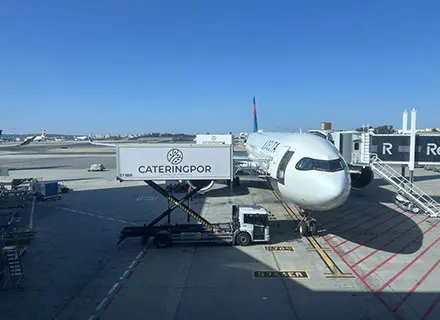

In what seems to be a massive boost for Airbus, Scandinavian airline SAS has placed its largest-ever aircraft order, agreeing to buy up to 40 Airbus widebody aircraft in a deal valued at more than USD 10 billion at list prices as it accelerates fleet modernisation and expands its long-haul network following a dramatic financial turnaround.
The order includes 18 firm Airbus A330-900neo aircraft, with additional A330-300 aircraft to support near-term capacity growth before the new generation of jets enters service. The carrier said the investment would strengthen connections between Scandinavia and key international markets while improving fuel efficiency, operating costs and the passenger experience.
“This is the largest investment in our company’s history and a clear signal of our confidence in the future,” SAS Chief Executive Anko van der Werff said.
The A330-900neo, powered by Rolls-Royce Trent 7000 engines, offers a 25% reduction in fuel burn, carbon emissions and operating costs compared with previous-generation competing aircraft. Airbus said the aircraft is already certified to operate on up to 50% sustainable aviation fuel, with a target of reaching 100% capability by 2030.
The order represents another commercial victory for Airbus, which reportedly competed with Boeing for the contract. SAS already operates an all-Airbus long-haul fleet comprising A350s and A330s, allowing the airline to benefit from fleet commonality and lower operating costs.
The purchase comes two years after SAS emerged from Chapter 11 bankruptcy protection following years of financial difficulties exacerbated by the Covid-19 pandemic. The restructuring enabled the airline to cut more than USD 2 billion of debt, reshape its fleet and return to profitability. In 2025, SAS posted an operating profit of SEK3 billion, compared with a SEK2.1 billion loss a year earlier, supported by stronger passenger demand and higher revenues.
The airline has also been reshaping its ownership structure. Air France-KLM, which acquired a minority stake during the restructuring, has announced plans to increase its holding to 60.5%.
The Airbus order follows SAS’ 2025 agreement to acquire up to 55 Embraer E195 regional aircraft, reflecting a broader strategy to strengthen both short-haul and long-haul operations.
Apart from SAS, China Eastern Airlines too is buying 25 A330neo jets from the European planemaker for a catalogue price of about USD 9.35 billion as the carrier expands its widebody fleet to serve more international routes.
As per China Eastern’s filing to the Shanghai Stock Exchange, the aircraft are scheduled to be delivered in batches from 2029 to 2033. The catalogue price of USD 9.35 billion is based on Airbus’s January 2025 list prices, and the actual transaction price would be lower, with the airline securing a “favourable” discount compared to previous purchases from Airbus, given the large order size.
The new widebody jets would primarily be deployed from Shanghai Pudong Airport to expand intercontinental destinations and increase flight frequencies, bolstering the hub’s role as a transfer centre for long-haul routes.
China Eastern, in March 2026, signed a separate agreement with Airbus to purchase 101 A320neo aircraft at a list price of about USD 15.8 billion, as major Chinese airlines point to a renewed focus on international expansion as a key growth driver.
The China Eastern deal could also pave the way for Airbus, with the latter stepping up efforts to expand its share in the world’s second-largest aviation market, where it expects passenger traffic to grow by around 5% annually over the next two decades.
The European planemaker has reportedly been in on-off negotiations in recent years to secure a huge order of up to 500 jets in China. While this type of deal often gets featured during state visits, nothing in this direction was announced when French President Emmanuel Macron visited the world’s second-largest economy in December 2025.
The A330neo, powered by Rolls-Royce’s Trent 7000 engines, is an upgraded fuel-efficient version of the previous-generation Airbus A330 long-haul jet, featuring high-aspect-ratio wings and improved aerodynamics. The new jets will replace 10 of China Eastern’s older A330 jets.
The announcements of Airbus’ new orders also coincide with the planemaker securing the first one billion euro tranche of a three billion euro financing package from the European Investment Bank (EIB) to support aerospace research and development through 2030.
The investment will fund next-generation commercial aviation, defence and security technologies across France, Germany and Spain, reinforcing the continent’s ambitions to remain competitive in the global aerospace industry.
A tie-up of the satellite activities of Airbus, Thales and Leonardo has also been planned, with the vision of creating a European rival to Elon Musk’s Starlink. The EIB’s financing deal for Airbus, whose main rival is American aerospace giant Boeing, would support the European planemaker’s planned investments through to 2030 in areas such as commercial aviation, security, defence and technology. The three-billion euro package for Airbus was the largest-ever corporate loan authorised by the EIB.