
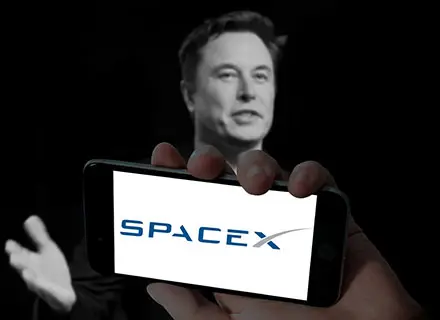

On 12 June 2026, something happened that no wealth tracker had ever recorded against a single human name. Maverick tech boss Elon Musk became the world’s first trillionaire after SpaceX priced its initial public offering (IPO) at USD 135 a share, formally pushing his fortune past the USD 1 trillion mark.
To put that in perspective, a trillion dollars is a million millions. If you spent USD 1 million every single day, it would take you nearly 2,740 years to spend it all.
SpaceX raised a record USD 75 billion in the offering, valuing the company at roughly USD 1.8 trillion, making it the largest stock market debut in history. By the end of that first trading day, with SpaceX opening on Nasdaq at USD 150 a share, Musk’s combined SpaceX and Tesla stakes alone were worth roughly USD 1.05 trillion.
From USD 24 Billion to a Trillion
As recently as March 2020, Musk’s net worth was estimated at USD 24.6 billion. Then, in January 2021, he became the richest person on the planet, surpassing USD 200 billion and USD 300 billion in the same year. The driver was Tesla. The electric car company’s stock rose roughly tenfold in about 18 months, as investors began valuing it less like a car company and more like a tech giant. By late 2021, Tesla’s total market value topped USD 1.23 trillion, temporarily pushing Musk’s net worth to USD 340 billion.
Then came the crash. In October 2022, Musk bought Twitter for USD 44 billion. The deal was expensive, chaotic, and immediately controversial. Tesla shareholders panicked. Between November 2021 and December 2022, Musk’s net worth fell by over USD 200 billion, one of the largest wealth destructions in history. That sum was greater than the entire fortune of the world’s second-richest person at the time. He briefly lost his top ranking to French luxury goods billionaire Bernard Arnault.
He came back. Tesla recovered. SpaceX kept growing in the background, quietly and dramatically. Then the milestones started piling up faster than anyone had predicted. Musk became the first person ever with a net worth of USD 500 billion in October 2025.
Two months later, the Delaware Supreme Court reinstated his previously cancelled Tesla stock option package, valued at USD 139 billion, pushing his fortune to USD 749 billion and making him the first person to cross USD 700 billion.
Then in February 2026, Forbes declared Musk the first person in history to surpass USD 800 billion, following the SpaceX-xAI merger that valued the combined company at USD 1.25 trillion. The SpaceX IPO in June 2026 was the final push over the line.
In the six years since he first crossed USD 100 billion, Musk’s net worth grew roughly tenfold, at a pace that no billionaire in history has matched, including Jeff Bezos, Bill Gates, and Bernard Arnault during their own runs at the top.
The Twitter Gamble That Became the X Ecosystem
When Musk bought Twitter in October 2022, most observers saw a billionaire overpaying for a struggling social network. What Musk saw was the foundation for something far larger.
Twitter was folded into a new company called X Corp. in April 2023. In July 2023, it was rebranded as X, with an entirely new strategy. The platform moved to the x.com domain in May 2024 and began integrating payments, video, and AI features through the Grok assistant.
The idea Musk kept referencing was WeChat, China’s super app where people chat, pay bills, shop, book taxis, and manage their bank accounts all in one place. He wanted to build the Western world’s version of that.
The payments piece came first. X Money launched as a digital wallet allowing users to store money, send and receive funds, earn interest on cash balances, and spend via a dedicated Visa debit card, all without leaving the X platform.
The AI piece came next. Musk founded xAI in July 2023, building the Grok chatbot directly into X. In February 2026, SpaceX acquired xAI in an all-stock deal, bringing together SpaceX’s rockets and Starlink satellite network, xAI’s Grok AI platform and Colossus supercomputer, and the X social media platform under one corporate roof. The stated goal was to build what Musk calls “orbital data centres,” essentially AI computing infrastructure in space.
X’s revenue tells a complicated story. In 2021, Twitter generated USD 5.1 billion in revenue in its last full year as an independent public company. By 2026, X generates approximately USD 2.9 billion, still 35% below the pre-Musk peak, with advertising accounting for 68% of income despite a significant exodus of big advertisers.
But the real value was never in ad revenue. The strategic objective was to acquire the world’s largest real-time human conversation dataset at precisely the moment that data became the most valuable raw material in the global economy. That data now feeds Grok, which sits inside a company worth USD 1.8 trillion.
Where the Trillion Actually Sits
Musk’s wealth is concentrated in a small number of companies he founded or controls. His fortune breaks down roughly as follows: SpaceX accounts for approximately USD 800 billion, Tesla approximately USD 290 billion, xAI approximately USD 40 billion, and X approximately USD 12 billion. His other ventures, including Neuralink and The Boring Company, barely register at this scale.
Musk owns 4.8 billion shares of SpaceX, or about 42% of the company, plus 350 million stock options exercisable at just USD 8.39 per share. At the IPO price of USD 135 a share, his stake alone is worth USD 648 billion, with the options adding another USD 44.3 billion.
Musk himself has pushed back on characterisations of his wealth as purely personal gain. Writing on X earlier this year, he said: “My ‘net worth’ is almost entirely due to my ownership stakes in Tesla and SpaceX. I have less than 0.1% that is cash,” adding that he has already created wealth for others “thousands of times over” and that Tesla is “more than 80% owned by retail investors and index/pension funds.”
Nearly 95% of Musk’s total fortune consists of unrealised equity gains, meaning he cannot simply spend it. Despite holding wealth that exceeds the GDP of several mid-size economies, he remains largely illiquid.
He can borrow against his shares, but even a hint of selling large stakes could crash the very stock prices that underpin the number. Financial analysts have also flagged questions about how long the valuation holds up.
As Jason Schloetzer of Georgetown University’s McDonough School of Business told ABC News: “It remains to be seen whether the valuation of SpaceX can maintain or whether we’ll see it come down once it’s under the scrutiny of public markets. Clearly, fundamentals matter in the long run. But it seems like Musk has been able to defy fundamentals in the past and he may be able to do that again.”
A Gap No Other Billionaire Comes Close to Bridging
Before the SpaceX IPO, Alphabet co-founder Larry Page held the position of the world’s second-richest person, with a net worth of around USD 304 billion, itself a staggering sum. The listing made even that figure look modest.
Forbes deputy editor Matt Durot described the gap plainly to Reuters: “The second-richest person has been hovering around USD 300 billion, so about less than one-third of what Musk is worth. And only one other person, Oracle founder Larry Ellison, has ever been worth USD 400 billion.”
Post-IPO, the scoreboard looks like this. Musk, at USD 1.1 trillion, sits USD 704 billion ahead of second-placed Larry Page, who is worth USD 296 billion. Oracle’s Larry Ellison is fourth on the Forbes list at USD 228 billion, putting him USD 872 billion behind Musk. Meta’s Mark Zuckerberg, at USD 196 billion, trails Musk by USD 904 billion.
The top 10 billionaires in the world combined were worth USD 2.55 trillion at the end of 2025. Musk alone is now approaching half that combined figure.
The scale also dwarfs entire national economies. Musk’s personal net worth is now larger than the annual GDP of Taiwan, Ireland, or Sweden. His fortune equals roughly one-quarter of India’s entire GDP, which the IMF estimates at around USD 4.15 trillion.
The milestone has drawn sharp reactions across the political and economic spectrum. Senator Bernie Sanders was direct on the platform Musk himself owns: “Today, Elon Musk, a trillionaire, pays the same amount into Social Security as someone making USD 184,500. If we end that absurdity and lift the cap on taxable income, we can make Social Security solvent for 75 years and expand benefits by USD 2,400.”
From the economics world, Michael Morris, professor of leadership at Columbia Business School, offered a more structural view, by stating, “For him, it probably won’t be a very meaningful change. He already has an enormous amount of wealth, and this will be some more zeros. But our institutions are under our control, and our institutions are allowing greater levels of inequality, and we just know empirically that that puts democracy at risk.”
Musk’s wealth did not build steadily. It moved in violent jumps, each tied to a specific event. A Tesla stock split in 2020. A SpaceX tender offer in late 2025. A court ruling reinstating his Tesla pay package. A merger announcement in February 2026. An IPO in June 2026. Each event added between USD 50 billion and USD 200 billion in a matter of days.
The result is a fortune so large it has effectively created its own category, one that no other person in history has entered, and that the second-richest person on earth, Larry Page at USD 296 billion, would need to nearly quadruple his wealth just to reach.