
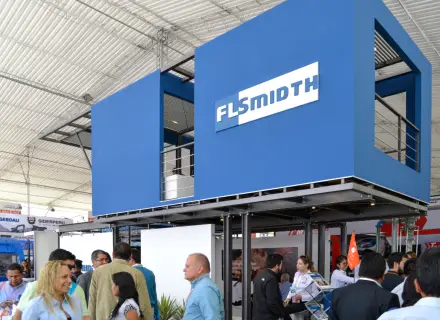

FLS has been awarded multiple repeat contracts to supply key technologies for Banded Haematite Quartzite (BHQ) beneficiation, a process that upgrades low-grade iron ore into a premium-grade concentrate.
The scope includes delivering a high-pressure grinding roll (the largest of its kind), nine of the world’s largest stirred media mills with hydrocyclones, nextSTEP flotation technology, concentrate thickeners and the world’s largest filtered tailings system. Additionally, FLS will provide its advanced process control systems, along with supervision, start-up, and commissioning services.
“This award underscores the strength of our customer relationships and our ability to deliver high-capacity beneficiation solutions at scale. By combining energy-efficient grinding, advanced flotation technologies, filtered tailings technologies and digital process control, we support a reliable ramp-up while improving productivity and reducing environmental impact. This project fully aligns with our MissionZero ambition to enable more sustainable mining operations,” said Qasim Abrahams, president of the Products Business Line at FLSmidth.
Sustainability And Efficiency
Industry analysts note that beneficiation technologies are increasingly critical as global iron ore grades continue to decline and mining companies face mounting pressure to improve resource efficiency while reducing environmental impact.
According to FLSmidth’s MissionZero initiative, mining companies are accelerating investments in solutions focused on reducing water waste, lowering emissions, and improving energy efficiency across mineral processing operations.
The company estimates that next-generation beneficiation flowsheets can reduce overall energy consumption by up to 30% and water consumption by as much as 80% compared to traditional processing systems.
The growing adoption of filtered tailings systems is also reshaping the mining sector’s sustainability priorities. According to FLS tailings technologies data, dry-stack and filtered tailings technologies can significantly reduce water loss, lower environmental risks, and cut the physical footprint of tailings facilities by nearly 50% compared to conventional systems.
The order value, booked in the second quarter of 2026, totals approximately DKK 300 million, with project commissioning expected in 2027-28.