
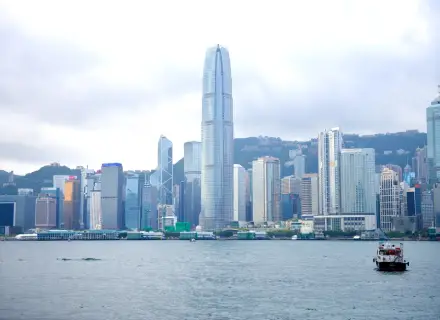

After completing its historic 13th consecutive quarter of GDP growth, Hong Kong has hit a new landmark, as the Chinese special administrative region overtook Switzerland and became the top global booking centre for cross-border wealth.
As per Boston Consulting Group, Hong Kong’s latest achievement will go unchallenged, as hubs in Asia are quickly emerging as new investment destinations for the HNWIs (High-Net-Worth Individuals), compared to the legacy European safe havens.
“Wealth from China and an IPO boom in 2025 helped Hong Kong rise to a USD 2.95 trillion offshore behemoth for the world’s rich, narrowly surpassing Switzerland’s USD 2.94 trillion in cross-border wealth. Hong Kong is cementing its role as China’s gateway to global markets, though that same concentration ties its trajectory tightly to economic and regulatory developments on the mainland,” stated BCG’s 2026 Global Wealth Report.
BCG sees both Hong Kong and Singapore consolidating their positions in the rankings of cross-border booking centres through an annual growth ratio of nearly 9% till 2030, compared to an expected 6% average in Switzerland over the same period.
“Cross-border wealth globally grew 8.4% to USD 15.7 trillion in 2025, driven by strong markets and more demand for geographical diversification, and it flowed overwhelmingly to the world’s top 10 booking centres, further boosting concentration,” BCG added.
“Despite slower growth rates, Switzerland’s diversification may prove an advantage as it draws clients from all regions, while the Asian hubs largely depend on growth in China. Geopolitical uncertainty reaffirms Switzerland’s role as a core global booking centre, attracting flight-to-safety flows from more volatile regions such as the Middle East,” the report observed.
The BCG report also coincides with a similar scoop from Reuters that, quoting bankers and financial advisers, talked about wealthy individuals looking to shift assets from the Gulf region to Switzerland in the wake of the ongoing Iran war.
“What ultimately matters is client proximity,” said Michael Kahlich, who co-authored the BCG report, adding that two hubs are forming globally – Singapore and Hong Kong for Asia, and Switzerland, the United Kingdom, and the United States for the Western region.
“As being close to clients has become more important, Swiss banks have expanded to other major hubs,” Kahlich added. ” UBS (UBSG.S), opens new tab, is number one in wealth management in both Singapore and Hong Kong,” he said.
Talking about Hong Kong’s economic growth, the GDP expanded 5.9% in Q1 2026, while completing the historic feat of achieving the 13th consecutive growth quarter. The Q1 data was also the strongest quarterly rate in nearly five years. Authorities in the Chinese special administrative region now expect the GDP growth to stay between 2.5% and 3.5% for 2026 after 3.5% growth for 2025.
“Looking ahead, Hong Kong’s economic growth outlook remains positive, underpinned by strong global demand for artificial intelligence-related electronics, sustained growth in visitor arrivals and robust cross-boundary financial activities. However, tensions in the Middle East pose downside risks,” a government spokesman said.
The Q1 2026 GDP growth was also the fastest since Q2 2021, when the economy grew 7.6%. On a seasonally adjusted quarterly basis, the economy expanded 2.9% in January-March, compared with 1.0% growth in October-December.
“The rapid global development of artificial intelligence (AI) has driven strong demand for related products and electronics across the board, which has, to some extent, mitigated the potential impact of geopolitical tensions on local exports and the economy,” Financial Secretary Paul Chan commented, while analysing the numbers.
“Facing a complex and ever-changing external environment, Hong Kong’s economy is moving forward by enhancing quality and increasing scale,” Chan said, adding that deepening AI applications across sectors and strengthening talent development are among the priorities for the administrative region’s authorities.