
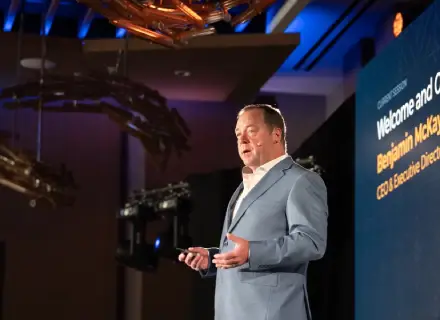

More than 100 regulatory, legal and industry leaders from across the US surplus lines market convened in Anaheim for the Surplus Lines Law Group meeting, hosted by the Surplus Line Association of California. The convening brought together the organisations responsible for overseeing the nation’s USD 100+ billion E&S insurance marketplace.
The discussion comes at a pivotal moment for the market. Total surplus lines premium reached approximately USD 100.9 billion in 2025, with activity concentrated across key jurisdictions including California, Florida and Texas. That growth is bringing increased pressure, from evolving regulatory requirements, litigation trends and the use of artificial intelligence in underwriting models, claims decision-making and core insurance operations.
Attendees included executives from the Surplus Line Association of California, Florida Surplus Lines Service Office, Excess Line Association of New York and Surplus Lines Stamping Office of Texas, alongside national policy and industry voices from organisations including the American Property Casualty Insurance Association and the Wholesale & Specialty Insurance Association, as well as representatives from leading carriers, wholesale brokerages and regulatory and legal experts across the surplus lines market.
Andrew Gulcher, chief of the Investigation Division at the California Department of Insurance, spoke on enforcement priorities and the growing importance of compliance in a high-volume market. Additional discussions featured updates tied to the National Association of Insurance Commissioners, coordination across state regulatory frameworks, including potential updates related to the Nonadmitted and Reinsurance Reform Act, as well as broader policy developments affecting areas such as tort reform and parametric insurance.
Throughout the meeting, participants examined how coordination across states can support consistency in oversight while preserving the flexibility and freedom of rate and form that define the surplus lines market. Discussions also addressed enforcement trends and evolving exposures, including the use of artificial intelligence in underwriting and governance, the continued impact of litigation and catastrophe risk on sectors such as utilities and the growing role of the surplus lines market in addressing coverage gaps related to AI as admitted carriers reassess their risk appetite.
“The surplus lines market exists to absorb complexity, but that only works when there is discipline behind it,” said Benjamin McKay, CEO and executive director of the Surplus Line Association of California. “As the market scales, that discipline must be reinforced through coordination and accountability across jurisdictions. That’s where the market is headed—more complex and increasingly interconnected, with risks that don’t stop at state lines.”
Participants emphasised that as the USD 100 billion surplus lines market continues to globalise, the role of stamping offices and surplus line associations remains foundational. Without coordinated oversight, access to coverage for complex risks would be significantly constrained across the US economy.