
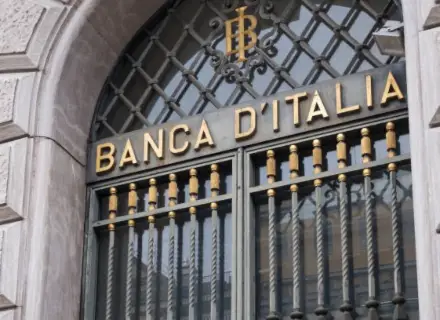

Italy’s central bank is bracing for a prolonged stretch of sluggish growth, forecasting the country’s economy will expand by just 0.5% in both 2026 and 2027, picking up slightly to 0.8% in 2028. The Banca d’Italia, which functions as Italy’s equivalent of a national economic regulator, released these projections on April 3, painting a cautious picture of an economy struggling against multiple headwinds at once.
The core problem is a combination of rising energy costs and shaky consumer confidence. Oil prices have surged to an average of $103 per barrel, while natural gas, which powers homes and factories across Europe, is trading at €55 per megawatt-hour. These are not abstract numbers. When energy gets expensive, it costs more to produce goods, transport them, and heat homes. Businesses hold back on investment. Families spend less. That chain reaction is precisely what Italy is experiencing right now.
Consumer price inflation, the rate at which everyday prices rise, is expected to hit 2.6% this year as a direct result of these commodity spikes. To put that in plain terms, goods and services that cost €100 last year will cost around €102.60 this year. The bank projects inflation will ease below 2% by 2027 and 2028, provided that energy prices gradually fall as futures markets currently suggest.
Geopolitical instability, particularly the ongoing conflict in the Middle East, adds another layer of risk. In a worst-case scenario where hostilities drag on, Italy’s 2026 growth could shrink by a further 0.5 percentage points, and 2027 could lose a full percentage point off its forecast, a significant blow to an already fragile recovery.
There are some bright spots. The labour market remains relatively stable, wages are growing, and the bank expects a slow recovery to begin in early 2027 once inflationary pressure eases. However, Italian manufacturers face stiffening competition from cheaper Chinese goods, which limits their ability to grow.
The Banca d’Italia is urging policymakers to pursue productivity reforms and keep a close watch on global risks before conditions worsen further.