
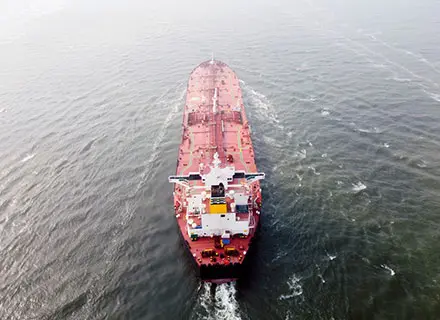

The US-Iran conflict is helping drive an unprecedented wave of supertanker orders as shipowners seek to capitalise on longer crude-oil voyages, elevated freight rates and growing uncertainty over the future of Gulf energy shipments.
More than 217 massive crude carriers (VLCCs) have been commissioned so far this year, according to Reuters, representing more than USD 20 billion in investment and roughly double last year’s total.
The surge comes as the effective closure of the Strait of Hormuz disrupts a critical oil-export route and forces buyers and sellers to reconsider established shipping patterns.
The ordering boom is not simply a bet on higher oil prices. It reflects the economics of moving crude over longer distances, the value of owning modern vessels and concerns over the age of the existing tanker fleet.
Longer routes, stronger demand
The Strait of Hormuz, linking the Persian Gulf with the Gulf of Oman, has long been central to global crude trading. Disruption to traffic through the waterway has increased the importance of alternative supply sources and shipping routes.
Reuters reported that buyers were shifting supply lines away from the Middle East towards the Atlantic basin, including producers such as Brazil, Guyana and Argentina. Crude travelling from the Atlantic basin to Asian refineries requires longer voyages than many traditional Gulf-to-Asia routes.
Even if oil consumption doesn’t increase proportionately, that change can still absorb more tanker capacity. A vessel spending more days at sea is unavailable for another cargo, effectively tightening the supply of ships available for charter.
The result has been a sharp increase in freight rates. VLCC spot prices have surpassed USD 500,000 a day, compared with about USD 132,000 in February, according to Reuters. Such earnings can materially improve the economics of ordering a new vessel, particularly for owners able to secure construction slots at competitive prices.
The surge also highlights how shipping markets can respond to geopolitical disruption faster than the physical oil market itself. A barrel of crude may still be available, but moving it to a refinery can become significantly pricier.
China’s shipyards benefit
Chinese shipbuilders are emerging as major beneficiaries of the tanker boom. A South China Morning Post report in 2026 said Chinese yards were securing more supertanker orders amid the continuing Iran war turmoil.
The country’s shipbuilding industry has expanded its capacity across commercial vessel categories, while demand for large crude carriers has provided another source of high-value work. Orders running into the late 2020s also give yards greater visibility into future production.
For shipowners, the decision is more complicated. New vessels require substantial capital and may not enter service for several years. An owner ordering a VLCC today is therefore making a judgement about freight markets, oil flows and fleet supply well beyond the immediate conflict.
The current boom is also attracting attention because it has already exceeded a previous ordering peak. Bloomberg reported in June that global orders for new oil supertankers had surpassed the record set in 2008. Clarkson Research said 262 new oil supertankers had been ordered, exceeding the previous October 2008 peak.
That historical comparison is significant. An oversupply of vessels and a collapse in tanker rates followed the 2008 ordering boom. The risk for today’s market is that owners responding to exceptional earnings could create a similar glut once the current disruption eases.
Fleet age adds to the pressure
Geopolitics is only one part of the story. The existing VLCC fleet is ageing, increasing the need for replacement tonnage.
About 20% of the fleet is more than 20 years old, according to Reuters. Older vessels can face higher maintenance expenses, stricter inspection requirements and commercial disadvantages compared with modern ships.
Newbuildings offer improved fuel efficiency and can help owners meet environmental and charterer requirements. They also provide an opportunity to replace older tonnage without immediately expanding fleet capacity.
However, the distinction between replacement and growth is important. Ordering more vessels than necessary to replace retiring ships could burden earnings in the next decade.
The timing of deliveries makes that risk harder to assess. Some vessels ordered during the current boom are scheduled for delivery as far out as 2030, potentially entering service after the Strait of Hormuz disruption has ended.
Middle East producers reconsider tanker ownership
The conflict has also encouraged Middle Eastern oil producers and previously hesitant shipowners to invest in or own tankers, Reuters reported.
Control over shipping capacity can provide greater flexibility when charter rates rise or vessels become difficult to secure. For producers, owning ships may also help manage export commitments during periods of disrupted commercial traffic.
But tanker ownership does not eliminate geopolitical risk. Vessels still face exposure to attacks, insurance costs, sanctions and delays at chokepoints. Reuters reported that the number of commercial vessels transiting Hormuz fell to three on Wednesday, compared with 12 the previous day, according to preliminary ship-tracking data.
The sharp decline illustrates how security concerns can affect shipping availability even before physical oil supplies are exhausted.
Rates could remain volatile
The duration of the conflict and the extent of crude flow rerouting heavily influence the immediate outlook for the tanker market.
Higher freight rates are supporting earnings and encouraging new investment. Yet the same conditions that benefit shipowners can raise costs for refiners and importers, adding to pressure on fuel prices and inflation.
The International Energy Agency has warned that global oil supply in 2026 could decline by 5.7 million barrels per day because of Middle East conflict and Gulf disruptions, while oil demand is also expected to fall. The combination of lower supply and demand creates uncertainty over how much of the current freight strength can be sustained.
For shipbuilders, the order book provides work for years. For tanker owners, however, the challenge is to avoid confusing exceptional wartime earnings with a permanent increase in shipping demand.
The current supertanker boom is therefore both a response to the crisis and a bet on the future of global oil trade. Longer voyages, fleet replacement and strategic concerns are driving investment today. Whether those orders translate into durable returns will depend on how quickly shipping routes normalise — and how many new vessels arrive when they do.