
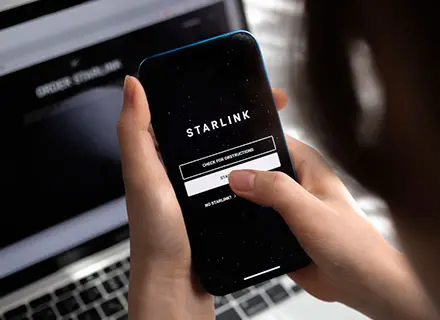

Elon Musk-led SpaceX struck a deal on Thursday to acquire a nationwide low-band spectrum portfolio, moving the maverick tech titan’s satellite venture closer to mounting a direct, orbital challenge to legacy wireless giants across the United States.
SpaceX will pay about USD 8 billion in cash for the assets to the seller, private equity firm Grain Management, as per the Wall Street Journal (WSJ).
While SpaceX’s flagship Starlink Mobile satellite-to-cellular service uses existing global 2 GHz mid-band spectrum for high-bandwidth capacity, the acquisition of the new spectrum will enable the company to pass its signal through territorial obstacles.
What sets low-band frequencies unique is their ability to travel long distances and penetrate dense structures like walls and tree cover, addressing a major technical hurdle previously faced by satellite-based mobile networks.
Most existing mobile handsets support the 800 MHz frequency band, eliminating the need for consumers to purchase proprietary satellite phones.
SpaceX, by pairing nationwide low-band airwaves with high-frequency space capacity, is looking to position Starlink Mobile to bypass conventional cell towers entirely and challenge the wireless oligopoly in both broad coverage and in-building reliability.
The deal can be a disruptive one for the legacy telecom players, as SpaceX eyes transforming satellite direct-to-device connectivity from a supplementary safety feature for remote dead zones into a full-scale commercial rival capable of unseating terrestrial cellular networks.
As the announcement arrived, shares of T-Mobile US, Verizon, and AT&T fell around 6% in extended trading on Friday.
In May, the three carriers established a joint venture focused on satellites, which analysts believe aims to counter SpaceX.
“The incumbent wireless carriers have been vocal in expressing skepticism that SpaceX’s network will be able to match the quality of their networks,” William Blair analysts said.
“We expect SpaceX to offer a very compelling Starlink broadband and Starlink Mobile bundle. The company may also include Grok in the package,” the analysts stated further, referring to the AI chatbot developed by Musk’s xAI.
The transaction related to SpaceX’s spectrum takeover, which also involves acquiring 100% of Grain Management’s nationwide 800 MHz spectrum portfolio, remains subject to Federal Communications Commission (FCC) approval.
Grain acquired the airwaves from T-Mobile earlier in 2026.
“We are going to see more investment, more opportunities for a range of providers, and America leading the world in next-gen technologies—to the benefit of consumers all across the country,” FCC Chair Brendan Carr said in response to the deal between SpaceX and Grain.
Grain CEO David Grain said the deal has “the potential to change where and how Americans connect.”
The FCC last week approved Starlink Mobile’s Gen2 constellation application, authorising SpaceX to launch 15,000 satellites that are optimized for 2 GHz spectrum globally.
The new orbital fleet will operate in very low Earth orbit (LEO), delivering expanded bandwidth and low-latency connections to standard handsets.