
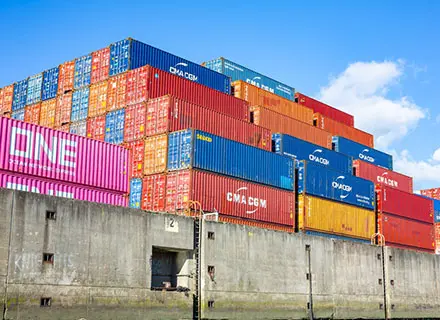

Germany has blocked Chinese state-owned shipping giant Cosco’s planned acquisition of an 80% stake in Hamburg-based logistics company Zippel, escalating Berlin’s scrutiny of Chinese investment in strategic infrastructure.
The German cabinet approved the prohibition on Wednesday, with the Economy Ministry saying the transaction would have deepened dependencies on China and jeopardised the resilience of supply chains in Germany and the European Union.
The decision is significant because Zippel does not operate a container terminal itself. The company specialises in moving containers between seaports and inland destinations using trains, barges and trucks, making it an important link between Germany’s largest seaport and its hinterland.
Cosco had sought to acquire 80% of Zippel, with the remaining 20% staying with management. Zippel has around 350 employees and handles cargo moving through Hamburg and other northern German ports.
The deal had already cleared Germany’s competition authority in February. The Bundeskartellamt concluded that there were no competition concerns because Cosco’s maritime container operations and Zippel’s inland transport activities were largely complementary. National security considerations, however, fell outside the authority’s remit.
That distinction ultimately allowed the German government to intervene through its foreign investment screening powers.
The economy ministry said Germany remained open to foreign investment but could intervene where an acquisition was likely to threaten public order or national security. The government has previously rejected only a small number of transactions after investment reviews, underlining the significance of the Zippel decision.
The case also highlights the growing sensitivity around Chinese ownership of European logistics infrastructure.
Cosco already has a foothold in Hamburg. In 2022, the German government approved the Chinese group’s acquisition of a 24.9% stake in the Tollerort container terminal, after initially considering a proposed 35% investment. The compromise followed an intense political dispute within Chancellor Olaf Scholz’s coalition, with several ministries warning about the strategic risks of Chinese involvement in critical transport infrastructure.
The latest decision suggests Berlin is now taking a more restrictive approach.
Security concerns surrounding the Zippel transaction had emerged earlier this year. German security officials reportedly warned that the acquisition could form part of a broader strategy to build influence across the Hamburg logistics network. The concern was not simply about ownership of a single logistics company but about the cumulative effect of Chinese participation in different parts of the supply chain.
For Berlin, the strategic importance of Hamburg is difficult to overstate. The port handled 114.6 million tonnes of seaborne cargo in 2025, while container throughput reached 8.3 million twenty-foot equivalent units, up 7.3% from the previous year. China was among the key drivers of the port’s container growth, with China-related traffic rising 6.5%.
That commercial relationship complicates the security debate. Chinese trade deeply integrates Hamburg, and Chinese shipping companies play a crucial role, as they are important customers and investors in European ports. At the same time, European governments are increasingly concerned that excessive dependence on foreign state-owned companies could create vulnerabilities during a geopolitical crisis.
For Germany, the issue has acquired additional urgency after the experience of relying heavily on Russian energy supplies before Moscow’s invasion of Ukraine. Policymakers have increasingly applied the broader lesson of economic security to other areas, including technology, energy, transport and logistics.
Chancellor Friedrich Merz, who took office in 2025, has sought to balance Germany’s need for foreign capital with efforts to reduce strategic dependencies on China. Berlin is also preparing tighter investment-screening rules as it reassesses the risks posed by foreign ownership of critical assets.
Zippel’s management has expressed disappointment with the government’s decision while maintaining that the proposed transaction was commercially sound. Chief executive Axel Plass said operations would continue as normal despite the prohibition.
The dispute illustrates a broader shift in European economic policy: foreign investment is no longer being assessed solely through the lens of competition, jobs and capital. Increasingly, policymakers view ownership of ports, terminals, rail links, logistics companies, and data systems as integral to national resilience.
For Cosco, the rejection represents a setback in its push to expand beyond shipping into integrated European logistics. For Germany, it marks another step towards reducing the strategic exposure created by Chinese ownership – even when the investment itself does not directly involve a critical port terminal.
The message from Berlin is increasingly clear: commercial access to Germany remains welcome, but control of strategically important supply chains is becoming harder to obtain.