
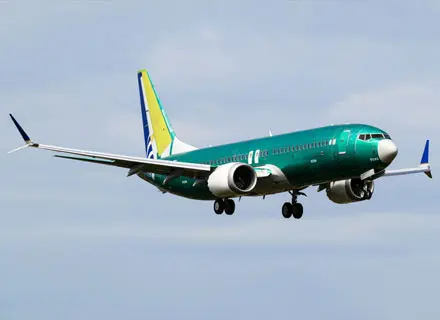

In a breather for Boeing, the latest consultation with the United States’ Federal Aviation Administration (FAA) has turned out to be a successful one, with the safety watchdog now permitting the American aerospace giant to increase its 737 narrow-body family production to 47 jets a month, up from 42.
“We’re off and rolling at the 47 rate, and we should be there in the next couple months,” Boeing CEO Kelly Ortberg said at the Bernstein Annual Strategic Decisions Conference while giving the latest update.
As per Ortberg, Boeing now aims to move its production ratio to 52 jets a month by early 2027, after opening a manufacturing line in Everett, Washington.
“I think the whole world’s watching to make sure we make (rate) 47 and 52,” Ortberg remarked.
The 737 production, since January 2024, has run into consistent headwinds after a midair panel blowout on a nearly new 737 MAX revealed significant manufacturing quality problems at the US planemaker and brought intense scrutiny from customers and the FAA, which then capped 737 outputs at 38 a month. The first relaxation came in October 2025, when the safety watchdog removed the cap.
With the latest development, Boeing now expects to increase the 737 output, as it will accelerate the American aerospace giant’s ongoing turnaround after years of crises that resulted in more than USD 35 billion in losses from 2019 to 2024. In 2025, the USD 10.6 billion sale of subsidiary Jeppesen, a digital aviation services provider, helped the company to register a USD 2.2 billion profit.
Giving further updates about the certification flight tests of MAX 7 and 10 (the narrowbody jet’s smallest and largest variants), Ortberg said Boeing has largely completed the procedures. Certifying the two models and Boeing’s new widebody 777-9 has taken several years longer than expected and been a significant drag on Boeing’s earnings.
“Pretty confident that we’re not going to see any hiccups in the remaining phase of flight testing for certifying the new 737 MAX engine anti-ice system. The one area I guess I’d highlight where I haven’t met my goals was getting the certifications complete on the new commercial aeroplanes sooner,” the Boeing CEO noted.
Ortberg’s comment also coincided with remarks made by Bryan Bedford, the head of the Federal Aviation Administration, who now expects the 737 MAX 7 certification to conclude by this summer, followed by the larger MAX 10 by 2026-end.
While supporting Boeing’s plan of raising the 737 production from 42 to 47, Bedford told Reuters that the company may again hike the ratio in the next 90 days.
“It’s important for the country that Boeing is successful. We are absolutely comfortable with 42 to 47, and I suspect in another 30, 60, or 90 days we’re going to see continued rate increases,” Bedford remarked.
Production of Boeing’s twin-aisle 787 is back on track (at eight a month) after dipping earlier in 2026 due to delays with engine supplies from GE Aerospace. Boeing still hopes to raise output to 10 per month later this year, subject to the pace of engine deliveries.
“We have not had customers ask to delay jetliner deliveries due to the Iran war and higher fuel prices. Instead, many customers have said they will take deliveries earlier if possible,” Ortberg concluded.