
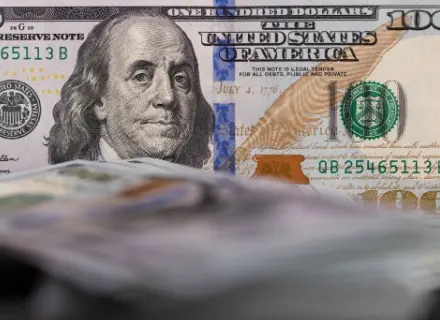

The US dollar touched a 10-day low on Tuesday (June 16), with the interim peace deal between Washington and Tehran to end the Iran war boosting investors’ confidence to some extent. On the other hand, the yen wobbled near the key 160 level after the Bank of Japan (BOJ) hiked interest rates to tame inflationary risks emerging from the Middle East conflict.
While the United States President Donald Trump, announced the signing of the preliminary agreement between his country and Iran, details of the pact haven’t emerged yet. However, that hasn’t stopped global markets from entering the feel-good mode.
Investor attention will now shift to the upcoming central bank meetings, with the Bank of England (BoE) and the US Federal Reserve giving their takes on whether the Iran war’s conclusion (subject to the stability of the interim peace deal) has come too late to ease inflation concerns of the British and American economies.
With the Bank of Japan already raising its interest rates to a 31-year high, the focus will be on the monetary policy approaches of the BoE and Fed.
The Australian dollar, on the other hand, was down 0.3% at USD 0.705, holding to its losses as the Reserve Bank of Australia (RBA) left interest rates unchanged in a unanimous decision after three consecutive hikes even as inflation remains elevated.
Stating that the inflation rate (4.2%) was still too high, the RBA said it would do whatever was necessary to bring it down “including increasing the cash rate target further if required.”
Matt Simpson, a senior market analyst at StoneX, told Reuters that traders are not ‘buying’ the RBA’s mildly hawkish tone where the Australian dollar is concerned.
“Given soft employment and growth, the only reason it is hawkish at all is to not undo the work of the last three hikes,” Simpson said.
While the US-Iran interim peace agreement would extend the “ceasefire” already announced in April by another 60 days and reopen the strategically important Strait of Hormuz, the broader currency market’s reaction to the development was a constrained one. Now the comments of the central bank bosses will be keenly watched by the traders and investors.
The euro was at USD 1.1577, below the 10-day high of USD 1.1622 it touched on Monday. Sterling, on Tuesday, was last seen at USD 1.3392. The dollar index, which measures the US currency against six other units, was at 99.76.
Another question that the investors will seek a quick answer from is whether the global supply chain will get normalized, given the fact that the Hormuz closure since February 28 disrupted the energy trade to a large extent along with creating a price shock phenomenon.
As per the ING analysts, “the market reaction has been faster than realities on the ground, and it can be altered by the prospects of a deal.”
“A more durable repricing requires safe, predictable, and insured shipping through the Strait of Hormuz. And demand could likely be higher than usual as depleted reserves need to be replenished. Re-escalation risks are reduced, but not off the table,” they remarked in their market note.