
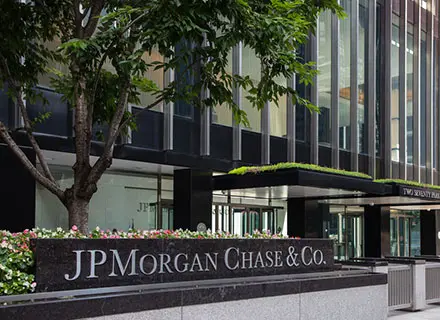

Wall Street biggie JPMorgan Chase has deployed more than USD 20 billion across the Gulf region since the outbreak of the Iran war, increasing its capital commitments and risk exposure as it positions itself to finance what it believes could become one of the world’s largest post-war reconstruction programs.
Doug Petno, the bank’s co-chief executive of commercial and investment banking, said the lender expects rebuilding and economic diversification across the region to require hundreds of billions of dollars once the conflict ends, creating significant opportunities for banks, investors, and capital markets.
“We’ve deployed significantly more capital and expanded our risk limits across the region,” Petno told Abu Dhabi-based newspaper The National. He said the move reflects both the immediate financing needs created by the conflict and JPMorgan’s long-term confidence in the Gulf’s growth prospects.
While the bank did not disclose how much it had adjusted its risk appetite, Petno said teams were working country by country to assess financing requirements as governments and businesses prepare for major capital expenditure programs.
“Funding could come from JPMorgan’s balance sheet, public debt markets, or private capital, depending on the nature of each project,” he said, adding that the overall financing requirement would become clearer after the conflict ends.
The bank expects reconstruction spending to focus on energy infrastructure, logistics networks, data centers, and artificial intelligence-related projects, alongside broader investments aimed at strengthening the region’s digital and economic resilience.
The conflict, which began in the last week of February 2026 following US and Israeli strikes on Iran and subsequent attacks by Tehran on neighbouring countries, disrupted business activity and damaged key energy and civilian infrastructure across parts of the region.
Despite the geopolitical uncertainty, Petno said Gulf financial markets had demonstrated resilience. Debt capital markets remained largely open throughout the conflict, although equity capital market-related activity had slowed as investors adopted a more cautious stance.
JPMorgan has been steadily expanding its Middle East presence. After establishing its regional headquarters at Riyadh in 2025, the bank now plans to grow its operations in the UAE and double its regional workforce over the next three to five years.
The lender is also working closely with governments, sovereign wealth funds, and corporate clients to structure financing for reconstruction and long-term economic diversification projects.
As Gulf economies continue efforts to reduce dependence on hydrocarbons, JPMorgan believes the region will remain one of the world’s most active investment destinations, with demand for infrastructure and strategic capital expected to extend well beyond the immediate post-conflict recovery period.