
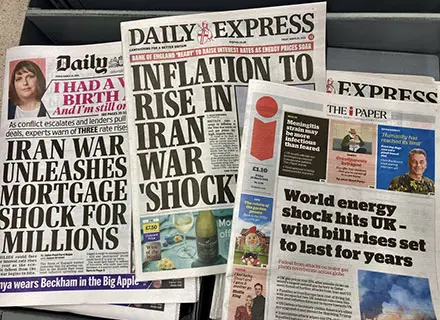

By the time the first missiles fell on Iranian soil in late February 2026, the global energy system had already survived one supply shock this decade – Russia’s invasion of Ukraine. It would not survive a second one unchanged.
What began as a military operation against Iran’s nuclear and command infrastructure escalated within 48 hours into something the International Energy Agency (IEA) would later call the largest supply disruption in the history of the global oil market, eclipsing even the 1973 Arab oil embargo.
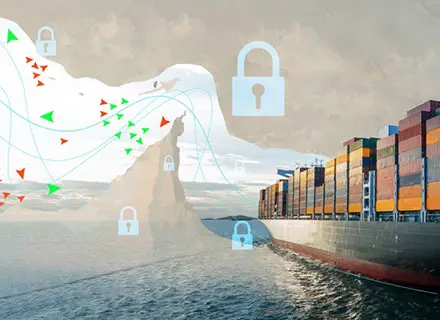
Iran’s closure of the Strait of Hormuz – the 33-kilometre chokepoint through which roughly a fifth of the world’s seaborne oil and LNG normally passes – did what geopolitics rarely manages: it forced nearly every government on earth to rethink, in the space of a few months, how it powers itself.
Six months on, with ceasefires struck, broken and re-struck, the headline numbers have become almost familiar. Brent crude, trading in the low seventies before the war, spiked past USD 120 a barrel within days.
Qatar’s Ras Laffan LNG complex took a direct hit that analysts estimated would need three to five years to repair, sending Asian spot LNG prices up by more than 140% overnight. Petrol pumps from Hanoi to Berlin saw queues not witnessed in a generation.
But the more consequential story is not the spike – spikes fade – it is what governments, companies and households did in response, and how much of that response looks permanent.
A crisis measured in decades, not weeks
Energy analysts have a habit of drawing three-scenario charts for crises like this: quick resolution, prolonged standoff, and full-blown regional war.
What has actually unfolded is messier – a stop-start conflict with ceasefires that hold for weeks before collapsing, as happened again in July when strikes resumed on tankers in the strait.
That unpredictability is itself the lasting economic signal. Markets can price in a war. What they cannot easily price in is a war that keeps almost-ending.
This is precisely why the IEA’s 2026 World Energy Investment report, released in May, reads less like a snapshot of a single bad year and more like a hinge point. Global energy investment is on course to hit USD 3.4 trillion in 2026, and the composition of that spending tells the real story.
Oil investment is set to fall for a third consecutive year, dropping below USD 500 billion, even as crude prices sit well above their pre-war range. That is a striking reversal of how energy shocks used to work. The 1970s oil crises triggered a drilling boom.
This one has done the opposite, because producers no longer believe elevated prices will last long enough to justify decade-long upstream commitments, and because the risk premium attached to Gulf infrastructure has made the region itself a harder place to invest in.
Where the money is going instead is instructive. Natural gas investment is climbing to USD 330 billion, its highest level in a decade, driven overwhelmingly by new liquefied natural gas export terminals in the United States and Qatar – a hedge against exactly the kind of chokepoint vulnerability Hormuz just exposed.
Renewables remain the largest single category of spending, at roughly USD 665 billion, more than half of it in solar. And in a twist that unsettles the clean-energy narrative, coal investment is heading for USD 180 billion, its highest since 2012, as Asian economies squeezed by the oil and gas disruption fall back on the one fuel many of them can produce at home. China alone accounts for close to 70% of that coal spending, even as it simultaneously leads the world in solar deployment.
The lesson governments appear to be drawing from this crisis is not “decarbonise faster” or “drill more,” it is “diversify everything,” reaching for whatever domestic resource is available, renewable or otherwise.
The geography of who pays
Energy shocks have never been distributed evenly, and this one is unusually blunt about who absorbs the pain.
The Gulf states that built their economic models on frictionless Hormuz transit – Saudi Arabia, the UAE, Iraq, Kuwait, Qatar – have seen exports collapse even with alternative pipelines like the East-West Petroline and the Abu Dhabi Crude Oil Pipeline running near capacity, together offering barely a tenth of what used to move through the strait.
Meanwhile, exporters outside the conflict zone have quietly profited. Analysis comparing shipping data before and after the war found the United States gained roughly USD 50 billion in additional export revenue and Russia more than USD 15 billion, simply by being able to ship oil that Gulf producers could not.
The knock-on effects reach further than fuel bills. Roughly ten million Indians work in the Gulf and send home upwards of USD 40 billion a year – around a third of India’s total remittance inflows – so any prolonged slowdown in Gulf economies lands directly on household incomes thousands of kilometres away.
Fertiliser markets, dependent on natural gas as a feedstock, tightened alongside LNG, prompting warnings from food-policy researchers about a slower-burning threat to crop yields in fertiliser-import-dependent regions well into 2027 and beyond.
And in a detail that says something about how thinly some economies are stretched, small trading states from Djibouti to Vietnam reported the kind of acute fuel shortages and panic buying that oil-rich nations barely noticed.
The unlikely beneficiaries
Every energy shock creates its opportunists, and this one has already reshaped investment maps well beyond the Middle East. Rystad Energy and other consultancies now point to Brazil, Guyana and Suriname as likely beneficiaries of a slower but broader fossil-fuel diversification through the 2030s, as buyers who once defaulted to Gulf crude look for suppliers with less geopolitical baggage.
Brazilian meat and poultry exporters, cut off from their usual direct routes to Gulf buyers, have rerouted through the Red Sea and Suez Canal at higher cost – a small but telling example of how conflict in one region reshapes trade logistics in entirely unrelated industries.
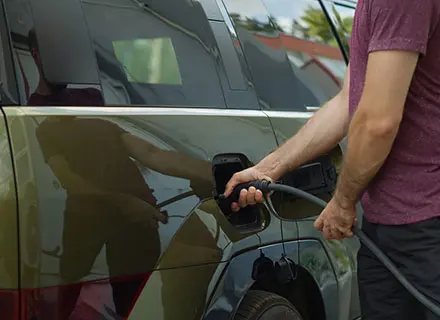
Electric vehicles have had an unexpectedly good war. April 2026 was the strongest month for EV sales in Europe on record, as fuel price volatility pushed consumers toward vehicles insulated from the pump. The United Kingdom saw its highest rate of solar panel installations since 2012 over the same period.
None of this is coincidence: crises that make fossil fuel prices unpredictable tend to make the fixed, known cost of a solar panel or a battery look considerably more attractive, regardless of what a country’s climate policy says on paper.
What actually sticks
The hardest question for anyone trying to write about this conflict’s “long-term effects” while it is still not entirely over is which changes are structural and which are simply crisis reflexes that will unwind the moment the strait reopens for good. Strategic petroleum releases, excise duty cuts, emergency tax credits for fuel-poor households – these belong to the second category. They will fade.
What looks more durable is the shift in how governments think about energy security itself. The IEA’s language is telling: officials now speak of “resilience rather than optimisation” as the organising principle of energy policy. That is a genuine change in worldview, not just a spending line.
Countries that spent the 2010s optimising for the cheapest barrel are now willing to pay a premium for supply they control, whether that means Chinese coal plants staying open longer than planned, new US and Qatari LNG terminals, or European grid investment running 20% higher than a year ago.
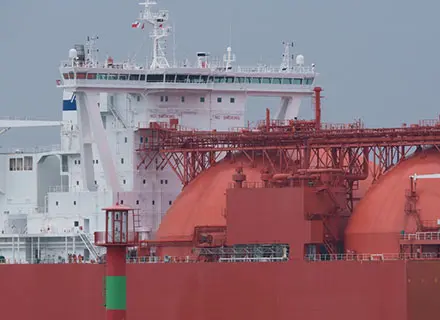
The IEA itself notes that nearly three-quarters of 2026’s investment decisions were locked in before the war began, meaning the fuller reckoning – in financing costs, in project pipelines, in where the next generation of energy infrastructure gets built – is still working its way through the system.
If the 1973 oil shock taught the world that energy security and foreign policy were inseparable, and the 2022 Ukraine invasion taught Europe that pipeline dependency was a strategic liability, the 2026 Iran war may end up teaching a subtler lesson: that in an interconnected energy system, the search for security itself becomes destabilising when every country chases it at once.
Six months in, the world is not so much replacing oil as hedging against needing quite so much of it from quite so few places – a shift that will likely outlast the war that triggered it by many year