

Warba Bank launched ‘Bdr AI’, an agentic artificial intelligence banking assistant that allows retail customers in Kuwait to initiate supported banking transactions through natural-language voice or text commands in Arabic and English, in July 2026.
According to the Kuwaiti Islamic bank, the service is integrated into its mobile banking application. It is intended to simplify routine transactions, improve operational efficiency, and provide automated digital banking support around the clock.
The launch takes Warba’s use of AI beyond customer information and financial advice towards conversational banking, in which an AI system can interpret what a customer wants, and initiate an eligible transaction within the bank’s established security and control framework.
Bdr AI supports Arabic, including conversational Kuwaiti Arabic, as well as English. Customers can communicate through voice or text rather than navigating multiple menus or manually entering transaction details.
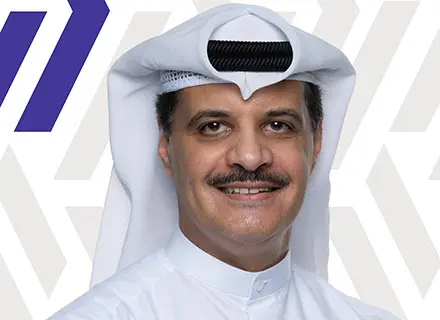
Anwar Badr Al-Ghaith, Deputy Chief Executive Officer for Digital Transformation and Operations at Warba Bank, said, ”The launch of Bdr AI expands how customers interact with the bank’s digital services by providing a faster and more flexible way to complete supported transactions.”
He added that continued investment in scalable digital infrastructure remains a priority as the bank seeks to improve efficiency while maintaining security and control across its digital channels.
The development comes as Warba expands its engagement with the international digital economy.
Islamic banking in digital mode
Founded in 2010, Warba Bank is headquartered in Kuwait City. The bank operates through a nationwide network of 20 branches, including at The Avenues and Kuwait International Airport. It is one of Kuwait’s newer Islamic banks, and has sought to differentiate itself through digital financial services and innovative Sharia-compliant products.
It has one of the country’s largest shareholder bases.
Warba’s digital transformation predates the current surge in generative and agentic AI. The bank established its Digital Group in 2020, bringing together digital transformation, a digital factory, and business-excellence functions. Since then, it has increasingly integrated technology into both customer services and internal operations.
Building an AI-enabled bank
Over the past three years, Warba has expanded its mobile banking capabilities while increasing the use of automation, data analytics, and AI.
In 2023, the bank enhanced its mobile application with features including personalised dashboards, digital wallets, Google Pay, mobile payments, and a marketplace for gift cards and promotional codes.
AI was simultaneously being deployed behind the scenes. Warba used AI for data mining and statistical analysis to generate insights and improve forecasting. It developed THEKEY, an AI assistant on Microsoft Teams designed to support employees.
Automation was introduced into a range of operational processes, including card delivery, legal workflows, and financial operations. The bank expanded digital services for corporate customers, including payment links, online letters of credit and guarantees, and digital document submission.
The next stage was to bring AI directly to customers. In 2024, Warba launched Warba Advisor, an AI-powered personal financial adviser. The service uses customer information and data analysis to offer personalised recommendations on products such as accounts, cards, savings, and investments.
Learning about Sharia principles
Warba’s technology strategy is not limited to making conventional banking services available through smartphones. The bank has sought to use digital technology to address distinctive requirements of Islamic finance.
One example is its interactive digital Fatwa system, launched in 2023. The system converted the bank’s collection of Sharia rulings into a searchable digital resource. Customers can search for rulings using questions, answers, titles or keywords, making Islamic guidance more readily accessible.
This type of service is significant for digital Islamic banking because the customer experience involves more than executing a transaction. Customers may also want to understand the Sharia principles governing financial products and activities.
Warba has similarly developed digital savings and payment products. Al Sunbula, its Sharia-compliant savings product, allows customers to open accounts digitally while offering returns and prize draws.
Its SiDi wallet is another example of technology being used to broaden access to financial services. The mobile-based proposition provides migrant workers with services, including digital account opening, transfers, payments and debit-card facilities, reducing reliance on physical branches.
Extending innovation to businesses and younger customers
Warba has targeted businesses and emerging consumer communities with technology-led products.
Its iPos wireless smart point-of-sale device, introduced in 2024, enables merchants to accept QR, mobile and digital-wallet payments. The Android-based device also supports foreign-currency transactions and loyalty features, giving merchants a broader digital payments and customer-engagement platform.
For younger consumers, Warba introduced a Game Edition prepaid card in collaboration with Visa, targeting the gaming and e-sports community. The card can be topped up through the Warba mobile application, and supports online and international transactions.
These products reflect an attempt to connect banking services with changing patterns of consumption rather than limiting digitalisation to traditional accounts, cards and transfers.
Warba’s digital transformation has been accompanied by community initiatives covering financial education, social welfare and environmental sustainability.
The bank has supported financial education and professional development through initiatives with organisations such as the CFA Society Kuwait. It has also backed programmes providing school supplies and other assistance to children from disadvantaged families.
In 2025, Warba launched its ‘Plant It for Free’ campaign, involving employees and community volunteers in tree planting and linking social engagement with environmental sustainability.
From mobile menus to conversations
Bdr AI is the latest stage in a multi-year transformation rather than an isolated technology experiment. Warba has moved from strengthening mobile banking and digital onboarding to automating internal processes, applying AI to data analysis, introducing personalised financial advice and now allowing customers to communicate banking instructions in natural language.
For an Islamic bank, the larger opportunity is to combine that convenience with Sharia-compliant products and digital access to Islamic guidance.