

Real gross domestic product (GDP) grew 4.43% year on year in the three months through June, accelerating from 3.89% in the first quarter, according to the National Bureau of Statistics.
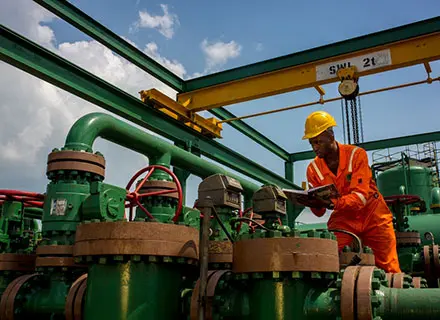
Oil was a major catalyst. The sector grew 7.31% year-on-year, compared with 2.57% in the first quarter.
Higher international oil prices provided an additional boost. Crude averaged about USD 93 a barrel during the quarter, up sharply from roughly USD 73 in the first quarter. The rise reflected tighter global supply conditions amid the US-Iran conflict and disruption risks around the Strait of Hormuz.
For Nigeria, Africa’s biggest oil producer, the combination of higher output and prices is particularly important because oil remains a crucial source of foreign currency and public revenue. Stronger inflows can ease pressure on the naira, improve reserves and give the government greater room to finance spending.
The improvement was not confined to hydrocarbons. The non-oil economy expanded 4.31% in the second quarter, up from 3.94% in the first quarter and 3.64% a year earlier. Agriculture grew 4.39%, while services increased 4.60%.
Telecommunications, information and communication, real estate, trade, financial services, manufacturing and construction were among the sectors supporting growth.
Services remained the dominant part of the economy, accounting for 56.62% of real GDP. The non-oil sector as a whole contributed 95.84%, underlining the extent to which Nigeria’s growth story extends beyond crude despite the oil sector’s faster expansion.
The figures offer some support for President Bola Tinubu’s economic reform programme, which has included fuel-subsidy removal, exchange-rate reforms and measures designed to attract investment.
The changes have also produced considerable pain, with Nigerians facing high living costs and inflation even as macroeconomic indicators improve.
Nigeria’s stronger oil performance also comes as the country expands domestic refining. The Dangote refinery has sharply increased petroleum-product exports since beginning operations, helping alter regional fuel trade flows and reducing some dependence on imported refined products.
The US Energy Information Administration said recently that Nigeria’s seaborne petroleum-product exports had increased sevenfold since 2023, driven by the refinery.
Rating agencies have begun to recognise the improved external position. Moody’s recently changed Nigeria’s outlook to positive from stable, citing stronger foreign-exchange reserves and economic resilience. It said higher oil prices and increased exports of refined products had helped strengthen the current-account position.
Still, the recovery faces risks. Nigeria remains vulnerable to oil-price swings, production disruptions and security problems in the oil-producing Niger Delta. The government must also translate stronger headline growth into higher household incomes and employment.
Investors will be watching whether the improved oil flows can be sustained, particularly as authorities seek to raise production further and reduce losses from theft, ageing infrastructure and operational disruptions across the petroleum industry, while containing inflation, fiscal pressures and volatility.
The latest expansion remains below Tinubu’s ambition of achieving 7% annual growth by 2027. The World Bank expects Nigeria’s economy to grow about 4.2% this year, suggesting that the country is improving but still has a considerable distance to cover.
For now, the second-quarter figures provide welcome evidence that Nigeria’s long-delayed recovery is gathering momentum. The challenge will be ensuring that an oil-led boost develops into durable, broad-based growth rather than another temporary commodity-driven upswing.