

The US 10-year Treasury yield breached 5% for the first time since 2023 on September 14, as mounting inflation concerns collided with swelling government and corporate borrowing needs, sending fresh tremors through global financial markets.
The benchmark yield rose almost five basis points to an intraday high of 5.01% on September 14 before paring much of the increase as buyers emerged. It was the first time the closely watched rate had crossed the 5% threshold since October 2023, when it breached the level for one day.
The move came as surging crude prices fuelled fears that inflation could remain elevated, complicating expectations for the Federal Reserve’s monetary policy decision this week. Brent crude approached USD 110 a barrel amid escalating geopolitical tensions and concerns over energy supplies.
The 10-year Treasury yield is a key reference point for borrowing costs across the US economy and global financial markets. Its rise can affect mortgage rates, corporate debt, consumer loans and the cost of financing government spending. For investors, the crossing of 5% is also a significant psychological marker.
“The 5% mark in 10-year rates is clearly a key psychological level for investors – a point at which some may have earmarked for buying a dip,” said Molly Brooks, a US rates strategist at TD Securities.
Inflation and borrowing pressures
The latest rise reflects a clash between expectations for monetary policy, inflation risks and the enormous amount of debt that governments and companies must finance.
Oil prices have become a major source of uncertainty. The ongoing conflict involving Iran and Israel, along with disruptions to energy infrastructure, has pushed crude higher, raising concerns that fuel and transport costs could feed into consumer prices.
Higher oil prices can make it harder for central banks to bring inflation back to target. Investors are therefore reassessing expectations for the Federal Reserve, with some anticipating that policymakers may need to keep interest rates elevated for longer or consider further increases if inflationary pressures intensify.
The surge in Treasury yields also reflects the supply of debt coming to market. The US government faces substantial borrowing requirements, while companies are raising funds for investment, including spending on artificial intelligence (AI) infrastructure and data centres.
The combination of increased supply and inflation uncertainty can make investors demand higher yields to hold longer-dated bonds. Treasury prices move inversely to yields, meaning the latest increase has resulted in losses for bondholders.
Global bond sell-off
The move in US Treasuries formed part of a wider sell-off in government debt. British and German bond yields also rose as energy prices climbed, highlighting how closely connected global fixed-income markets have become.
Investors have been watching whether the 5% level will once again act as a floor for yields or whether the market could push higher.
The sell-off has affected long-duration Treasury investments particularly sharply. BlackRock’s iShares 20+ Year Treasury Bond ETF touched its lowest intraday level since its launch in 2002, underlining the pressure on investors holding longer-maturity government debt.
The rise in yields is significant for asset allocation. When government bonds offer higher returns, they become more competitive with equities, particularly shares whose valuations depend on expectations of strong earnings growth far into the future.
Pressure on equities
US stock markets have come under pressure as investors weigh higher borrowing costs against elevated equity valuations. The S&P 500, Dow Jones Industrial Average and Nasdaq Composite all closed lower on Monday.
The S&P 500 fell 0.5%, while the Dow declined 0.3 per cent and the Nasdaq dropped 0.6%. The declines reflected both the rise in Treasury yields and weakness in technology and artificial intelligence-related shares.
Higher yields can weigh on growth stocks because future earnings are discounted at a higher rate.
The impact is not limited to Wall Street. Higher US Treasury yields can influence capital flows globally, affecting emerging-market currencies, government bonds and equity markets. Countries and companies that borrow in dollars may face additional pressure if US yields rise alongside a stronger dollar.
The treasury seeks to contain costs
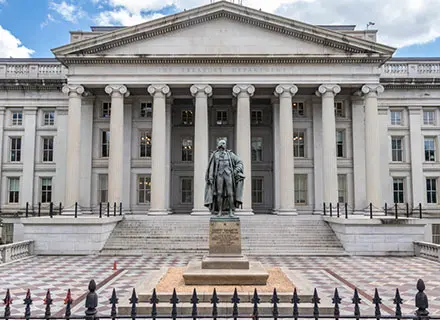
US Treasury Secretary Scott Bessent has made long-term borrowing costs a key measure of the administration’s economic success. The Treasury has responded by increasing bond buybacks and considering measures to manage the supply of longer-dated debt.
The administration has also encouraged Japan to curb Treasury sales and opened the door to potentially reducing issuance of long-maturity bonds.
However, the measures have so far had limited effect. The 10-year yield continued to climb despite the Treasury’s efforts, suggesting that investors remain focused on inflation, fiscal deficits and the broader supply-demand balance in the bond market.
The challenge is particularly acute because higher yields increase the government’s cost of servicing its debt.
Fed decision in focus
The Federal Reserve’s decision this week will be closely watched for clues about the future path of interest rates. Investors will assess whether policymakers view the oil-driven inflation risks as temporary or as a threat to broader price stability.
A central bank that signals a willingness to keep rates higher could reinforce pressure on the long end of the Treasury curve. Conversely, reassurance that inflation remains under control could encourage bond buying and ease yields.
For now, the 5% threshold has become a test of investor confidence. If yields remain above that level, borrowing costs could stay elevated across the economy, increasing pressure on businesses, households and governments.
The breach does not automatically signal an economic crisis. But it indicates that the bond market is demanding greater compensation for inflation uncertainty, heavy borrowing and the risks surrounding the global economic outlook.
As investors wait for the Federal Reserve’s next move, the question is whether 5 per cent will mark a temporary spike or the beginning of a more sustained period of higher long-term borrowing costs.