
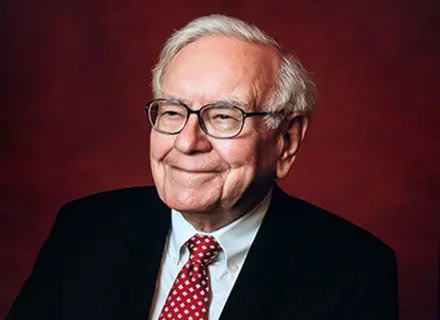

Warren Buffett, the investor who transformed a struggling textile manufacturer into one of the world’s most recognisable business empires, has stepped down as chairman of Berkshire Hathaway.
The change, announced on Friday, September 18, marks another decisive stage in one of the most closely watched succession plans in global business. Buffett will remain on Berkshire’s board, but the formal transfer of the chairmanship signals the end of his direct leadership of the company.
Greg Abel succeeded Buffett as chief executive officer at the start of 2026 and will continue to run Berkshire’s operations. Howard Buffett, a board member since 1993, will assume the chairman’s role, with responsibility centred on preserving the culture and values established by his father.
The announcement completes a transition that Buffett had been preparing investors for over several years. In May 2025, he told Berkshire shareholders that Abel would succeed him as CEO. The chairman’s departure now separates the company’s operational leadership from the stewardship of its distinctive corporate culture.
For Berkshire investors, however, the significance extends well beyond a change of title. Buffett’s career has helped shape modern value investing, demonstrated the power of long-term ownership and created a conglomerate whose operations span insurance, railways, energy, manufacturing and consumer brands.
His departure therefore raises a question that has followed Berkshire for years: how does a company built around one investor’s judgement continue to prosper when that investor is no longer in charge?
From Omaha to Wall Street
Buffett’s story began in Omaha, Nebraska, where he was born on August 30, 1930. His father, Howard Buffett, was a businessman and US congressman. The young Warren developed an interest in numbers and business early, buying his first stock at the age of 11.
That early interest developed into a lifelong pursuit of investing. Buffett attended the University of Pennsylvania’s Wharton School before graduating from the University of Nebraska. He later studied at Columbia Business School, where he was taught by Benjamin Graham, the economist and investor widely regarded as the father of value investing.
Graham’s influence became fundamental to Buffett’s approach. The central idea emphasised that shares signify ownership in businesses, not just pieces of paper for trading. Investors should seek a margin of safety by buying assets for less than their underlying worth.
Buffett adopted that discipline and eventually developed it into a broader philosophy: buy excellent businesses at sensible prices, hold them for long periods and allow their earnings and cash flows to compound.
In 1956, he established Buffett Partnership Ltd, an investment partnership that attracted capital from family, friends and other investors. The partnership delivered strong returns and established Buffett’s reputation as a disciplined investor.
Yet the business that would define his career was not initially an obvious success story.
The textile mill that became a conglomerate
In 1965, Buffett took control of Berkshire Hathaway, a New England textile company whose origins stretched back to the 19th century. The company had struggled as the US textile industry faced growing competition and changing economics.
Buffett initially bought shares because he believed the company’s assets and share price offered an opportunity. But the investment did not develop as he had expected. The textile business continued to face difficulties, and Buffett eventually moved away from the manufacturing operations.
Instead of allowing Berkshire to remain a declining industrial company, he began using it as a holding company for investments and acquisitions.
This shift became the foundation of Berkshire’s modern identity.
Buffett’s approach was to acquire businesses with durable competitive advantages, capable management and reliable cash generation. Rather than constantly buying and selling shares, he preferred to own businesses outright and allow their earnings to accumulate within the group.
One of the most important developments came through insurance.
Insurance: The financial engine
Berkshire’s insurance operations became a critical source of capital for Buffett’s investment strategy. The group owns insurance businesses, including GEICO and General Re, while its reinsurance operations have played a significant role in its financial performance.
Before paying claims, insurance companies collect premiums. The money held during that period is known as the insurance float. When underwriting is profitable, the insurer can invest that float while retaining the benefits of the investment’s returns.
Buffett recognised the importance of this model and used Berkshire’s insurance businesses to generate capital that could be deployed elsewhere.
The strategy helped Berkshire move beyond the economics of a traditional holding company. Its insurance operations provided a recurring source of funds, while the group’s investment portfolio and wholly owned businesses created additional earnings.
The result was a structure that could acquire companies, invest in securities and retain earnings without depending primarily on issuing new shares or borrowing heavily.
Berkshire’s insurance operations remain central to understanding its business model. Underwriting results, investment income, interest rates, claims, and the broader insurance cycle all influence the company’s financial performance.
For investors, this makes Berkshire different from a conventional industrial conglomerate. Its insurance businesses provide both earnings and financial flexibility, although they also expose the group to catastrophe losses and other insurance risks.
Charlie Munger played a crucial role in the evolution of value investing.
Buffett’s success cannot be understood without Charlie Munger, his long-time business partner and vice-chairman of Berkshire Hathaway.
Munger, who died in November 2023 at the age of 99, helped Buffett evolve beyond the strictest interpretation of Benjamin Graham’s investment philosophy.
Graham emphasised buying businesses at a substantial discount to their intrinsic value. Munger encouraged Buffett to focus more on the quality of a business, even when the purchase price was not exceptionally cheap.
That distinction became important. Berkshire increasingly acquired companies with strong brands, pricing power and attractive long-term economics.
One of the most celebrated examples was the group’s investment in Coca-Cola. Berkshire began building its position in 1988, and the beverage company became a major long-term holding.
The investment reflected Buffett’s preference for businesses with powerful brands, repeat demand and the ability to generate cash over many years.
Munger’s influence also reinforced Berkshire’s culture of rationality, patience and independent thinking. The two men became known for their ability to explain complex financial concepts in simple language, often through the annual shareholder letters and Berkshire’s annual meeting in Omaha.
Their partnership became one of the most influential relationships in modern investing.
The biggest bets
Over the decades, Berkshire built a portfolio of investments that became closely associated with Buffett’s name.
Among its notable holdings and acquisitions, there was Coca-Cola, a long-term investment that illustrated Buffett’s preference for durable brands and recurring consumer demand. Then came GEICO, the auto insurer that became one of Berkshire’s best-known operating businesses.
Furthermore, one must not forget about BNSF Railway. Acquired in 2009, the railway gave Berkshire exposure to the US transport and freight economy.
Berkshire Hathaway Energy, on the other hand, emerged as a major utility and energy business within the group. Dairy Queen, the celebrated consumer brand, became part of Berkshire’s portfolio in 1998.
Berkshire expanded its presence in aerospace manufacturing by acquiring Precision Castparts in 2016.
Berkshire also built major stock-market positions in companies such as Apple, whose shares became a significant investment in the group’s portfolio.
These investments illustrate how Buffett’s strategy evolved from buying undervalued securities to owning businesses with strong competitive advantages.
The common thread was not a particular industry. It was the ability to generate cash, retain earnings and produce attractive long-term returns.
The Oracle of Omaha
Buffett’s reputation was built not only on his investment returns but also on his ability to communicate.
He became known as the “Oracle of Omaha”, a nickname reflecting his investment record and his annual appearances before Berkshire shareholders.
The annual meeting in Omaha became a global event, attracting thousands of investors who travelled to hear Buffett and Munger discuss markets, businesses and the economy.
Unlike many financial executives, Buffett generally avoided complicated jargon. His shareholder letters often explained investment principles through everyday examples and memorable analogies.
His message was consistent: investors should understand the businesses they own, avoid unnecessary trading and maintain a long-term perspective.
He also frequently warned against excessive leverage, speculative behaviour and the belief that markets could be predicted with certainty.
That philosophy resonated with investors around the world, including those who did not own Berkshire shares.
Buffett’s personal lifestyle reinforced the message. Despite becoming one of the world’s wealthiest people, he remained associated with Omaha and a relatively modest way of living.
His public image combined financial success with frugality, plain speaking and a reluctance to chase status.
A fortune built on compounding
Buffett’s wealth grew alongside Berkshire Hathaway’s success.
The company’s shares became a long-term compounding machine, with investors benefiting from the reinvestment of earnings and the expansion of the group’s businesses.
Berkshire’s market capitalisation eventually reached approximately $1 trillion, placing it among the world’s largest companies. It became notable as a major non-technology company to reach that valuation.
The company’s structure also allowed Buffett to maintain substantial cash reserves and make large acquisitions when opportunities arose.
This approach was particularly important during periods of market stress, when asset prices fell and companies needed capital.
Buffett’s investment in Goldman Sachs during the 2008 financial crisis was one example of his willingness to provide capital to major businesses during difficult conditions.
Berkshire’s financial strength enabled it to act when other investors faced constraints.
Yet the company’s scale also created challenges. As Berkshire grew, finding investments large enough to make a meaningful difference to group earnings became increasingly difficult.
A strategy that worked exceptionally well with smaller sums became harder to replicate with hundreds of billions of dollars.
That reality shaped Buffett’s later career.
The succession question
Buffett’s succession planning became one of the most important issues facing Berkshire Hathaway.
The company’s identity had become closely linked to its chairman. Investors often treated Buffett’s judgement as a central part of Berkshire’s value.
The challenge was therefore not merely to appoint a new CEO. It was to preserve the decentralised management structure, financial discipline and corporate culture that had developed under Buffett.
Greg Abel emerged as the successor to the CEO role.
Abel had been a senior Berkshire executive and vice-chairman responsible for non-insurance operations. He became CEO in January 2026, taking responsibility for running the company’s businesses.
Howard Buffett’s role is different.
As chairman, he is expected to help protect the culture and values of the company. Buffett has previously described his son as someone who would guard Berkshire’s culture and values.
The distinction between the two roles is significant.
Abel is responsible for operations, capital allocation and the performance of Berkshire’s businesses. Howard Buffett’s chairmanship is primarily about governance and cultural continuity.
The arrangement reflects Berkshire’s long-standing preference for decentralised management, in which operating subsidiaries retain considerable autonomy.
What changes after Buffett?
The immediate change is the end of Buffett’s chairmanship, but the company’s investment philosophy is unlikely to disappear overnight.
Berkshire still owns its collection of businesses and investments. It retains its insurance operations, railway business, energy interests and consumer brands.
The group also retains a large investment portfolio and substantial financial resources.
The more difficult question concerns capital allocation.
Buffett’s ability to make major investment decisions was central to Berkshire’s identity. Investors will now watch how Abel approaches acquisitions, share purchases, cash reserves and the allocation of capital between Berkshire’s different businesses.
The transition may also affect investor expectations.
Berkshire’s shares have historically attracted shareholders who value financial conservatism and long-term ownership. The company’s future performance will depend on whether the new leadership can maintain those characteristics while adapting to changing market conditions.
The company’s size means that acquisitions must be substantial to materially influence earnings. The insurance business continues to face risks from claims, investment markets, and interest rates.
Berkshire’s future will depend on the quality of its businesses and the choices of its new leaders.
A legacy beyond the balance sheet
Buffett’s influence extends beyond Berkshire Hathaway.
His investment philosophy has shaped generations of investors, fund managers and business leaders. The principles of buying quality businesses, avoiding unnecessary debt and allowing capital to compound have become part of mainstream investment thinking.
His philanthropic commitments have also been significant.
Buffett has pledged to give away the vast majority of his wealth to charitable causes. He has been associated with the Bill & Melinda Gates Foundation and co-founded the Giving Pledge in 2010 with Bill Gates and Melinda French Gates.
The initiative encouraged billionaires to commit to giving away at least half of their wealth during their lifetimes or through their wills.
Buffett’s philanthropy reflected his long-term investment strategy: he believed in using capital to generate enduring benefits.
The end of an era
Warren Buffett’s departure from the Berkshire Hathaway chairmanship is the closing chapter of one of the most remarkable careers in business.
He took control of a struggling textile company in 1965 and transformed it into a diversified conglomerate with a global shareholder base.
Along the way, he helped redefine value investing, built a powerful insurance operation and demonstrated the importance of disciplined capital allocation.
His partnership with Charlie Munger became a model for business collaboration. His annual letters became essential reading for investors. His public image made him one of the most recognisable figures in finance.
Now, Berkshire moves into a new phase.
Greg Abel will lead the business. Howard Buffett will oversee the board as chairman. Warren Buffett will remain a director and chairman emeritus, retaining a connection to the company he built.
The test for Berkshire will be whether its institutions can carry forward the principles that made it successful.
For investors, the Buffett era may be ending in name. But the businesses, capital and philosophy that he assembled will continue to shape Berkshire Hathaway for years to come.