

The year 2025 was a productive one for the insurance industry, as on a global basis, it expanded by 7.1% in 2025, adding 456 billion euro to the global premium pool and bringing the total to 6.9 trillion euro.
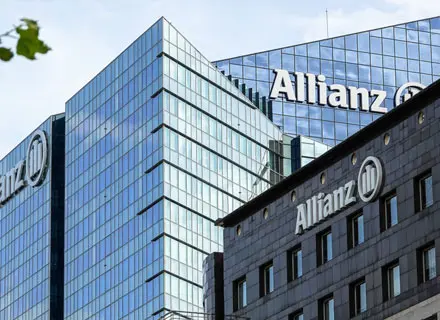
The “Global Insurance Report 2026″, prepared by Allianz Research, analysed developments in insurance markets worldwide and found that while growth moderated from the 9.4% recorded in 2024, it remained above the industry’s 10-year compound annual growth rate of 5.6%.
“Life insurance remained the largest segment at 2,861 billion euro, followed by property and casualty (P&C) at 2,320 billion euro and health at 1,688 billion euro,” the study remarked.
“The P&C segment slowed sharply, growing by only 3.8% in 2025 – well below both the previous year’s 8.5% expansion and its 10-year average of 5.6% – as pricing cycles matured and claims inflation stabilised. North America, which accounts for 52% of global P&C premiums, recorded growth of just 2.2%, down from 9.7% the previous year, while Asia continued to exhibit the world’s largest protection gap, with penetration of just 1.3% compared with 4.3% in North America. Life insurance grew by a still robust +6.9%, though the US annuity boom is fading. Health insurance remained the industry’s strongest growth story, expanding by +12.3%, the fastest pace since 2014, driven by rising medical costs and growing demand for private healthcare protection,” Allianz Research said.
Behind the boom in the health insurance segment, the report identified factors like the surge in ageing populations, rising medical costs, and growing pressure on public healthcare systems. North America alone grew by 14.9%, with the United States now accounting for more than 70% of global health premiums.
Asia, on the other hand, emerged as the principal engine for life insurance, with premiums rising 9.9% across the region and China alone expanding by 11.4%. The Allianz Research report noted that demographic ageing, high savings rates, and less comprehensive public pension systems underpinned Asia’s position as the world’s largest life insurance market.
“Despite Asia’s rise, global insurance remains overwhelmingly dominated by the US. North America increased its share of global premiums from 42.5% to 46.4% over the past decade, meaning that almost every second euro written globally now originates from the region. China has emerged as a clear number two, increasing its market share from 7.5% to 10.9%. Yet, at 746 billion euro in premiums, it remains less than a quarter of the size of the North American market at 3,191 billion euro. Western Europe, by contrast, will continue to lose relative weight across most business lines,” the study observed.
Using the Iran war as its case study, Allianz Research also flagged geopolitical fragmentation as a growing force reshaping the insurance industry, creating both operational complexity and new demand for specialised coverage across infrastructure, energy security, and political risk.
“The Iran war is acting as a major external supply shock, disrupting energy markets, trade flows and supply chains. In our central scenario, global GDP growth is expected to slow to +2.6% in 2026, while Eurozone growth will fall to just +0.8%. If the conflict is not resolved during the summer, we expect additional upward pressure on inflation and a materially worse global growth outlook. More broadly, geopolitical fragmentation is creating a structurally more complex operating environment, challenging assumptions around global integration, capital mobility and cross-border risk diversification. Insurers will need to adapt by building more regionally resilient operating models, integrating geopolitical analysis more directly into underwriting and capital allocation and developing products tailored to emerging risks such as cyber escalation. While fragmentation raises costs and operational complexity, it also increases demand for protection and resilience, reinforcing the strategic relevance of insurance in a more uncertain global environment,” it said.
Looking ahead, Allianz Research projected the global insurance market would grow at an annual rate of 5.3% over the next 10 years, with the global premium pool reaching 12,129 billion euro by 2036.
“Geopolitical fragmentation is reversing many of the assumptions that shaped the global economy for decades. As trade, capital flows, and regulation become increasingly fragmented, resilience is replacing efficiency as the dominant organising principle. This shift is making the operating environment more complex and costly, making the push for affordability even more urgent. Nothing less than insurance’s strategic importance is at stake: not only as a mechanism for risk transfer but also as a critical enabler of investment, innovation, and economic confidence,” said Ludovic Subran, Chief Economist and Chief Investment Officer at Allianz.