
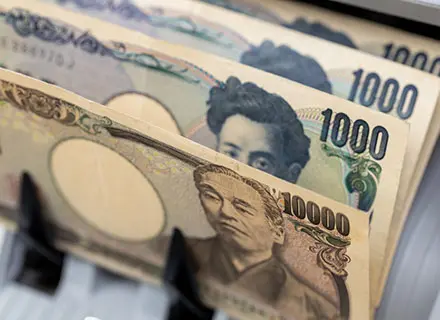

The Bank of Japan (BOJ) raised its interest rates to a 31-year high on Friday and signalled its readiness to keep pushing up borrowing costs, joining its global peers in fighting persistent inflation pressures driven by soaring oil costs amid the ongoing Iran war.
At the two-day meeting that ended on Friday, the BOJ raised its policy rate to 1.25% from 1% by a 7-2 vote. As per the reports, dovish board members Toichiro Asada and Ayano Sato dissented from the apex bank’s monetary policy panel’s decision.
BOJ’s European and US peers have already raised their rates, highlighting central banks’ focus on global inflation risks caused by the global energy cost shock, expansionary fiscal policies and surging demand for AI investment.
The latest hike has been the first such move from the BOJ in three months and takes interest rates closer to levels the central bank deems neutral to the Asian giant’s economy.
Japan, traditionally known for its decades-old practice of keeping interest rates low, is veering away from the practice, as the yen, which has consolidated its position as a cheap global funding currency over the years, is facing tremendous volatility pressure, including hitting 40-year lows earlier in 2026 before experiencing a highly unstable, paradoxical reaction to domestic policy changes.
The currency saw another round of correction, after the BOJ’s rate hike announcement, by sinking to 156.91 per dollar.
BOJ Governor Kazuo Ueda said with underlying inflation approaching 2%, the bank’s policy focus had shifted.
“If risks of underlying inflation overshooting 2% materialise, that could have a negative impact on Japan’s economy. It’s important to stabilise underlying inflation at 2%. Our policy phase has changed,” he told a news conference.
BOJ said while economic and price developments are moving in line with its baseline forecast, there is a risk of underlying inflation deviating from its 2% target.
“Wholesale inflation remains elevated, and price pressures from business-to-business trading have started to spill over into consumer prices,” the apex bank noted.
“Underlying inflation has been approaching 2% as companies continue to pass on the cost of higher wages and inflation expectations keep heightening,” it added further.
The BOJ, since 2024, has raised its interest rates several times, including in June, at a pace of roughly twice a year, on the view that Japan was making progress in durably achieving its 2% inflation target.
The latest hike to 1.25% brings the rate within the BOJ’s estimated 1.1% to 2.5% range of Japan’s nominal neutral rate, or the level that neither cools nor overheats growth.
However, BOJ’s policy rate has remained lower than that of the European Central Bank (ECB), which raised its key rate last week to 2.5%, and the United States Federal Reserve’s 3.75%-4.00% range.
A section of analysts has blamed the slow pace of BOJ rate hikes behind the weak yen that has pushed up import costs and broader inflation.
Core consumer inflation held steady near the BOJ’s 2% target in August, data showed on Friday, as companies continued to pass on rising costs for a wide range of food and grocery items.