

For the best part of a decade, America’s largest banks spoke with something close to one voice on capital regulation.
They funded the same trade bodies, signed the same comment letters, ran the same advertisements and told regulators the same story about credit, competitiveness and the cost of holding idle equity.
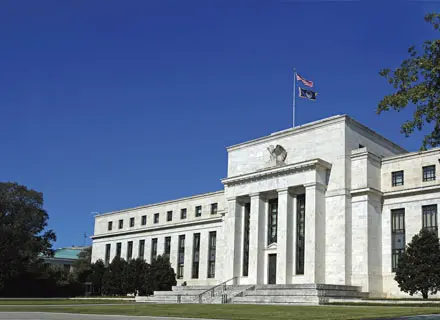
That campaign has largely worked. The Federal Reserve is now finishing a rewrite of capital rules that will leave the biggest lenders holding less capital than they do today.
And that is precisely where the alliance has broken. JPMorgan, Bank of America, Goldman Sachs and Morgan Stanley are now feuding over a single technical adjustment inside the Fed’s proposal, with billions of dollars at stake, according to public documents and four people familiar with the discussions who spoke to Reuters.
The disagreement is narrow, highly technical and almost entirely invisible to anyone outside the regulatory bar. It is also worth more to the banks involved than most of the rest of the package combined.
What the surcharge does
The instrument at the centre of the argument is the capital surcharge applied to global systemically important banks, known as GSIBs.
There are eight of them in the United States, namely JPMorgan Chase, Bank of America, Citigroup, Wells Fargo, Goldman Sachs, Morgan Stanley, BNY Mellon and State Street.
The surcharge is an extra layer of common equity tier 1 capital they must hold on top of everyone else’s requirements, calibrated to the damage their failure would inflict on the wider system.
The Fed built the surcharge after the 2007 to 2009 financial crisis, originally around five systemic risk factors carrying equal weights of 20% each, one of which was short-term wholesale funding.
The logic was drawn straight from the wreckage of that period. Before the crash, the largest Wall Street firms funded their balance sheets aggressively with short-term liabilities that, for several of them, disappeared almost overnight, a dynamic that accelerated the collapse of Lehman Brothers and forced Morgan Stanley and Goldman Sachs to convert into bank holding companies.
Short-term wholesale funding, or STWF, covers repurchase agreements, commercial paper, brokered and uninsured wholesale deposits and similar instruments. It is cheap, flexible and prone to vanishing at exactly the moment a bank needs it most.
The tweak that split the room
In March the Fed proposed changes it said would make the surcharge more risk-sensitive, including a revision to how short-term wholesale funding is treated. The mechanics matter here.
At present the Fed measures short-term wholesale funding as a ratio of risk-weighted assets. That normalised comparisons across the eight banks, but it also pushed the effective weighting of the funding measure to roughly 30% of the overall calculation.
The Fed has proposed scrapping the ratio and simply measuring the absolute dollar amount of short-term wholesale funding a bank carries.
The recalibration is designed to bring the funding component back to around 20% of aggregate Method 2 GSIB scores, its originally intended weight, with the Fed attributing the drift to early data limitations.
Strip out the jargon and the change is simple. Today a bank’s funding risk is judged relative to how risky its assets are. Under the proposal it would be judged on its own, in dollars.
That single substitution redistributes billions across the industry, because the eight banks look very different once the denominator disappears.
Winners, losers and the maths behind them
The banks that benefit are the ones with small risk-weighted asset books relative to their funding. The banks that lose are the universal lenders with enormous balance sheets that were, in effect, being flattered by a large denominator.
According to 2026 federal data, short-term wholesale funding accounted for 37% of Morgan Stanley’s liabilities and 30% of Goldman Sachs’s. For Bank of America the figure was 24%, and for JPMorgan 21%.
The scoring effects are stark. Morgan Stanley currently carries the highest funding score among the eight at 333 basis points, despite ranking only fifth in absolute terms with $503bn of short-term wholesale funding, because its comparatively small $529 billion risk-weighted asset base inflates the ratio.
Under the proposal its score would fall to 116 basis points, a decline of 65%. JPMorgan runs by far the largest short-term wholesale funding book at $903 billion, yet ranks only fourth on the current measure at 165 basis points, because its $1.9 trillion risk-weighted asset denominator dilutes the result.
Under the proposal JPMorgan would move to the top of the table at 208 basis points. Goldman Sachs, second highest today at 271 basis points on $552 billion of funding, would drop to 127 basis points.
Translated into capital, the numbers are large enough to explain the sudden loss of solidarity. The overall package still reduces requirements for all of them, but JPMorgan told the Fed in a June letter that the funding tweak would cost it $13 billion of additional relief it would otherwise have received, and Bank of America $9 billion.
In the same letter JPMorgan estimated that Goldman Sachs and Morgan Stanley would each pick up a further $1 billion to $2 billion, a figure that is its own calculation of a rival’s gain rather than an independent one.
Better Markets has reached the same directional conclusion, namely that the two investment banks stand to benefit most.
The Main Street argument
The change caught executives at JPMorgan and Bank of America by surprise, the people told Reuters, because the two largest US lenders sit on deep deposit funding and the revision hands the advantage to commercial rivals who rely more heavily on wholesale markets.
To them it also sat awkwardly with the stated rationale for capital relief under President Donald Trump’s regulators, which has been to expand lending into the real economy.
That has become the core of their public case. According to the same account, JPMorgan and Bank of America executives have lobbied Fed officials, at times in joint meetings, to kill the proposed change, arguing that the new formula could constrain lending and support riskier trading activity instead.
JPMorgan’s business banking chief Stevie Baron made the argument publicly in a blog post in August, warning that the proposal as drafted would encourage trading over lending to small businesses and customers.
The formal objections were filed in June. In separate comment letters submitted on June 18, JPMorgan and Bank of America told the Fed it had not adequately justified removing risk-weighted assets from the denominator, arguing the change could distort how reliance on short-term funding is measured and produce uneven outcomes across the largest US banks.
Bank of America’s chief financial officer Alastair Borthwick wrote that a gross funding measure with no denominator risks overstating the danger posed by a larger firm whose relative reliance on such funding is low.
Bank of America has kept its public language broad. A spokesperson said the bank supports changes that drive Main Street lending, job creation and affordability. The Fed, JPMorgan, Goldman Sachs and Morgan Stanley all declined to comment.
The case for absolute dollars
The two investment banks take the opposite view, and they have the more orthodox regulatory argument on their side.
Goldman Sachs and Morgan Stanley filed their own letters backing the revision, on the grounds that it would improve the accuracy of the surcharge by better aligning the funding measure with the risk it is meant to capture.
Goldman argued the change would produce a more transparent and economically grounded measure, while Morgan Stanley, which two of the people who spoke to Reuters described as especially active in pressing the case, told the Fed the revision could improve liquidity in the Treasury market by cutting the capital banks must hold against dealing in government bonds.
Financial reform advocates, who agree with almost nothing else in the Fed’s package, agree with them on this point.
Better Markets argues that the damage a funding run inflicts depends on the absolute dollar volume of run-prone liabilities, not their ratio to a risk-weighted figure, since a bank forced into a fire sale must liquidate real assets at real prices regardless of what risk weights those assets carried.
The group also notes that scaling by risk-weighted assets creates a perverse incentive, because banks that successfully optimise their risk weights downwards see their funding scores rise, while banks that become genuinely riskier see them fall.
Christopher Appel, director of banking policy at Better Markets and a Fed official from 2019 until March, said the surcharge is a key remaining safeguard as regulators trim overall capital levels and that the revision would better gauge funding risk.
“It’s absolutely critical that the Fed get this right,” he said. Appel was among many staff who left the central bank this year as the administration overhauled federal agencies.
The wider package
The funding dispute sits inside a far larger rewrite. On March 19, the agencies released a linked set of proposals covering Basel III implementation, a revised standardised approach and the GSIB surcharge methodology, marking a decisive retreat from the 2023 drafts that would have pushed capital requirements sharply higher across the industry.
Fed Vice Chair for Supervision Michelle Bowman set out the logic a week earlier, saying the Basel III element would raise requirements slightly for the largest banks while the surcharge proposal would produce a modest decrease, leaving a small net reduction.
The surcharge proposal does several other things beyond the funding measure. It adjusts the fixed systemic indicator coefficients to account for economic growth and inflation, replaces year-end snapshots with daily and monthly averages, and narrows the Method 2 surcharge bands from 50 basis points to 10 basis points to soften the cliff effects of moving between buckets.
Industry economists have long complained that fixed denominators calibrated to 2012 and 2013 activity levels cause Method 2 scores to drift upwards over time for reasons unconnected to systemic risk, with a bank holding a constant global market share seeing its size score rise by 29% over the period.
The aggregate figures are substantial. The surcharge proposal alone is expected to cut common equity tier 1 requirements for GSIBs by roughly 3.8%. Taken together, the March package is estimated to reduce required CET1 by up to 4.8% for Category I and II GSIB organisations, 5.2% for Category III and IV regional banks and 7.8% for community banks.
Not everyone at the Fed agreed. Governor Michael Barr put the surcharge cut at $33 billion and said that once the recent changes to the enhanced supplementary leverage ratio are included, tier 1 requirements for GSIBs fall by 6.0%, or $60 billion.
“These significant reductions in capital requirements are unnecessary and unwise,” he said, while accepting that some elements, including annual averaging and narrower scoring bands, were genuine improvements.
Why the banks still object
It is worth noting that even the banks winning relief are unhappy with the headline outcome. Jamie Dimon told shareholders in April that the proposals remain flawed in specific areas and that some aspects are, in his words, nonsensical, while backing timely finalisation because everyone wants to move on.
On JPMorgan’s first-quarter call, executives said the bank was planning for a surcharge of 5.2% in 2028, a 70-basis point increase on the current 4.5%, which combined with the Basel III risk-weighted asset changes would mean roughly $20 billion more GSIB capital on its present balance sheet.
That is the frame JPMorgan has adopted throughout. It is not arguing that the surcharge should disappear.
It is arguing that the calibration remains disconnected from the Fed’s own stated rationale, and that the funding tweak makes the disconnection worse.
The timing explains much of the urgency. The infighting risks complicating the Fed’s effort to finalise the reforms before 2027, when Democrats are widely expected to take the House of Representatives and step up scrutiny of the administration’s regulators.
Access has not been the constraint. JPMorgan and Morgan Stanley executives have each met Fed officials on the GSIB proposal at least four times since March, according to public Fed memos reviewed by Reuters.
The four people cited by the agency said it was unclear who will prevail. Bowman has told banks to limit their feedback, and three of them believe she will stay close to the current draft, partly because she wants the rule done by year-end.
All four banks support the overhaul in principle. What has changed is that a rare window has opened to maximise individual gains at a rival’s expense.
The industry pushed for years to soften the surcharge with limited success, and only made progress when the Fed’s 2022 capital review triggered an unprecedented and unified backlash. Unity was the tactic that worked. It has not survived contact with the spoils.
What to watch
Three things will determine how this lands. The first is whether the Fed keeps the absolute-dollar measure intact, softens it with a partial denominator, or phases it in.
A compromise that preserves the principle while smoothing the distributional effect is the most likely landing zone for a regulator trying to close a file before the calendar turns.
The second is the Treasury market question. Morgan Stanley’s argument that lower capital charges on repo activity would deepen liquidity in government bonds is the one strand of this dispute with consequences well beyond bank shareholders, and it is the argument most likely to resonate inside a central bank that has spent years worrying about Treasury market fragility.
The third is durability. Better Markets has pointed out an internal tension in the package, arguing that if risk-weighted assets cannot be trusted as a denominator for the funding measure, the accompanying Basel III proposal doubles down on the same metric across the rest of the capital framework.
A rule finalised in December on a narrow supervisory majority, into a Congress about to change hands, is not obviously a settled rule.
For now, the spectacle is the story. Four of the most powerful financial institutions in the world spent a decade arguing that capital regulation was too blunt to reflect real risk.
The Fed has finally accepted a version of that argument, and two of them have discovered they preferred the blunt version after all.